)
Sustainable business
27.07.2026
Webinar recap: How businesses can build a credible biodiversity investment strategy
Earthly brought together Lorienne Whittle, Rewilding Landscapes Manager at Nattergal ; Siobhan Stewart, Head of Delivery at …

)
When a business is certified as a
, it shows stakeholders - customers, employees, and investors - that the company is committed to responsible business practices and accountable impact. From 2026, every company certifying or recertifying for B Corp must meet defined requirements across climate action and environmental stewardship, with no exceptions.
address these requirements while strengthening performance across multiple B Corp Impact Assessment areas.
B Corp certification replaced the 80-point scoring system with mandatory requirements across the seven impact topics.
Climate action is now mandatory and self-reporting is no longer accepted, external verification is required.
Nature-based solutions provide verified environmental and community outcomes across multiple B Impact Assessment areas.
As a certified B Corp, Earthly supports businesses on their certification journey.
A
is a for-profit company that has been independently verified by B Lab to meet rigorous standards of social and environmental performance, accountability, and transparency. Certification shows that a business considers the impact of its decisions on shareholders, workers, communities, customers, suppliers, and the environment.
To become certified,
complete the B Impact Assessment (BIA), amend their governing documents to embed stakeholder governance, and pay an annual certification fee based on revenue. They must recertify every three years to maintain their status.

Earthly's projects are verified against Verra (VCS), Gold Standard, Plan Vivo, and the DEFRA Biodiversity Metric - with an additional layer of independent assessment through Keystone 3.0 across carbon, biodiversity, and community impact. For businesses, this translates to credible, reportable evidence of nature-positive action.
From 2026, B Corp certification has moved from a points-based threshold to mandatory minimum requirements across seven defined impact topics:
purpose and stakeholder governance, fair work, justice, equity, diversity and inclusion, human rights, climate action, environmental stewardship and circularity, and government affairs and collective action
.
A company must meet the baseline in every topic; failing one means failing certification, regardless of performance elsewhere.
Under the updated standards, each step requires more robust evidence and measurable outcomes.
Step 1: Complete the B Impact Assessment (BIA)
Companies begin by completing the
, which evaluates how the business operates across governance, workers, community, environment, and customers. This provides a comprehensive view of current performance and highlights areas that require improvement.
Step 2: Meet defined performance requirements
Businesses must demonstrate that they meet specific requirements across key impact areas. This includes providing evidence of policies, practices, and outcomes, rather than relying on high-level commitments or isolated initiatives.
Step 3: Embed stakeholder accountability
Companies are required to formalise their commitment to stakeholders by updating governance structures. This ensures that decision-making considers the impact on employees, communities, and the environment alongside shareholder interests.
Step 4: Undergo verification
All submitted information is reviewed by B Lab as part of a formal verification process. Businesses must provide supporting documentation and data to substantiate their responses, and may be subject to additional review or audit.
Step 5: Commit to transparency and recertification
Certified companies are required to publish aspects of their impact performance and recertify on a regular cycle. This ensures accountability over time and demonstrates continuous improvement as standards evolve.

Comparison of B Corp standards before and after April 2025, including version updates and the transition to the B Impact Self-Assessment platform.
B Corp certification is moving from a flexible scoring system to a requirements-based model. The focus is no longer on achieving a high overall score, but on meeting defined standards across all areas of impact.
Under the old model, companies needed to reach 80 points out of 200 across five broad categories - governance, workers, community, environment, and customers. A strong score in one area could make up for a weaker performance in another. That flexibility no longer applies.
From points to defined standards:
Certification is no longer based on achieving a total score. Companies must meet minimum requirements across seven impact topics, with no ability to offset weaker performance in one area with stronger results in another.
A new assessment model:
The points threshold is replaced with a “does not meet, meets, or exceeds” system, shifting the focus to whether requirements are met rather than how highly a company scores overall.
Independent verification:
All assessments are verified by external, independent auditors. This change strengthens credibility and aligns with regulatory expectations on environmental claims, including EU greenwashing legislation.
From static to continuous improvement:
Benchmarks escalate at Year 3 and Year 5 recertification, requiring businesses to demonstrate ongoing progress rather than maintaining a fixed level of performance.
This shifts certification from a balancing exercise to a system of consistent, measurable performance across all impact areas.
Environmental performance is now a baseline requirement. It cannot be balanced by strength in other areas:
Climate action refers to a company's measurable efforts to reduce greenhouse gas emissions and align its business with the goal of limiting global warming to 1.5°C. The new standards require a documented, evidence-based approach to emissions measurement, target-setting, and transition planning.
Small and medium companies (under 250 FTE):
Must publish a Climate Action Plan at Year 0
No mandatory GHG measurement or science-based targets
Must demonstrate progress at Year 3
Measurement is recommended but not required
For larger companies specifically, this means:
Measuring Scope 1, 2, and material Scope 3 emissions annually using the GHG Protocol methodology.
Setting and disclosing science-based targets aligned with SBTi’s 1.5°C pathway.
Developing and publishing a formal climate transition plan that outlines how those targets will be met.
Annual third-party verification of GHG inventory required
These are guidelines on how a company manages its broader relationship with nature - across biodiversity, water, land use, resource consumption, and waste.
While climate action focuses on emissions, this focuses on ecological impact: what a company takes from natural systems, what it puts back, and how it manages the risks and dependencies that arise from its interaction with the natural world.
Under the new standards, all companies must:
Assess actual and potential environmental impacts across operations and value chains.
Develop a biodiversity transition plan and demonstrate progress at each recertification cycle.
Integrate circular economy practices into operations and product design, moving away from a take-make-waste model.
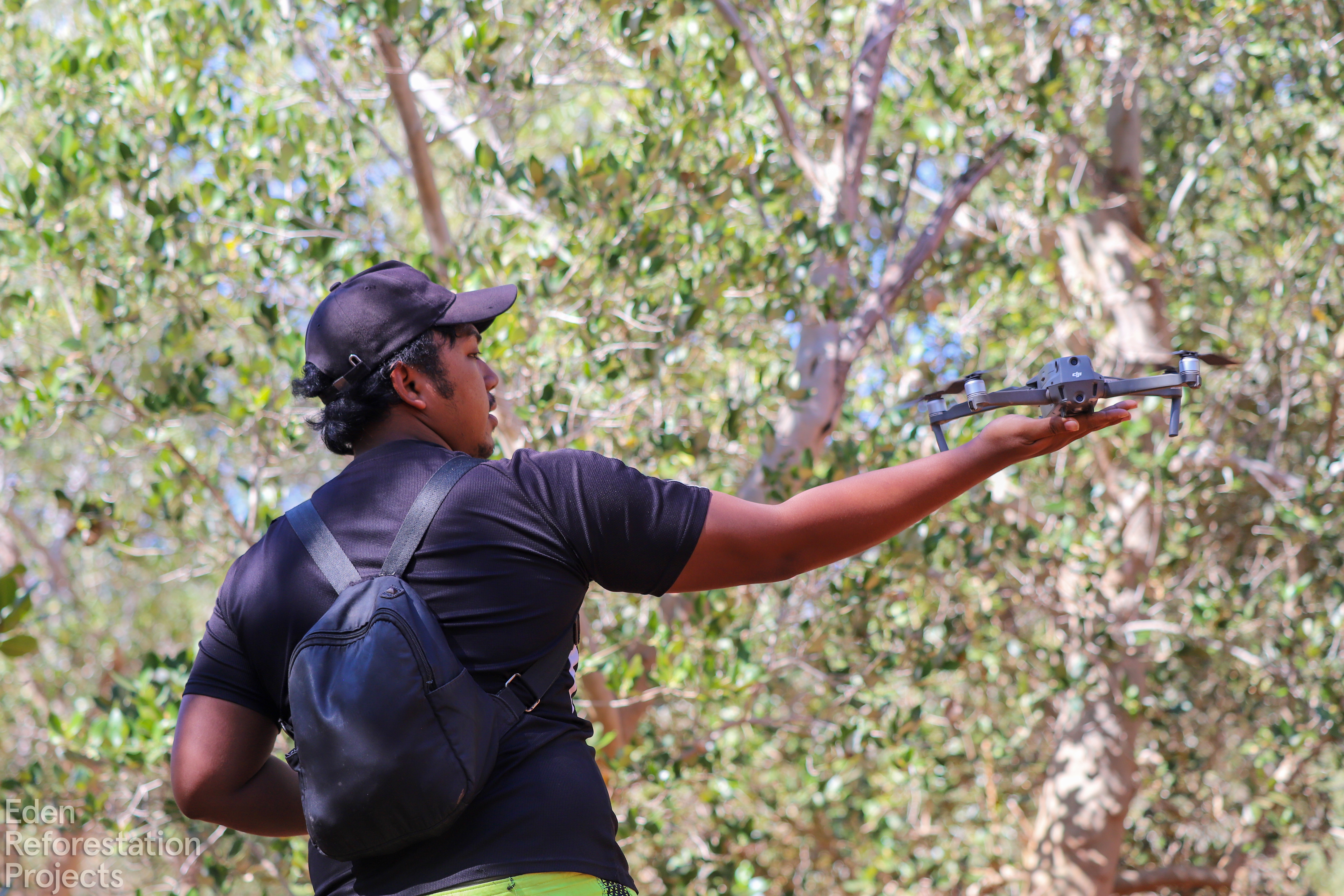
Using drone technology to support mangrove regeneration in Madagascar, a project supported by Earthly. Businesses investing in nature-based projects like this contribute to carbon sequestration and biodiversity restoration, while supporting local livelihoods.
B Corp certification provides a structured way for businesses to measure and demonstrate impact. It introduces external verification, accountability, and a consistent framework that shapes how a business operates over time.
Brand credibility and trust:
of consumers in a PWC survey say they would stop buying from companies that treat the environment, employees, or communities poorly. Stakeholders now expect proof for sustainability claims. Unsubstantiated messaging can lead to reputational damage, regulatory risk, and loss of customer trust. B Corp certification shows that impact is assessed, evidenced, and publicly disclosed.
Access to investment:
Certification aligns with investor expectations around governance, transparency, and performance. ESG assets are projected to exceed
, reflecting how capital is being allocated and how risk is evaluated.
Talent attraction and retention:
Employees want to work for companies that reflect their values. B Corp certification provides a credible signal of commitment, supporting recruitment, engagement, and retention.
Regulatory readiness:
B Corp standards align with frameworks such as
and
. Work completed for certification can support wider reporting requirements, reducing duplication and preparing businesses for tighter regulation.
Operational clarity and decision-making:
The certification process requires businesses to assess impact across operations and value chains. This creates visibility into risks and opportunities, informing decisions across sourcing, strategy, and operations.
Continuous improvement:
Certification is not static. Recertification every three years introduces a cycle of measurement, improvement, and accountability, with expectations increasing over time.
The 2025 B Corp standards raise the bar, exposing
many businesses have not yet addressed, including:
From 2025,
include annual GHG emissions reporting for companies with more than 250 employees or $75 million in revenue. However, many businesses lack robust
data, and information on biodiversity and land use is often incomplete or inconsistent. Without this baseline, developing a credible climate transition plan becomes significantly more challenging.
The new Environmental Stewardship and Circularity topic requires companies to assess environmental impacts across their operations and value chains, and to develop a biodiversity transition plan. For many businesses, this capability is still underdeveloped, with limited baseline data on biodiversity and ecosystem impact.
At the same time, environmental performance can no longer be balanced by strength in other areas. This introduces a structural challenge for companies that have not yet established clear strategies for emissions reduction, ecosystem impact, and environmental management.
A big portion of a company’s environmental and social impact sits outside its direct operations. Engaging suppliers, improving traceability, and aligning standards across the value chain can be complex and resource-intensive. For businesses with extended or opaque supply chains, identifying and evidencing responsible sourcing practices, especially for high-risk raw materials, requires a lot of groundwork.
Under the new standards, the certification process can take up to 12 months and that timeline assumes the foundational systems are already in place. Companies must now demonstrate consistent action on environmental topics prior to application, not just at the point of submission.
While sustainability strategies and policies are increasingly common, demonstrating outcomes remains a challenge. B Corp certification requires evidence of impact, not just intent, creating a gap for companies that have not yet added measurement and reporting into their operations.
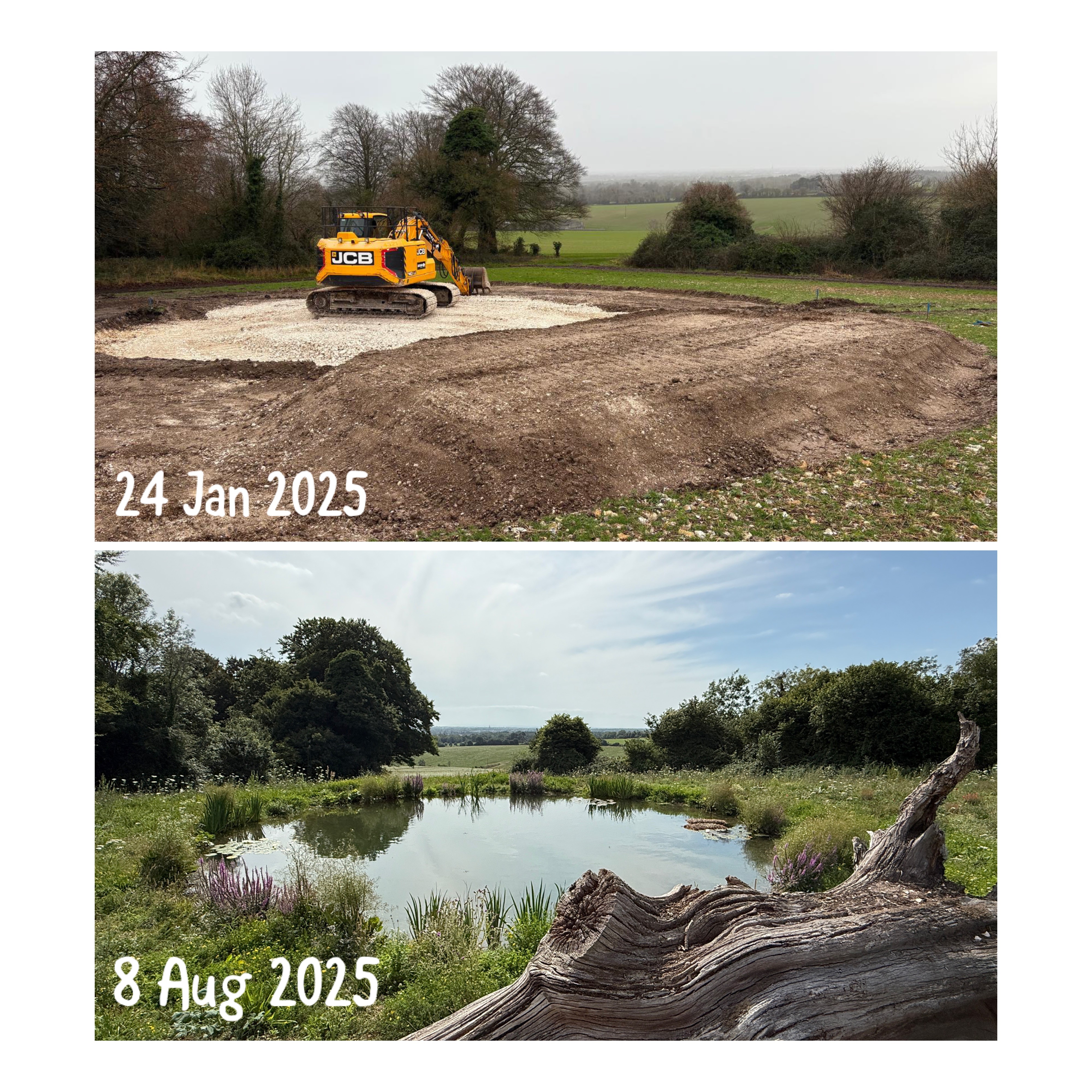
Earthly's Keystone 3.0 framework gives businesses the verified, audit-ready evidence they need - assessing projects across climate, biodiversity, and people so that every investment can be defended in a B Corp certification context.
support businesses in meeting the more stringent requirements of B Corp certification. They deliver measurable carbon, biodiversity, and social outcomes through integrated interventions, addressing key challenges associated with certification.
NbS contribute directly to environmental performance by supporting carbon sequestration, ecosystem restoration, and biodiversity enhancement. Activities such as reforestation, peatland restoration, and regenerative agriculture can form part of a company’s climate strategy, helping to address emissions while improving ecosystem health.
This is particularly relevant under the updated standards, where environmental performance is a mandatory baseline and requires demonstrable action across climate and nature.
A key requirement for B Corp certification is the ability to evidence impact. NbS projects are typically designed with monitoring and verification frameworks, enabling companies to report on outcomes such as carbon removal, biodiversity indicators, and land restoration.
This supports the shift from commitment to accountability, allowing businesses to demonstrate progress through quantifiable data rather than high-level disclosures.
Many NbS interventions can be integrated within supply chains, particularly in sectors reliant on land use or agriculture. Regenerative practices, sustainable sourcing, and landscape-level restoration initiatives enable companies to address impacts beyond their direct operations.
This is increasingly important as B Corp standards place greater emphasis on value chain accountability and Scope 3 emissions.
NbS projects often deliver social co-benefits alongside environmental outcomes. These can include job creation, improved livelihoods, and enhanced access to ecosystem services such as clean water, health and soil fertility.
By contributing to both environmental and community impact, NbS support performance across multiple B Impact Assessment areas, reinforcing a more holistic approach to certification.
As sustainability requirements evolve across certifications and reporting frameworks, businesses are expected to demonstrate measurable, verifiable impact. Nature-based solutions support this by delivering outcomes across carbon, biodiversity, and community impact, which can be used to meet requirements across multiple standards and disclosures.
Their ability to generate consistent, evidence-based data makes them relevant not only for B Corp certification but also for broader reporting and compliance requirements.
To support B Corp certification, NbS must be aligned with business impact areas, integrated into strategy, and supported by measurable outcomes:
Start by assessing where your business has the most significant environmental impact. This may include greenhouse gas emissions, land use, or supply chain activities. Identifying these hotspots ensures that NbS interventions are targeted and relevant, rather than standalone initiatives.
NbS should form part of a broader environmental strategy, not operate in isolation. This includes aligning with emissions reduction targets, climate transition plans, and biodiversity goals. Integration at this level ensures that NbS contribute directly to certification requirements.
Different NbS approaches deliver different outcomes. Selecting the right intervention depends on your impact profile and objectives.
reforestation and afforestation for carbon sequestration and habitat restoration
to improve soil health and reduce supply chain emissions
, wetland and
restoration to support carbon storage and water systems
The focus should be on interventions that deliver measurable outcomes across climate, communities and nature.
To meet B Corp requirements, impact must be supported by evidence. This requires working with projects that have robust monitoring, reporting, and verification processes in place. Data on carbon, biodiversity, and community outcomes should be transparent and auditable.
Earthly helps businesses invest in high-impact nature-based solutions designed to deliver measurable outcomes across carbon, biodiversity, and community impact. Our projects are
against over 160 data points across carbon, biodiversity, and people, with only those that meet defined standards included in the
. This ensures that businesses are investing in solutions that have been evaluated for quality, impact, and transparency.
Where possible, NbS should be embedded within supply chains rather than treated as external activities. This may involve working with suppliers, supporting regenerative practices, or investing in landscape-level interventions. Integration strengthens both environmental and value chain performance.
Ongoing measurement is essential. Businesses need systems to track environmental and social outcomes, ensuring that data is consistent, comparable, and aligned with certification requirements. This supports both verification and continuous improvement over time.
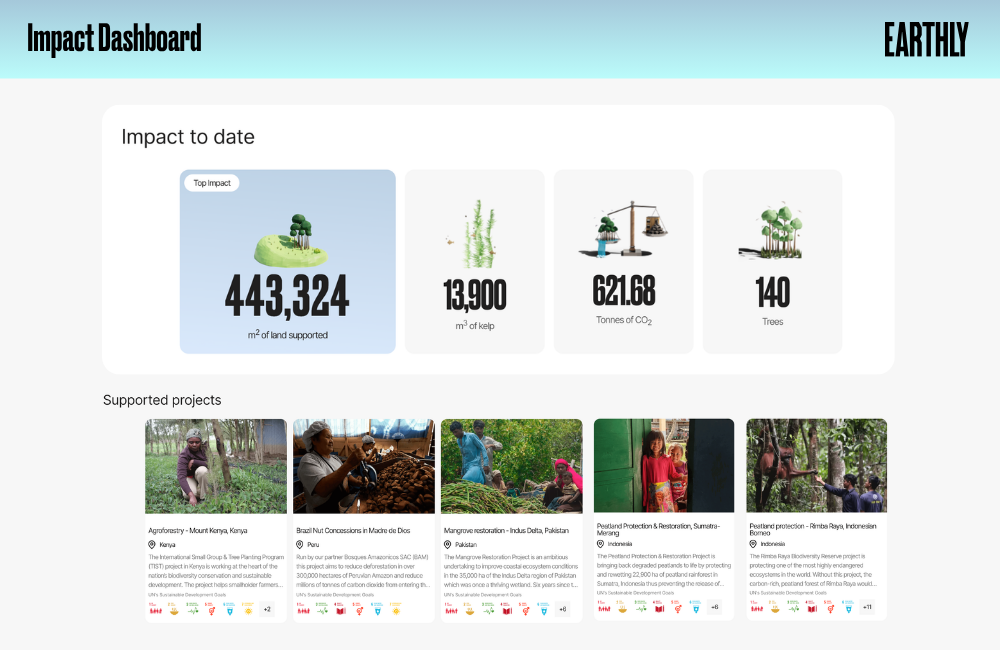
Earthly's customer impact dashboard. Track, measure, and report on verified NbS outcomes in one place - giving sustainability teams the data they need to evidence social responsibility and environmental performance.
, meeting B Lab’s standards for social and environmental performance, accountability, and transparency. We have been certified since 2020 and scored 114.8 on the B Impact Assessment, more than double the 50.9 median for ordinary businesses. This provides a direct understanding of what certification requires, including the level of evidence, measurement, and continuous improvement needed to meet evolving standards.
For businesses navigating the new B Corp standards, Earthly offers support across the areas where NbS have the most direct bearing on certification outcomes:
: Get access to a curated portfolio of high-quality, verified nature-based projects aligned with B Lab’s environmental stewardship requirements.
: Credible, traceable carbon credits that support climate action plans and emissions reduction strategies.
: Verified units of measurable habitat restoration, assessed using the DEFRA Biodiversity Metric.
: Access to an impact dashboard and customer hub that enable businesses to track, visualise, and report outcomes across carbon, biodiversity, and community impact, supporting B Impact Assessment requirements.
B Corp alignment through our resources
: Guidance on how nature-based solutions investments map to specific certification requirements under the new standards, helping businesses connect activity to measurable impact.
For businesses looking to take the next step, Earthly’s team can guide you on how to align nature-based solutions with certification requirements. Please feel free to
or visit the
to find projects aligned with your impact goals.
Related articles
27.07.2026
Earthly brought together Lorienne Whittle, Rewilding Landscapes Manager at Nattergal ; Siobhan Stewart, Head of Delivery at …
)
08.07.2026
Eight in ten companies reporting on sustainability are now doing it across more than one framework simultaneously …
)
18.06.2026
On 11 June 2026, the Science Based Targets initiative (SBTi) published the final Corporate Net-Zero Standard …