)
Sustainable business
27.07.2026
Webinar recap: How businesses can build a credible biodiversity investment strategy
Earthly brought together Lorienne Whittle, Rewilding Landscapes Manager at Nattergal ; Siobhan Stewart, Head of Delivery at …

)
mobilises over a billion people globally each year around climate action, nature protection, and environmental advocacy. Over the years, businesses have used it as a time to showcase their sustainability story.
However, much of what passes for corporate participation remains surface-level - a recycling initiative, a one-off volunteering day, a reworked sustainability pledge. These actions are not without value, but they fall short of what is now expected by customers, investors, and regulators, who are looking for
that are specific, measurable, and independently verified.
The responsible businesses leading in 2026 are approaching Earth Day differently. They are using it not as a standalone campaign, but as a strategic inflection point - supporting initiatives that are measurable, verifiable, and set into long-term sustainable operations through nature-based solutions.
Earth Day 2026 is about action, not awareness - businesses are expected to show real impact.
High-impact campaigns are built on measurable actions, clear communication, and ongoing commitment.
Nature-based solutions help businesses restore ecosystems, support biodiversity, and create credible impact and also meet growing regulatory, disclosure, and risk requirements.
The most effective campaigns link business or customer actions to real-world environmental outcomes.
Sustainability credibility comes from verified projects, transparent reporting, and consistency beyond April 22nd.
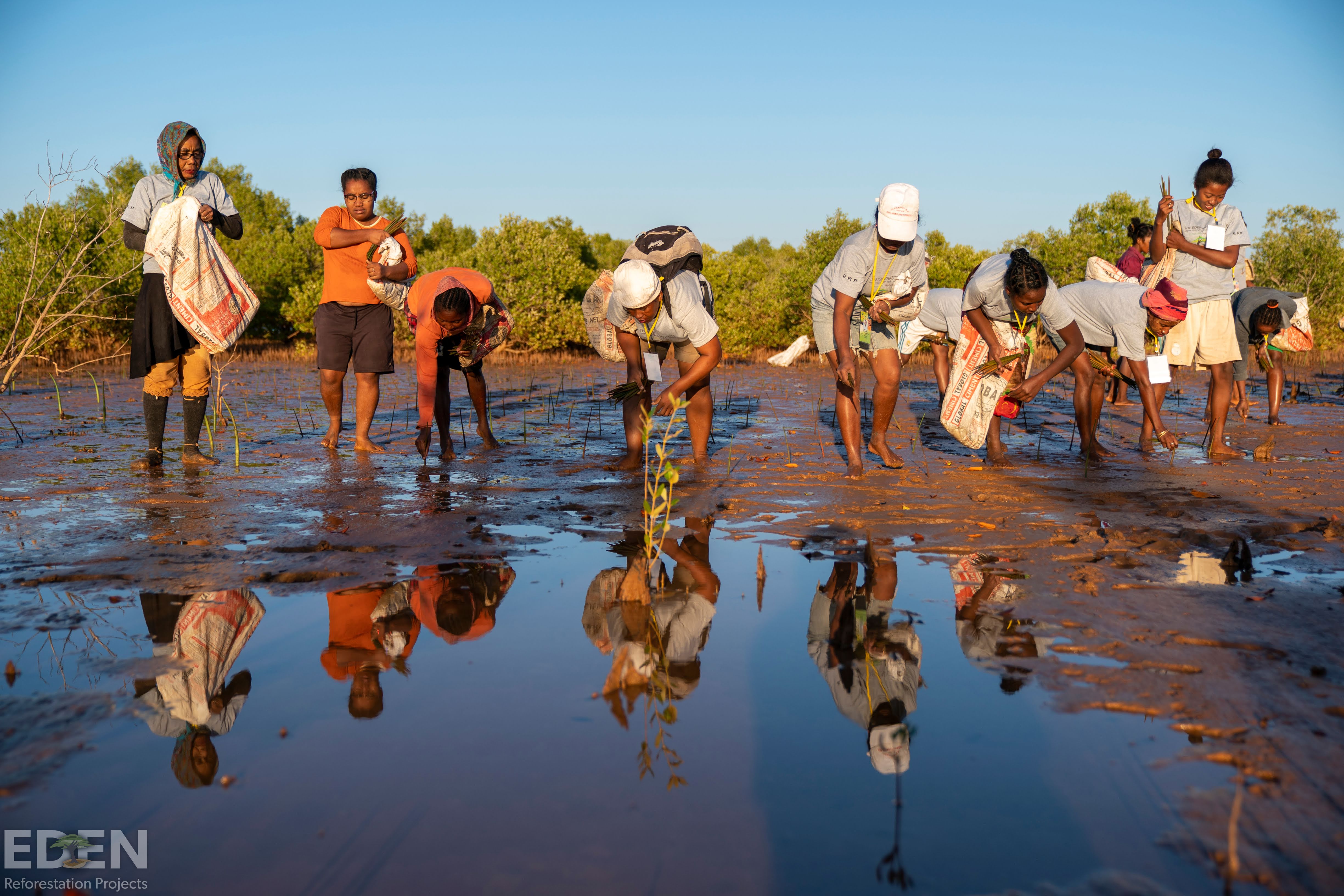
Earth Day climate action is a collective responsibility - we all depend on the planet’s ecosystems. Protecting them requires coordinated effort across governments, businesses, communities, and individuals.
is a global environmental observance held annually on April 22nd, to raise awareness and drive action on climate change, biodiversity loss, and the need to protect the natural world. Since its launch in 1970, it has grown into the world's largest civic event, engaging over a billion people across more than 190 countries each year.
Today, Earth Day is recognised and supported at the highest levels of government, civil society, and international institutions. Businesses, too, are recognising it as a day to demonstrate genuine environmental leadership, engage stakeholders on shared values, and show where they stand on climate action.
The theme for Earth Day 2026,
“Our Power, Our Planet,”
reflects a fundamental shift in how environmental progress is understood. Climate action is no longer driven by policy alone, but by the collective, sustained efforts of communities, businesses, and individuals.
For businesses, this reframes Earth Day as an opportunity to demonstrate how environmental responsibility is embedded into operations, supply chains, and long-term strategy.
A high-impact Earth Day campaign has three components:
Credible action:
It delivers measurable environmental outcomes - for example, supporting verified nature-based solutions that restore ecosystems, remove carbon, or protect biodiversity. Crucially, these contributions should also strengthen ecosystem health and support community resilience.
A clear narrative:
It communicates what is being done, why it matters, and how the impact is verified. Vague language such as “investing in the planet” is no longer sufficient - stakeholders expect specificity, evidence, and transparency.
A structure for continuing:
High-impact campaigns include mechanisms for ongoing measurement, reporting, and integration into long-term sustainability strategy.

Elephants spotted in the forest conservation project we support in Malaysia. Nature-based solutions help sequester carbon, support biodiversity, and improve community livelihoods.
Investing in
- actions that protect, restore, or sustainably manage natural ecosystems - is becoming a central part of how businesses translate sustainability commitments into measurable impact:
The
has identified NbS as among the most promising strategies for climate mitigation. Estimates suggest they could provide up to
of the emission reductions needed by 2030 to stay on track with the Paris Agreement. Beyond carbon, NbS deliver what the sector calls co-benefits: biodiversity restoration, water quality improvement, soil health, flood resilience, and support for local communities and livelihoods.
A carbon-only approach to sustainability is now seen as insufficient, both by regulators (the
, is now pushing companies to report on nature-related impacts alongside carbon metrics) and by stakeholders who expect companies to address the full spectrum of environmental harm.
The EU's
now requires companies to disclose ESG performance, including nature-related impacts. Investors are embedding nature criteria into capital decisions alongside climate metrics. Businesses that build NbS into their strategy now are getting ahead of requirements that are already arriving, rather than scrambling to catch up.
The effort to protect and restore nature faces a funding gap estimated at over
annually to 2030. Public funding alone cannot close it.
The
the private sector can direct toward conservation far exceed those of governments and philanthropy combined. When businesses invest in high-quality NbS, they are not just meeting their own sustainability targets, they are contributing to ecosystem protection, regeneration and restoration.
For Earth Day campaigns, NbS offer something operational efficiency measures often cannot: a visible, tangible connection to nature.
A campaign anchored in the restoration of a rainforest, a mangrove ecosystem, or a peatland is easier to communicate, easier to verify, and more resonant with a broad audience than a percentage reduction in energy consumption.
Instead of broad intentions like "we want to support the environment," define things like:
Tonnes of CO₂ to balance
Area of land to restore
Number of trees or mangroves to plant
Biodiversity outcomes to support
This becomes the foundation of your campaign messaging, and the basis on which you will report results after Earth Day.
Not all nature-based projects are equal, and the quality of what you support will directly shape both impact and credibility.
Key things to look for:
Third-party verification
Transparency in impact data
Co-benefits: biodiversity, community livelihoods, water and soil health
Long-term sustainability and monitoring
Nature-based solutions can often be aligned with your industry. A construction company, for example, might gravitate towards forest restoration while a food company may find stronger relevance in regenerative agriculture.
However, highest-impact projects are not defined solely by sector fit, but by their quality, credibility, and the outcomes they deliver.
Earthly’s
reflects this balance, cutting across
and
conservation,
restoration,
protection, and
- each independently verified and reporting against measurable co-benefits.
With your solution in place, you need a structure that connects your business activity to environmental impact in a way that is clear and compelling.
Common approaches include:
Contribution-based:
"For every purchase, we restore X m² of nature"
Matched funding:
Match customer contributions during Earth Week to a nature investment
Fixed investment:
Commit to a defined climate contribution and communicate the impact
Choose a model that aligns with your business model and audience. To automate things,
allows businesses to integrate contributions directly to specific projects, giving you real numbers to build a campaign around from day one.
Data builds legitimacy, but storytelling is what makes a campaign resonate. Your campaign should answer:
What are you doing?
Where is the impact happening?
Who is benefiting?
Why does it matter now?
For example, you could say:
"This Earth Day, we are supporting mangrove restoration in Madagascar. We have planted 1000 mangroves - protecting biodiversity, removing X tonnes of carbon from the atmosphere, and sustaining the livelihoods of coastal communities."
That is a campaign narrative with specificity, geography, and human impact - the three things that separate credible commitments from greenwashing. You could go further and commuicate specific species or people that your actions are benefitting - something Earthly helps our customers to do.
A high-impact campaign invites participation from stakeholders. You could:
Let customers choose the project they want to support from your list at checkout.
Share live or regular impact updates from the project
Run Earth Day challenges or matched giving windows
Use interactive tools such as carbon footprint calculators to make impact personal
Earthly provides businesses with
on the customer hub that make ongoing engagement straightforward - so you are not starting from scratch on content.
Track and report against:
Carbon sequestered or emissions avoided
Biodiversity and ecosystem outcomes
Customer participation and campaign reach
Business results: sales uplift, engagement, brand sentiment
Share results after Earth Day internally and publicly to build trust with stakeholders. Earthly customers receive a personalised Impact Dashboard that tracks key impact data in a single, shareable page.
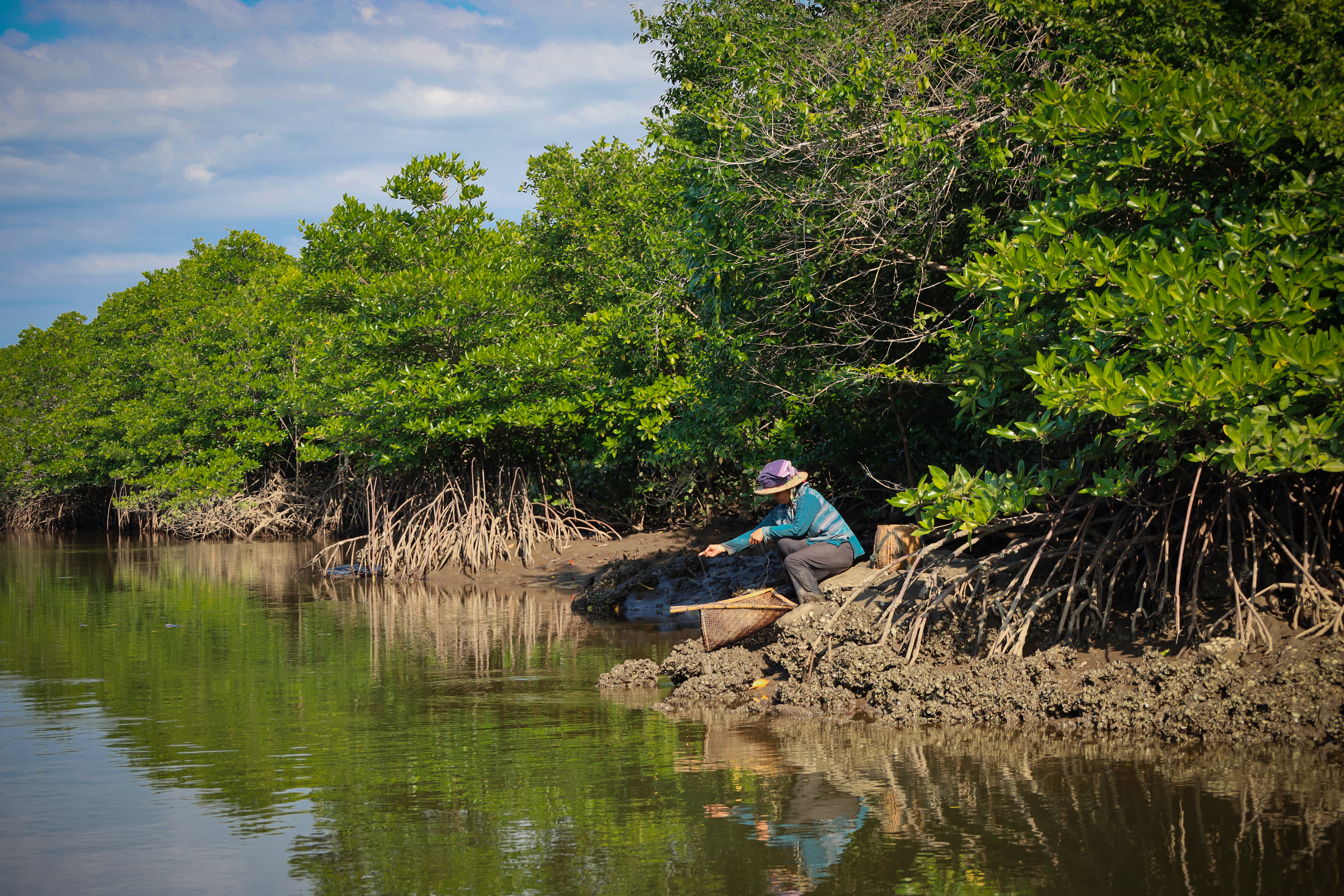
80% of consumers are willing to pay more for sustainably produced goods (PwC). This means investing in nature is a good business opportunity, if the impact is credible and verifiable.
Not every Earth Day initiative needs to be complex or resource-intensive. While high-impact campaigns are built on strategy and long-term commitments, there is still value in simple, well-executed actions, when they are done consistently and with intention:
:
Tree planting remains one of the most accessible ways to contribute to environmental action. This can be done in different ways - for example, planting a tree per purchase, or gifting trees to partners, employees, or customers as part of your Earth Day engagement.
:
Even a modest investment in a high-quality, verified nature-based carbon credits can contribute to measurable impact, while also supporting communities globally through improved livelihoods, job creation, and access to health and education initiatives.
:
Your business could commit to supporting biodiversity restoration for each year of operation - for example, if you have been operating for four years, you support four units of biodiversity impact. As the focus shifts beyond carbon, supporting biodiversity is a natural next step for businesses.
Offset your business travel emissions:
Commit to offsetting all business travel since last Earth Day - helping to address emissions from flights, transport, and operations while supporting verified environmental projects.
Engage your customers in a simple campaign:
Give customers a direct role in your campaign by tying their actions, such as purchases or sign-ups, to specific environmental outcomes. For example, you could say for every sign up, you will invest in a verified nature-based project in a different continent. This helps connect everyday actions to real-world impact
Educate and communicate:
Use Earth Day as an opportunity to share what your business is already doing for the planet, transparently and without overstatement. At the same time, educate both employees and customers on climate and nature.
Audit and improve a single area of your operations:
Whether it’s packaging, energy use, or sourcing, focusing on one tangible improvement can be more effective than attempting broad, unfocused change.
The key is to ensure that even smaller actions are aligned with broader sustainability goals, rather than existing in isolation.
A well-designed Earth Day campaign creates tangible value across your business:
Brand differentiation.
Consumers increasingly favour businesses with credible, specific environmental commitments over vague green claims. A verified nature campaign gives your brand something tangible to stand behind.
Investor and ESG appeal.
Nature-related disclosures are becoming a standard expectation among ESG-focused investors. Businesses with documented, third-party verified impact are better positioned to attract and retain capital.
Regulatory readiness.
Frameworks like the CSRD and TNFD are tightening disclosure requirements around nature. Getting ahead of these now reduces compliance risk and avoids the cost of catching up later.
Stakeholder trust.
Employees, customers, and partners are paying closer attention to what businesses actually do, not just what they say. A credible Earth Day commitment builds the kind of trust that compounds over time.
Customer engagement.
Earth Day gives businesses a natural moment to invite customers into their sustainability story. Done well, it deepens brand loyalty and turns passive buyers into active advocates.
Competitive advantage.
In crowded markets, a demonstrable sustainability position is increasingly a differentiator - particularly in procurement, B2B partnerships, and talent acquisition.
Regulatory frameworks such as the EU’s CSRD and TNFD now require businesses to disclose and act on nature-related impacts; the cost of inaction is costly financially and reputationally. As a result, investing in credible nature-based solutions helps businesses strengthen their sustainability position.
Earthly helps responsible businesses support high-quality, verified nature-based projects, so they can meet these growing disclosure and reporting requirements with confidence
We are trusted by different companies including Deloitte, L'Oréal, Innocent, and Envision Racing at every stage of their sustainability journey to identify the right projects and solutions for their specific goals.
For businesses running an Earth Day campaign, Earthly removes the most common barriers to doing it credibly:
Project sourcing:
Rather than navigating the voluntary carbon market independently - where quality varies - businesses can access carbon and biodiversity projects on our marketplace that have already been
for integrity, additionality, and co-benefit.
Impact data and reporting:
Earthly engagement tools provide businesses with the impact data they need to communicate outcomes honestly - tonnes of CO₂ sequestered, hectares protected, biodiversity metrics, and community benefits.
Flexibility for businesses of all sizes:
Whether you are making your first nature investment or scaling an existing commitment, Earthly's model is designed to work across business sizes and sectors. You do not need a dedicated sustainability team or a large budget to access high-quality NbS.
Built for ongoing commitment.
Earthly supports businesses beyond April 22nd - tools for ongoing contribution, impact tracking, and stakeholder reporting that make nature a consistent part of your sustainability strategy.
View our
to select verified projects for your Earth Day campaign. Or
to get support.
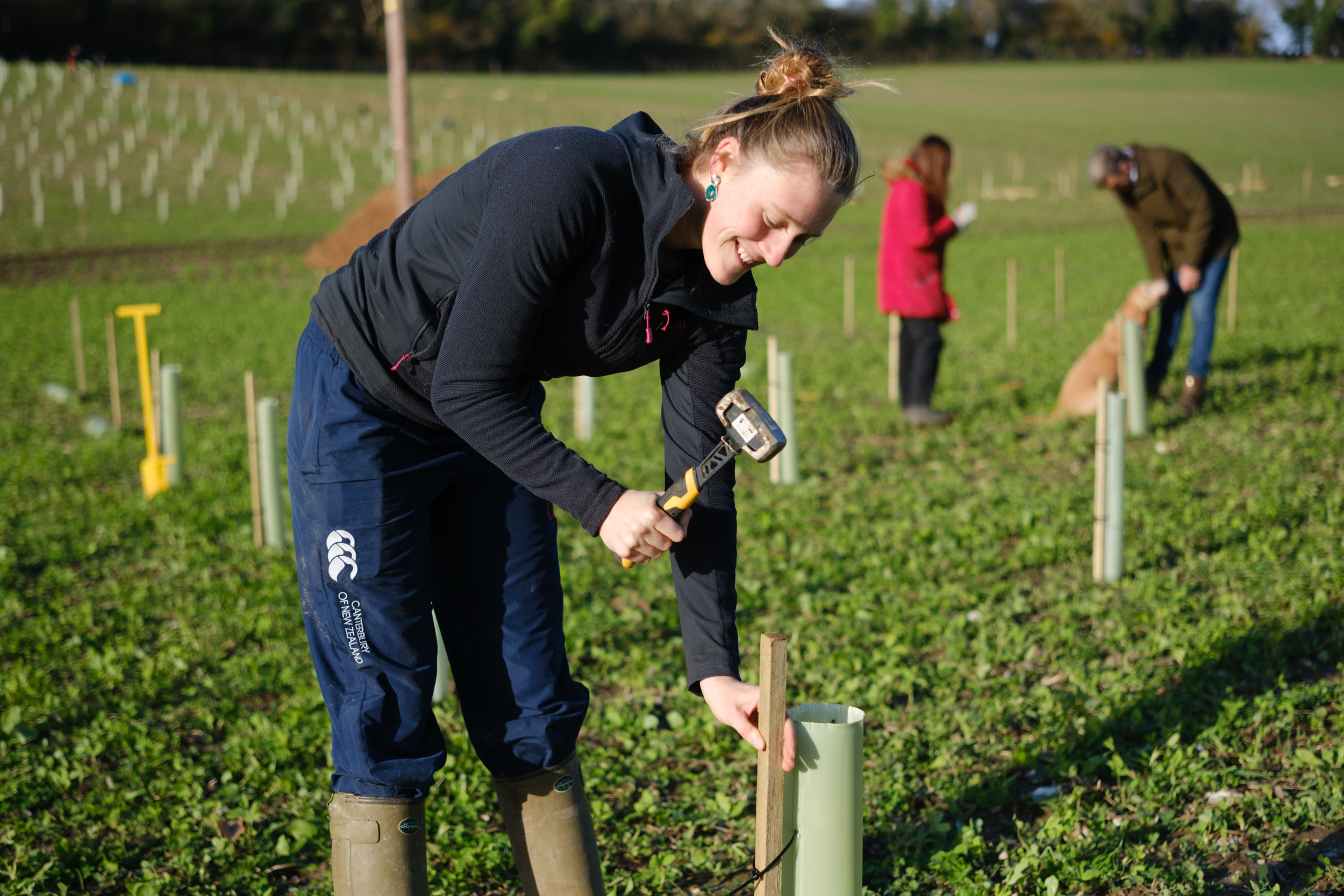
Hands-on ecosystem restoration in a project we support in England, UK. Supporting projects like this helps deliver measurable impact for climate, biodiversity, and communities.
What makes an Earth Day campaign “high-impact?”
A high-impact campaign delivers measurable environmental and social outcomes, is built on credible nature solutions, and includes transparent reporting.
How can businesses avoid accusations of greenwashing on Earth Day campaigns?
Be specific about your impact: name the project you support, cite the standard it operates under, describe the co-benefits it delivers, explain how outcomes are measured and reference independent verification. Working with trusted partners like Earthly can also help ensure quality and accountability.
How much should a business invest in an Earth Day campaign?
There is no fixed amount - investment typically depends on your sustainability goals, company size, and desired impact.
Is it too late to start planning a 2026 Earth Day campaign
Not at all, a credible campaign does not require months of preparation; it requires a clear commitment, a verified project, and an honest narrative. Through Earthly, businesses can get started quickly without the time and expertise required to source and assess projects independently.I
Do Earth Day campaigns need to continue beyond April 22nd?
Yes, the most effective campaigns use Earth Day as a launch point, with ongoing reporting and integration into broader sustainability efforts.
Related articles
27.07.2026
Earthly brought together Lorienne Whittle, Rewilding Landscapes Manager at Nattergal ; Siobhan Stewart, Head of Delivery at …
)
08.07.2026
Eight in ten companies reporting on sustainability are now doing it across more than one framework simultaneously …
)
18.06.2026
On 11 June 2026, the Science Based Targets initiative (SBTi) published the final Corporate Net-Zero Standard …