)
Innovation and tech
14.05.2026
The evolution of Keystone: Earthly’s best-in-class nature project assessment
The voluntary carbon market has changed a lot since 2020. Consequently, so has the way we assess projects. …

)
The voluntary carbon and nature markets are at an inflection point. Retirement volumes declined
in 2025, yet overall market value rose - showing buyers are getting more selective. Carbon and nature credit buyers are seeking higher-quality projects, but the tools to assess and verify them have not always kept pace. That gap between market demand and assessment rigour is what is holding back investment in nature projects.
That was the backdrop to Earthly's
, where the speakers walked through what rigorous, holistic nature project assessment looks like, and why it matters now more than ever for sustainable businesses, project developers, nature investors, corporate sustainability teams, and anyone investing in nature-based solutions.
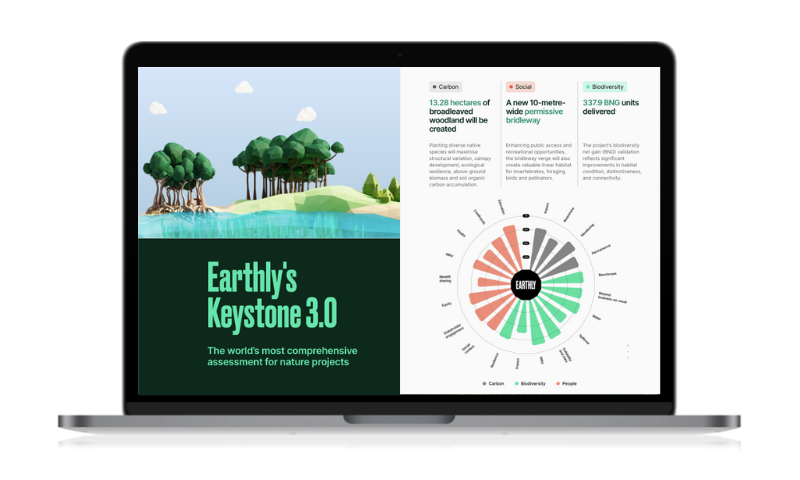
The 15th webinar in our ‘Planet Earthly’ series introduced
.0: the latest iteration of Earthly's proprietary nature project assessment framework. It provides a rigorous, independent assessment of nature-based projects across three pillars: carbon, biodiversity, and people - so that businesses can invest in nature with confidence.
The session was led by Lorenzo Curci, Earthly Co-founder, alongside the research team - Sharan Ghai, Research Lead; Maria Olender, GIS Researcher; and Monica Mayorga, Research Associate.
The webinar covered:
What Keystone 3.0 is and how it works
The three-pillar scoring methodology: carbon, biodiversity, and people
Key updates across each pillar in this version
How the framework applies to voluntary biodiversity credits and biodiversity net gain
The role of AI in project screening
Where the nature and carbon markets are heading
“Keystone 3.0 is about building the integrity infrastructure needed to scale nature and carbon markets.”
Lorenzo Curci, Co-founder and Chief Commercial Officer, Earthly
Before launching Keystone 3.0, Earthly
over 200 Chief Sustainability Officers to understand the state of the market.
The findings were clear: 58% said concerns about quality and integrity in the carbon and nature markets had delayed, reduced, or prevented investment. Nearly a quarter had stopped investments entirely.
As Lorenzo Curci put it: "There's a real appetite to invest, but the confidence just isn't there - and that's exactly what we've been working on over the last five years with Keystone."
of those same CSOs said that independent scientific project assessments would help unlock investment. That's a structural need the market hasn't fully met, until now.

Women collecting firewood from an agroforestry project in Uganda supported by Earthly. Nature-based solutions are actions to protect, sustainably manage, and restore natural ecosystems, delivering benefits for both people and the environment - UNEP.
"A carbon-only view of a project might look fine. But then you go in and discover that the community has unresolved land rights disputes, or that the biodiversity monitoring is essentially non-existent. Keystone 3.0 shows you the full picture."
Sharan Ghai, Research Lead
Most assessment frameworks have a one-dimensional view of a project that collapses complex ecological, social, and carbon dynamics into a single number. This can mask weaknesses: a project can score well overall while harbouring serious gaps in community rights, biodiversity monitoring, or carbon permanence.
Keystone 3.0 moves away from this by assessing projects across carbon, biodiversity, and people, offering a more complete picture of project performance. Each pillar is measured independently. A strong carbon score cannot compensate for a weak people score. A project that is carbon-sound but ecologically fragile or socially deficient doesn't pass.
The assessment also has a dual scoring system that strengthens how project quality is evaluated that addresses integrity:
Maturity:
What a project is doing in practice - its design, activities, and intended outcomes.
Confidence:
How well those actions are evidenced - based on data, monitoring, and independent verification, rather than self-reported claims.
The webinar also challenged static assessments of nature projects. Most project evaluations capture a single moment in time, despite the fact that nature systems and the risks affecting them are constantly evolving. Keystone 3.0 introduces continuous monitoring through satellite imagery, geospatial data, and real-time environmental signals, ensuring that changes such as fire or deforestation are captured as they happen, not years later.
Keystone 3.0 builds on previous Earthly assessment by introducing a more advanced framework, assessing projects to provide a more complete and accurate view of quality:
“If a fire moves through a forest protection project, buyers shouldn't have to wait three to five years for the next monitoring report to find out. "Continuous monitoring keeps an eye on that risk - it turns a carbon claim into a carbon fact, and gives you something solid to stand behind when reporting to stakeholders."
Maria Olender, GIS Researcher
Carbon is where Earthly's assessment work started, and Keystone 3.0 reflects years of accumulated scrutiny across hundreds of projects.
The framework now adapts to project type too. A biochar project and an avoided deforestation project face fundamentally different permanence and leakage risks - Keystone accounts for that without sacrificing comparability across the portfolio.
Continuous monitoring is also now built in. Satellite imagery, geospatial analysis, and live environmental data mean scores reflect what's happening on the ground now, not just at the point of last verification.
The red flags the team looks for most consistently are weak or absent baselines, overclaimed carbon figures that outrun comparable projects without methodological justification, no leakage analysis in contexts where activity-shifting is a real risk, and permanence threats with no mitigation plan or buffer contribution.
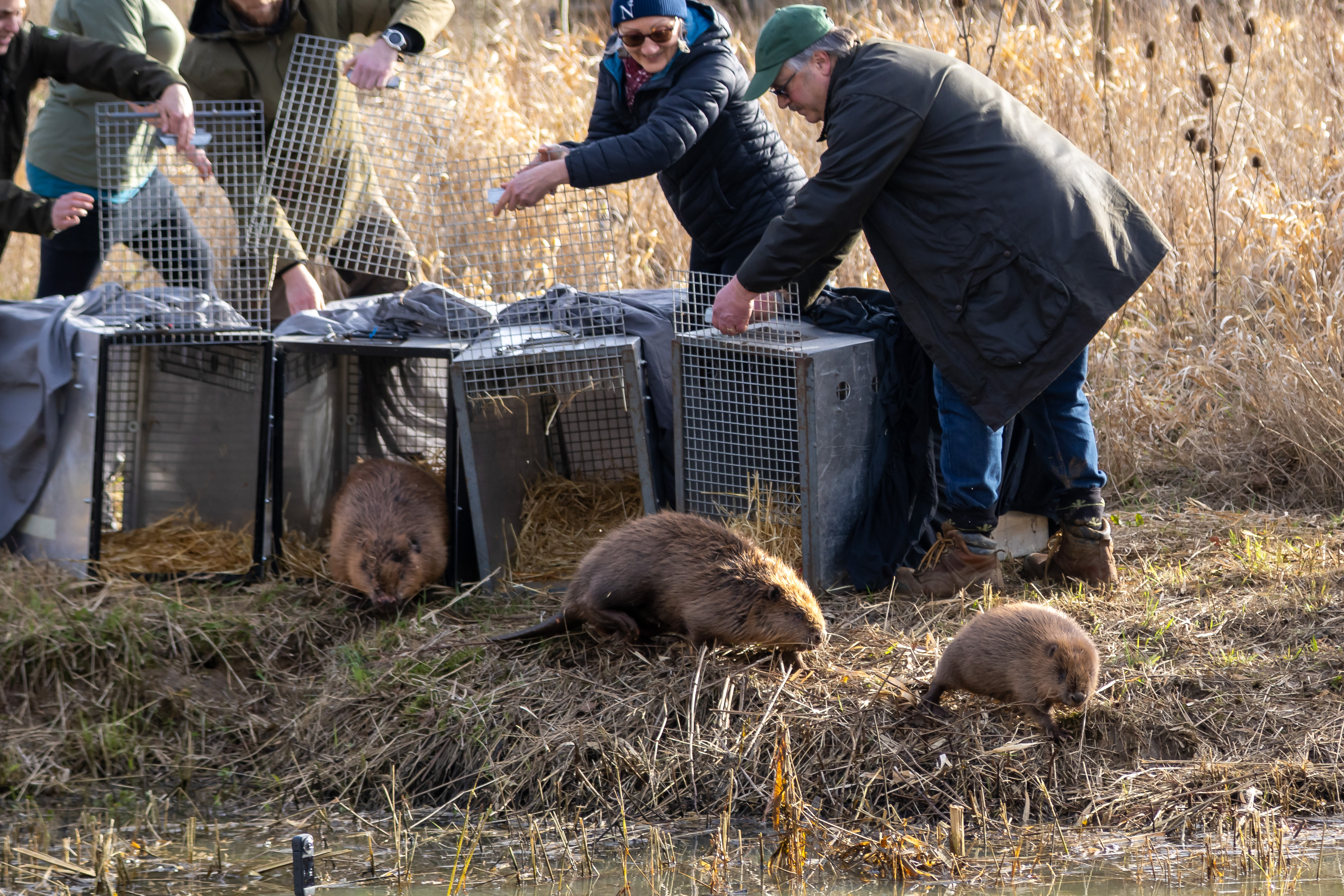
Beavers being reintroduced into a restored wetland in Habitat Mosaic Creation - Boothby Wildland, Lincolnshire, England, playing an important role in rebuilding natural ecosystems. As ecosystem engineers, they help improve water quality, increase biodiversity, and restore landscapes.
"Impact, success, and risks look different in different projects. Our new biodiversity pillar takes into account these variables by introducing flexible, context-sensitive indicators that adapt depending on the project type being assessed."
Monica Mayorga, Research Associate
The biodiversity pillar has been extended in two ways. First, it can now properly assess projects where biodiversity is the unit of sale - including voluntary biodiversity credits (VBCs) based on the UK's biodiversity net gain framework. Concepts like additionality, leakage, and permanence previously existed only in the carbon pillar; equivalents have now been introduced for biodiversity projects through new sections including Beyond Business as Usual, Spillover, and Resilience.
Second, the framework is now context-sensitive. A restoration project and a conservation project have different impact profiles. Agricultural land and wetland ecosystems carry different risks. New projects are assessed primarily on design quality and theory of change; established projects are also assessed on observed outcomes.
A dedicated water section has also been introduced - covering freshwater and marine ecosystems across suitability, monitoring, and impact. These ecosystems are among the most ecologically valuable and the most underrepresented in conservation finance.
"The social pillar exists in most frameworks in some form, but it typically functions as a compliance checklist. Keystone evaluates the quality, the fairness, and the durability of social outcomes - not just whether something has happened, but whether it actually means anything for the communities involved."
Sharan Ghai, Research Lead
Social assessment in most frameworks functions as a compliance checklist -
is documented, jobs are noted, the section is ticked.
Contrarily, Keystone evaluates the quality, fairness, and durability of social outcomes, not just whether something happened, but whether it delivered anything meaningful for the communities involved.
The pillar covers eight sections: social context, stakeholder engagement, equity, benefit sharing, livelihoods, education, and health. Critically, a mandatory contextual analysis now precedes any scoring.
Before a single indicator is assessed, the research team must complete an independent review of land tenure history, socioeconomic baseline, stakeholder mapping, and community and indigenous rights. This matters because the same criterion, scored identically, can represent completely different realities depending on context.
The connection to project durability is well evidenced: communities with genuine ownership and economic stake in a project protect it. Communities excluded or consulted only nominally are, at best, indifferent, and at worst, actively hostile. Social integrity and ecological permanence predict each other.
"It doesn't assess the project fully, but it helps us with the speed and scale of early screening. The depth of judgment and the final assessment is done by us, by humans."
Maria Olender, GIS Researcher
Keystone 3.0 uses AI-assisted pre-assessment to accelerate early-stage screening. Before a project reaches the research team, it goes through an automated review of publicly available documents - flagging absent baselines, overclaimed figures, bad press, unresolved greenwashing accusations, and whether benefit-sharing mechanisms are in place.

Before and after images of Forest Restoration Project - Luckaitztal, Germany, showing the transformation of degraded land into a thriving forest ecosystem. High-integrity NbS can deliver up to 37% of the climate mitigation needed by 2030 while supporting biodiversity and communities.
Keystone is designed to solve real challenges across the nature market. Whether you’re buying, developing, or financing projects, the need for credible, comparable, and verifiable data is only increasing.
As disclosure requirements tighten and scrutiny increases, businesses need defensible, audit-ready decisions:
Access independently verified, audit-ready project scores that hold up to scrutiny from regulators, investors, and stakeholders
Demonstrate alignment with
,
, and other disclosure frameworks with confidence
Invest in nature-based solutions knowing that carbon, biodiversity, and people outcomes have all been stress-tested
Strengthen your position against greenwashing risk with a defensible, transparent evidence base
For developers, the challenge isn’t just delivering impact, it’s proving it:
Understand where your project can improve its impact across all three pillars
Unlock access to Earthly's marketplace by meeting a rigorous but fair threshold that reflects your project's stage and context
Demonstrate the full value of your project, including biodiversity and people co-benefits that other frameworks may overlook
Use Keystone findings to strengthen monitoring plans, baseline studies, and benefit-sharing mechanisms
As the market matures, stakeholders need standardisation without oversimplification:
Compare projects across ecosystems, registries, and project types on a consistent, independent basis
Identify red flags early - weak baselines, overclaimed carbon figures, unresolved land tenure and absent biodiversity monitoring
Benefit from continuous monitoring that keeps scores current, not frozen at the point of last verification
Forward-contract with confidence, knowing the projects you are backing have cleared a high and independently set bar
"Evidencing these outcomes is going to continue to become really important - and by evidencing so many outcomes across this holistic lens, it becomes even more valuable to companies trying to navigate what has sometimes been a siloed system."
Lorenzo Curci
The carbon and nature markets are entering a new phase - defined not just by growth, but by a shift toward long-term investment in high-integrity projects that have verifiable impact.
Recent
shows demand is focused on high-quality and removal credits, reshaping pricing, demand, and long-term growth expectations . At the same time, forward contracting is gaining momentum, with buyers securing supply for 2030 and 2035 to meet future net-zero commitments.
Regulatory pressure is reinforcing that. Disclosure frameworks like TNFD and CSRD, procurement requirements linking contracts to demonstrable environmental impact, and the growing expectation of audit-ready reporting are all pointing in the same direction: verified, multi-dimensional evidence of impact is becoming a compliance requirement, not just a reputational preference.
, assessed rigorously, can address climate, biodiversity loss, water stress, and community resilience within a single investment. The integrity infrastructure to support that is what Keystone 3.0 is built to provide.
To take the next step with Keystone 3.0, you can:
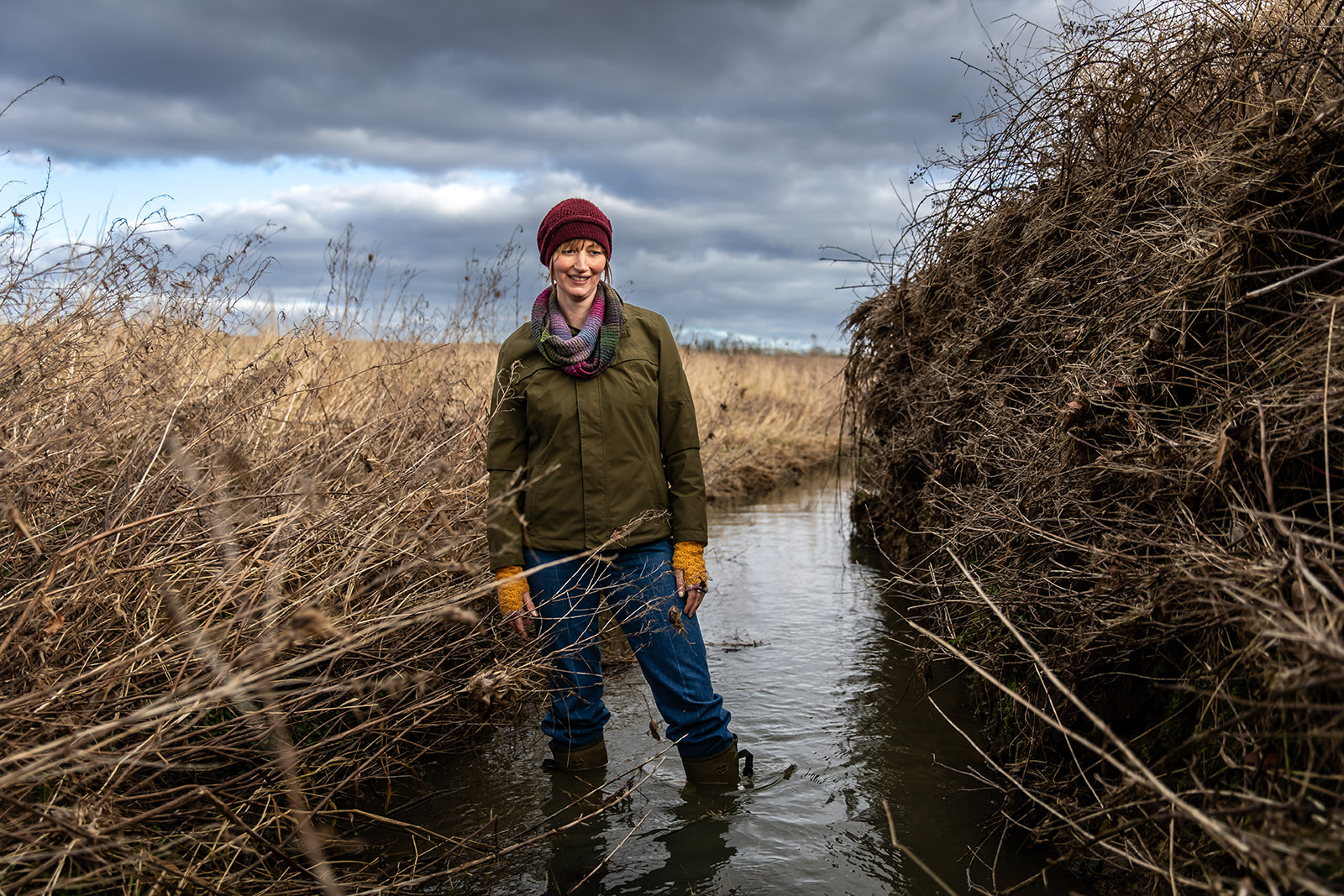
Image of Habitat Mosaic Creation - Boothby Wildland, Lincolnshire, England, assessed under Keystone, rated highly across all three pillars: carbon (8.25/10), biodiversity (8.07/10), and people (8.03/10). It’s an example of the kind of project that meets rising expectations for quality and transparency. Keystone helps businesses invest in high-quality projects that can be evidenced, reported, and meet disclosure requirements.
What is Keystone 3.0?
is Earthly’s scientific assessment framework for evaluating nature-based projects. It assesses projects across carbon, biodiversity, and people, using over 160 indicators to provide a more complete and evidence-based view of project quality.
Why do businesses need independent project assessments?
Many businesses struggle to invest in nature markets due to concerns around quality, integrity, and greenwashing. Independent assessments provide a consistent and verifiable way to evaluate projects, helping businesses make confident, audit-ready investment decisions.
How is Keystone 3 different from traditional carbon project assessments?
Traditional assessments often focus on carbon alone and rely on static, point-in-time evaluations. Keystone 3 takes a more advanced approach by:
Assessing carbon, biodiversity, and people together
Separating project design from evidence through dual scoring
Continuously monitoring projects using real-time data
What does “high-integrity” mean in nature markets?
High-integrity projects are those that can demonstrate real, measurable, and long-term impact. This includes strong baselines, credible methodologies, transparent monitoring, and verified outcomes across environmental and social dimensions.
How does Keystone 3 support reporting and disclosures?
Keystone 3 provides evidence-backed data that supports corporate reporting frameworks such as TNFD, CSRD, and SBTi. It helps businesses demonstrate credible impact and reduce exposure to greenwashing risks by offering transparent and independently verified assessments.
Related articles
14.05.2026
The voluntary carbon market has changed a lot since 2020. Consequently, so has the way we assess projects. …
)
09.02.2026
Keystone 3.0 is Earthly’s next-generation nature projects assessment framework, designed to help businesses identify high-integrity carbon credits, …
)
27.01.2026
Keystone 3.0 is Earthly’s holistic nature-based assessment framework for evaluating the integrity and impact of nature projects …