Earthly on the ground: we visited farmers protecting Nairobi's water supply

77,000 farmers in Kenya's central highlands are protecting Nairobi's water supply, and transforming their own lives in the process.

David Mbugua, Earthly

David Mbugua, Earthly

03 Jun, 2026

Loading...
Earthly on the ground: we visited farmers protecting Nairobi's water supply

When most people in Nairobi turn on a tap, they rarely think about where their water comes from. Yet more than 3 million residents depend on a single source: Ndakaini Dam, which supplies around 84% of the city's water.

The health of this water supply begins far upstream, in the farms and forests of Kenya's Upper Tana watershed.

In August 2025, I visited the Upper Tana Watershed project to understand the impact it is having on farmers and downstream communities. I was accompanied by Frederick Kihara, Trustee of Upper Tana, Patrick Nyaga, Interim CEO of Upper Tana, and Carol Nguru, Upper Tana’s Project Coordinator. 

Together, we met farmers in Gatanga, Murang'a County, and visited Ndakaini Dam to learn how nature-based solutions are improving livelihoods while safeguarding Nairobi's water supply.

TL;DR

  • The Upper Tana Agroforestry Project works with more than 77,000 farmers to improve livelihoods while protecting the watershed for Nairobi.

  • Farmers we met like Nyoro and Rachel have increased their incomes through agroforestry.

  • Sustainable farming practices such as planting Napier grass and tree lucerne help reduce soil erosion, improving water quality and lowering treatment costs.

  • Earthly Keystone rating: 8.0

    (Carbon: 8.2, Biodiversity: 7.8, People: 7.9)

upper-tana-19

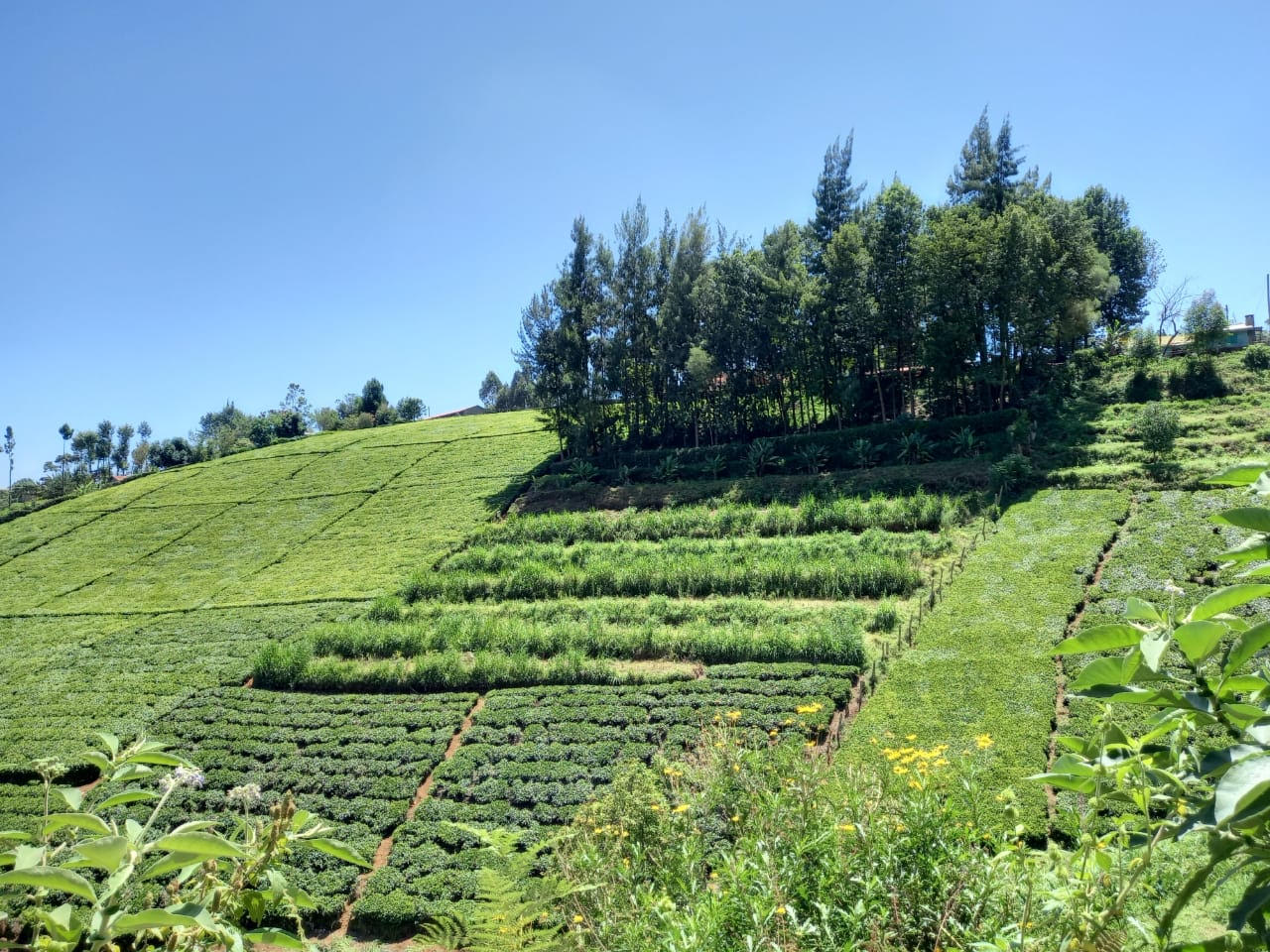
Steep slopes make the Upper Tana watershed vulnerable to erosion. Conservation farming practices implemented through the Upper Tana Agroforestry Project help improve soil health, stabilise soils, reduce sediment entering waterways and support more resilient agricultural landscapes.

About the agroforestry project in Upper Tana, Kenya

The Upper Tana-Nairobi Water Fund (UTNWF) is Africa's first water fund. It covers over 10,000 square kilometres of the Upper Tana watershed - the catchment that feeds Kenya's longest river, the Tana, and ultimately the Ndakaini Dam on which Nairobi depends.

Decades of agricultural expansion in the highlands had stripped vegetation, destabilised slopes, and increased the sediment load washing into rivers and reservoirs. Rather than investing in more water treatment infrastructure, the Fund invests in the land and the farmers who manage it.

The results so far are significant:

  • 165,000 smallholder farmers engaged across the watershed

  • 3 million trees planted across agroforestry systems

  • 153,078 hectares of farmland under agroforestry management

  • 15,000+ rainwater harvesting kits installed

  • An expected 11% increase in water availability for Nairobi

  • A projected 16% reduction in sediment levels in nearby rivers

The project operates under the

Plan Vivo standard

. It works with farmers through individually designed Farm-Specific Action Plans (FSAPs), introducing techniques including fruit orchards, alley cropping, enrichment fallows, dispersed tree interplanting, and boundary planting. Crucially, it is volunteer-led: all revenue from carbon credits is channelled back into project activities.

Agroforestry - Upper Tana, Kenya - Nyoro's Story

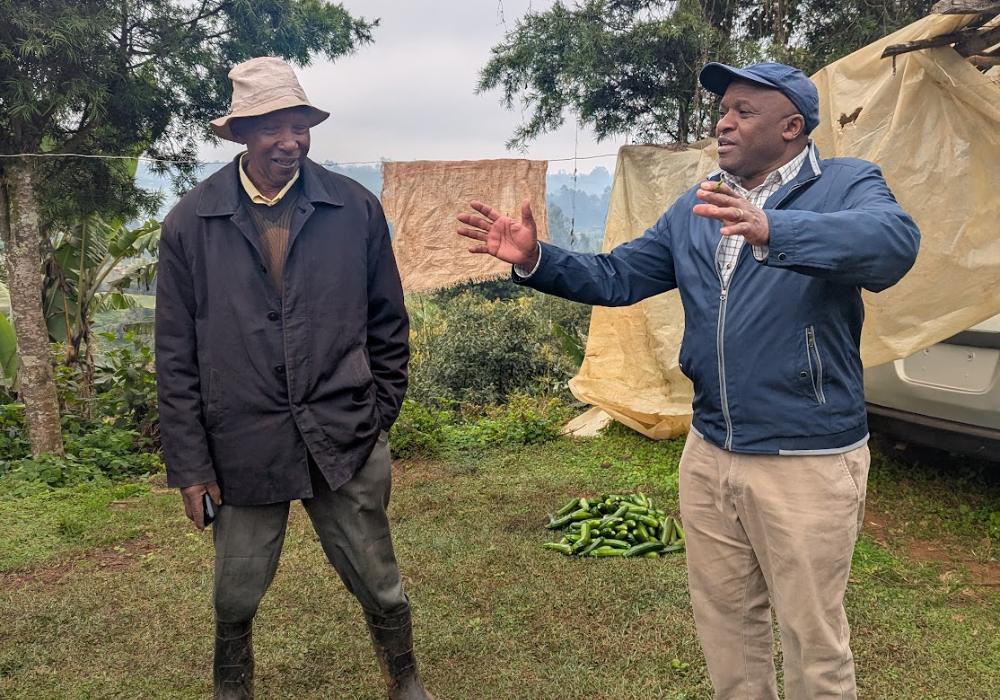
Nyoro (left), a farmer in Gatanga, Murang'a County, discusses how agroforestry and improved market access have helped strengthen his livelihood through the Upper Tana agroforestry project.

1. Nyoro's story: “Avocados changed everything”

My first stop was the farm of 66-year-old Nyoro in Gatanga.

Farming has been part of his life for as long as he can remember. His parents were farmers, and like many people in the area, he was drawn to agriculture by the fertile soils and favourable climate.

As we walked around his farm, it quickly became clear how diversified his operation has become.

Building a better income through agroforestry

One of the most significant changes has come through avocado farming.

Through the Upper Tana project, Nyoro received avocado seedlings and support connecting directly with buyers in Nairobi. This has helped him avoid brokers who often underpay farmers for their produce.

Today, he sells avocados for around KES 140 per kilogram.

Although avocado trees take at least two years before they begin producing fruit, the investment has paid off. Nyoro now harvests approximately 6,000 kilograms of avocados each season, generating around KES 800,000 (approximately USD 6,100) in income.

Farming beyond avocados and embracing indigenous trees

As we walked the farm, he showed me how he diversifies his income across multiple crops: macadamia trees harvested every two years, plum trees harvested annually in December, and courgettes grown mainly for home use. 

Around his farm, Kenya Tea Development Agency (KTDA) tea has been growing since 1959, farmers found it there when they arrived and built their own diversified systems on top of it.

He also showed me bamboo he uses for posts and firewood, and pointed out a creative detail: he uses bamboo as a connector between posts to train dragon fruit plants along the boundary of his plot.

Nyoro also has indigenous trees on his land. One is Dombeya, locally called

mwiri

, which attracts bees for pollination and allows him to collect honey for home use. Locals also boil the bark for health purposes. 

Another indigenous tree he grows is Prunus africana, which grows naturally in the area. He explained that locals use its leaves to reduce inflammation after eating meat, and believe it has properties useful in treating prostate conditions.

Restoring the land through agroforestry

Some of the most visible changes on the farm relate to soil conservation.

Nyoro pointed to strips of Napier grass growing along vulnerable slopes. He said before joining the project erosion and occasional landslides were common.

The Napier grass, distributed through the project, helps stabilise the soil and reduce runoff. Boundary posts provided through the programme also help farmers mark and respect farm boundaries, reducing low-level disputes.

What success of the project looks like on the ground

One detail stood out to me: Upper Tana does not provide cash or dictate which crops to plant. Instead, it gives seedlings for crops the farmer chooses and connects them to markets where they can earn a fair price. 

Perhaps the strongest evidence of impact comes from the changes in Nyoro's quality of life.

  • Education opportunities:

    Income from his farm has enabled him to put two of his children through university, creating opportunities for the next generation.

  • Improved financial security:

    Earnings from avocado production helped him purchase a car, a milestone that reflects the increased stability and profitability of his farming business.

  • Access to clean water:

    With taps now installed on his property, Nyoro no longer needs to fetch water from nearby rivers, saving time and improving daily life for his household.

Challenges in agroforestry

Not everything is straightforward.

Nyoro told me that Persea mites remain one of the biggest challenges for avocado farmers. Because he prefers organic farming methods and avoids insecticides, managing these pests can be difficult.The mites damage leaves by feeding on them, reducing chlorophyll and affecting overall productivity.

Despite these challenges, his outlook remains positive.The support he has received has helped him build a more resilient farm and a more secure future for his family.

The Upper Tana-Nairobi Water Fund project (1)

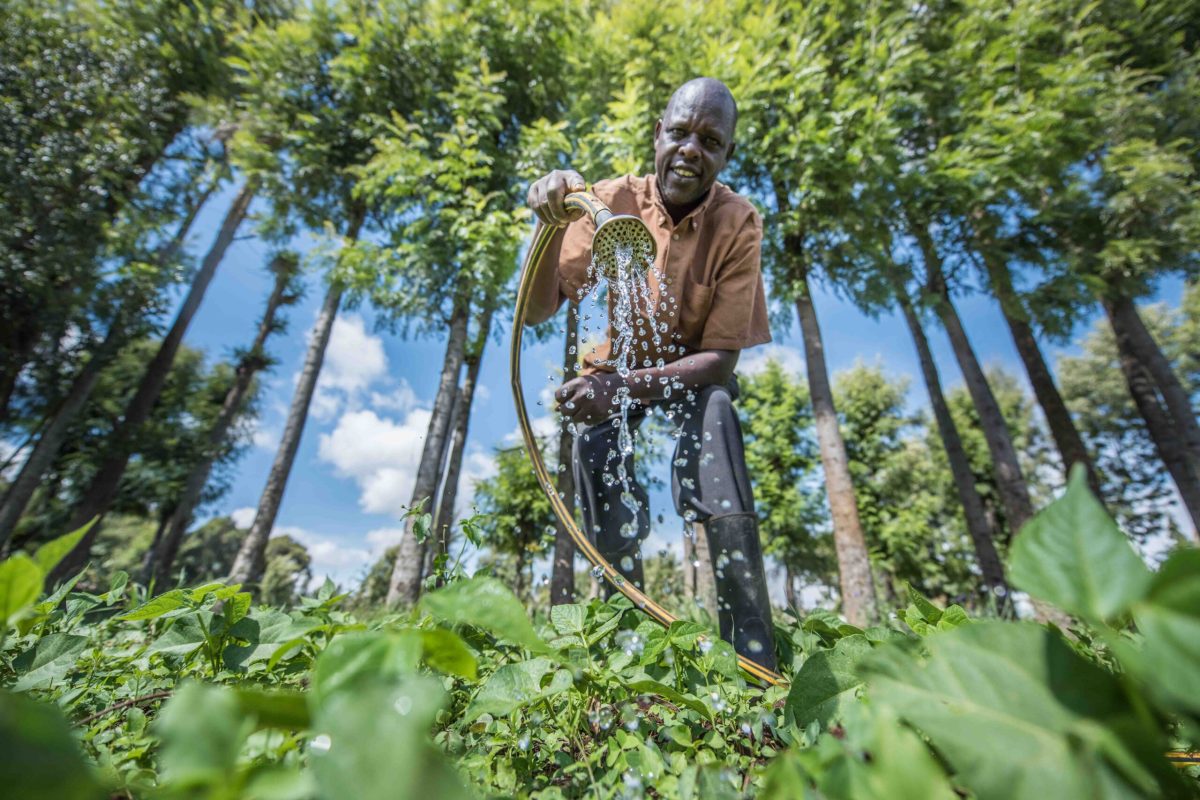
The Upper Tana Agroforestry Project is working to increase women's participation in sustainable agriculture, with female-led households accounting for 39% of participants - well above the regional average of 24%.

2. Rachel's Story: “Farming for family and future”

In Gatanga, we met 39-year-old farmer Rachel Njeri.

From the moment we arrived, Rachel was eager to share how the project had affected her life. She offered to take me around her farm.

Farming with Nature

Among the crops she showed me were tree lucerne, a protein-rich shrub she uses to feed her cows, and Calliandra, another preferred fodder plant for ruminants that also doubles as a living fence.

Like Nyoro, she also grows avocados as part of her income-generating activities. The market access the project provides makes avocado farming genuinely viable in a way it was not when the produce had to pass through brokers.

A landscape alive with wildlife

One of the most memorable moments of the visit came while walking through Rachel's compound.Several indigenous trees on the property are estimated to be more than 60 years old. These mature trees provide important habitat for wildlife, including an African Harrier Hawk that I spotted during the visit.It was a reminder that productive farms and thriving biodiversity can coexist when landscapes are managed sustainably.

Turning opportunity into stability

The benefits of the project can also be seen in Rachel's daily life.

Additional income from her farming activities has helped her build a gate for her home and cover medical expenses for her mother.

She credits the project with giving her greater financial security, more confidence in the future and a better ability to support her family. For Rachel, the benefits extend beyond the farm itself and into everyday life at home.

Agroforestry - Upper Tana, Kenya

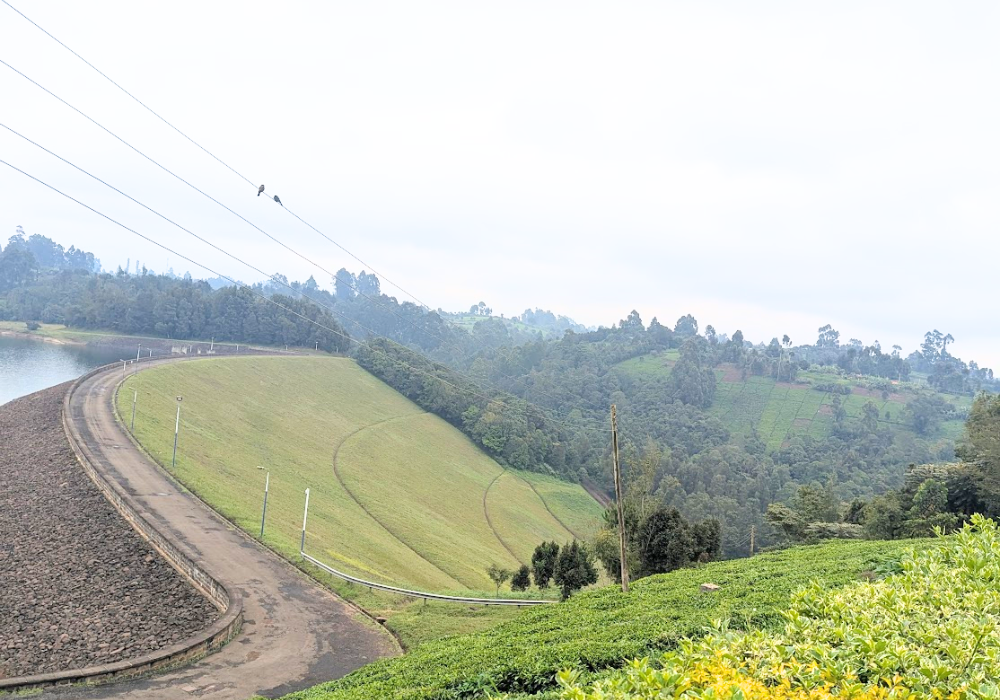
Ndakaini Dam supplies water to more than 3 million people in Nairobi. Conservation efforts across the Upper Tana watershed help protect the quality and reliability of this important resource.

3. The dam that feeds a city: Ndakaini and NWSC

The benefits of the Upper Tana project extend far beyond individual farms.To understand this connection, I visited Ndakaini Dam and met Eng. Job Kihamba from Nairobi City Water and Sewerage Company (NWSC), one of the founding partners of the project.Ndakaini Dam holds up to 70 billion litres of water and supplies the majority of Nairobi's drinking water.According to Eng. Kihamba, the work happening on farms throughout the watershed plays a big role in maintaining water quality.

When erosion washes large amounts of soil into rivers, turbidity increases. Consequently, water treatment becomes more expensive, filters clog more quickly and more chemicals are required to make the water safe for drinking.

The ripple effect on how healthy farms create cleaner water

When I visited Ndakaini Dam, I asked Eng. Job Kihamba about a report commissioned 15 years ago by EABL - NWSC's largest single client, using around 5% of the city's water supply, followed by Coca-Cola at roughly 3%. The report had warned that if water shortages continued, companies like EABL might need to consider moving their operations out of Kenya within a decade.

Yet today, both companies are still here.

So what changed?

According to Eng. Kihamba, the work being carried out by farmers across the Upper Tana watershed has played a big role. He showed me data on his phone indicating that turbidity levels at Ndakaini Dam are now consistently between 5 and 6 NTU - a sign of improved water quality.

The connection between farming practices and water security is surprisingly direct:

  1. Farmers plant Napier grass and tree lucerne on steep slopes

    , helping to hold soil in place and reduce erosion.

  2. Less soil enters rivers and reservoirs

    , meaning lower levels of sediment and turbidity in the water reaching Ndakaini Dam.

  3. Cleaner water is cheaper to treat.

    When turbidity is low, NWSC can use aluminium sulphate, a widely available and relatively inexpensive coagulant.

  4. High turbidity increases treatment costs.

    In these cases, NWSC must use more expensive polymers such as PAC (polyaluminium chloride), which can increase the cost of treating one cubic metre of water by up to six times.

  5. Lower turbidity also reduces pressure on treatment infrastructure.

    Filters clog less frequently, reducing the need for backwashing and helping operations run more efficiently.

When turbidity becomes too high, NWSC may have to open the gates and return water to the river instead of treating it. This is one reason why, during periods of water rationing, people can sometimes see water flowing in rivers while their taps remain dry.

For Eng. Kihamba, the message was clear: what happens on farms upstream has a direct impact on the quality, cost and reliability of water supplied to millions of people downstream.

Supporting farmers and water security

The partnership has also delivered infrastructure benefits for farming communities. Together, NWSC and the Upper Tana Water Fund have supported farmers through:

  • Construction of water pans

    , which help farmers store water during dry periods, especially in July, August and September.

  • An alternative water source for livestock, irrigation and home use

    , reducing the need for farmers to draw water directly from rivers.

  • Reduced pressure on rivers and streams

    , as fewer farmers need to bring livestock to the river or pump water from natural waterways.

  • Improved water quality downstream

    , because less activity around riverbanks means less sediment is disturbed and washed into the water system.

  • Farmer education sessions

    , often held during pruning season, where project partners can share knowledge, understand farmers’ needs and sometimes distribute seedlings.

  • Water quality monitoring across the watershed

    , supported by NWSC’s 24 river gauging stations, light sensors that measure turbidity and chemical sensors that detect compounds such as nitrogen.

At the time of my visit, Ndakaini Dam was at 93% capacity. In some previous years, Eng. Job explained, it had dropped as low as 21%.

He also acknowledged the dam’s complicated political history. In the past, there were tensions between Nairobi and Murang’a, with local leaders arguing that Murang’a hosted the infrastructure while some communities still faced water shortages. Land displacement during the dam’s construction in the late 1980s and early 1990s also created long-standing grievances.

Today, Eng. Job said the situation is more settled. Communities have been fairly compensated over time, and NWSC now coexists well with local residents.

Why Earthly supports the project supporting the first water fund in Africa

We are happy to have the

Upper Tana agroforestry project

on Earthly's marketplace. The project's impact is reflected in its 8 out of 10

Keystone

assessment score - Earthly's proprietary framework for evaluating nature-based solutions - through which fewer than 9% of projects qualify. 

During my visit, I had the opportunity to see the impact of the project firsthand. We only add projects to our marketplace when we are confident they deliver on project objectives, with verified data.

This project is a strong fit for businesses looking to invest in nature with a water security co-benefit, particularly those with supply chains or operations that depend on freshwater availability. It is also well suited to companies seeking credible social impact alongside carbon, with tens of thousands of smallholder farmers directly supporting and verified outcomes at community level. 

For businesses navigating CSRD, TNFD-aligned disclosure, or increasing pressure around green claims, Upper Tana Agroforestry offers the kind of documented, verifiable outcomes that support robust reporting and reduce disclosure risk.

You can support the Upper Tana Agroforestry project directly through our

marketplace

, or

talk to us

to find the right fit for your business.

upper-tana-23

Nature-based solutions like Upper Tana can help businesses advance their sustainability goals while supporting reporting requirements under frameworks such as TNFD, CDP and CSRD, alongside broader climate and biodiversity commitments.

FAQs

What is the Upper Tana Agroforestry Project?

The Upper Tana Agroforestry Project is a nature-based solution on Earthly’s marketplace operating in Kenya. It supports farmers through agroforestry, soil conservation and sustainable land management practices that improve livelihoods while protecting critical water resources.

Why is the Upper Tana watershed important?

The watershed supplies water to Ndakaini Dam, which provides around 84% of Nairobi's water and serves more than 3 million people. Protecting the landscape helps maintain water quality and security for both urban and rural communities.

How does the project benefit farmers?

Farmers receive support to adopt sustainable farming practices, improve soil conservation and diversify their income through crops such as avocados and macadamia. The project also helps connect farmers to markets and supports water infrastructure such as water pans.

How does agroforestry improve water security?

Trees and other vegetation help stabilise soil and reduce erosion. This means less sediment enters rivers and reservoirs, improving water quality and reducing the cost of water treatment downstream.

Can businesses invest in the Upper Tana Agroforestry Project?

Yes, the project is available on Earthly's marketplace, allowing businesses to support activities such as agroforestry, soil conservation and watershed restoration while contributing to measurable environmental and social outcomes.