)
Sustainable business
27.07.2026
Webinar recap: How businesses can build a credible biodiversity investment strategy
Earthly brought together Lorienne Whittle, Rewilding Landscapes Manager at Nattergal ; Siobhan Stewart, Head of Delivery at …

)
More than
companies worldwide have set or committed to science-based targets through the Science Based Targets initiative (SBTi). Yet many struggle to reduce emissions quickly enough to stay on track because of poor emissions data, complex supply chains, and the challenge of reducing Scope 3 emissions.
The good news is that businesses can make faster progress by focusing on their biggest emissions sources, strengthening supplier engagement, improving carbon data, and adding decarbonisation into business decisions.
SBTi targets are science-based emissions reduction goals aligned with limiting global warming to 1.5°C.
To meet SBTi targets faster, focus on the biggest sources of emissions first, particularly Scope 3 emissions.
Success depends on adding decarbonisation into business decisions rather than treating it as a standalone sustainability initiative.
While emissions reductions should remain the priority, SBTi's Ongoing Emissions Responsibility (OER) framework gives businesses a structured way to take responsibility for ongoing emissions through high-integrity climate contributions.
Earthly helps businesses invest in verified nature projects and build the evidence needed to meet growing disclosure requirements across TNFD, CSRD, and SBTi.

Science-based targets are now the baseline for credible corporate climate action. Over 11,000 companies have committed to reducing their emissions in line with a 1.5°C pathway, and SBTi-aligned businesses now represent 41% of global market capitalisation.
are greenhouse gas emissions reduction goals that align with the latest climate science and the objectives of the
. They are designed to help businesses reduce emissions at a pace consistent with limiting global warming to 1.5°C above pre-industrial levels and reaching net-zero emissions by 2050.
The
is a global body that validates corporate climate targets and provides the frameworks, standards, and guidance companies need to set credible emissions reduction goals. It was established through a partnership between CDP, the United Nations Global Compact (UNGC), the World Resources Institute (WRI), and the World Wide Fund for Nature (WWF).
Companies typically set two types of targets:
Near-term targets outline the emissions reductions a company plans to achieve within the next five to ten years. These targets focus on immediate action and are considered the most important milestone for driving emissions reductions this decade.
Net-zero targets set out a company's long-term pathway to reducing emissions by at least 90-95% across its value chain before neutralising any residual emissions. Under the SBTi Net-Zero Standard, companies are expected to prioritise emissions reductions over offsetting.
Scope 1:
Direct emissions from owned or controlled sources.
Scope 2:
Indirect emissions from purchased electricity, heating, or cooling.
Scope 3:
All other indirect emissions across the value chain, including purchased goods and services, transportation, business travel, and product use.
For many businesses, Scope 3 emissions account for the largest share of their carbon footprint, making supplier engagement and sustainable procurement critical to achieving SBTi targets.
By setting science-based targets, companies can create a clear, measurable roadmap for decarbonisation while demonstrating credible climate leadership to investors, customers, employees, and regulators.
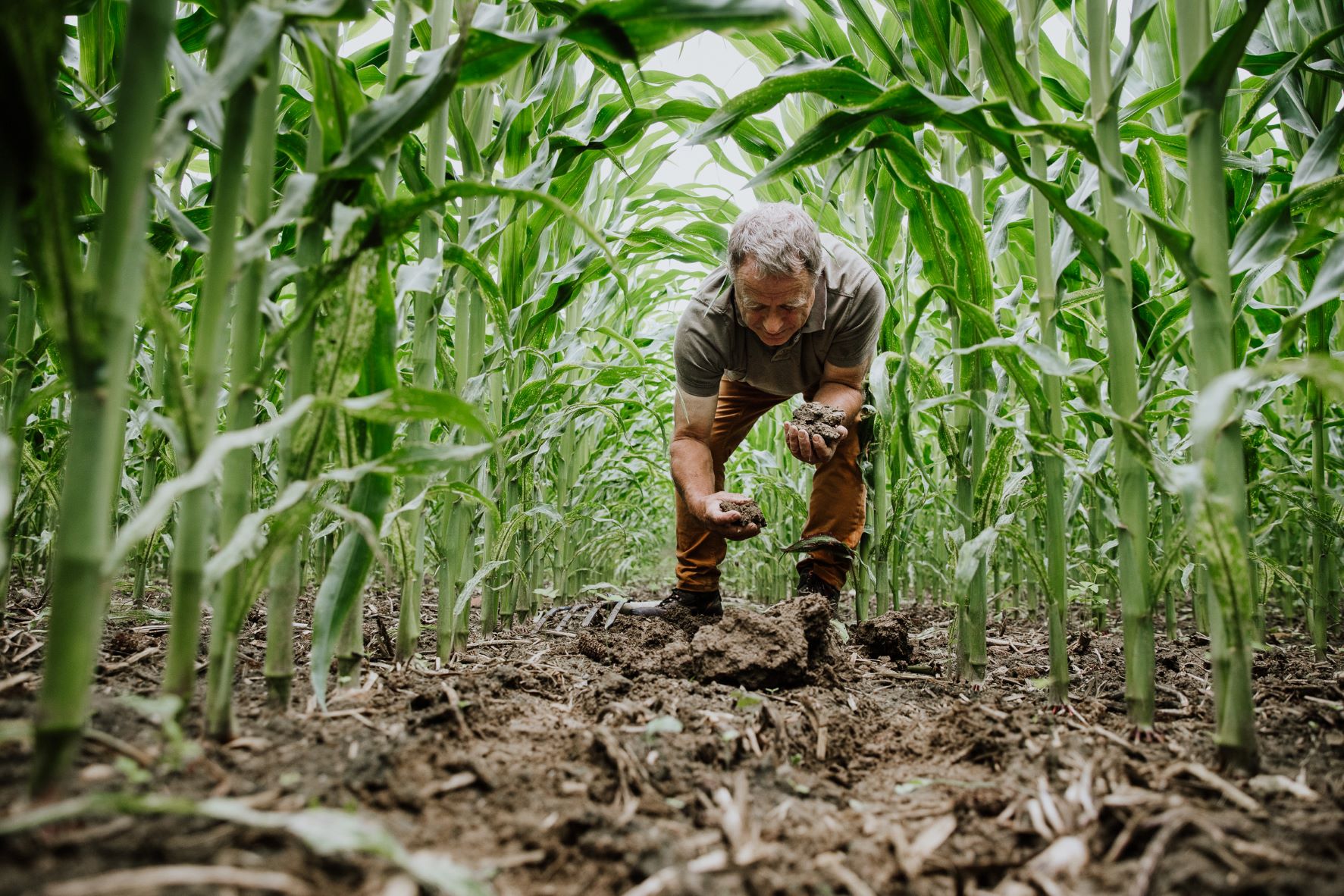
According to SBTi, companies with validated targets are cutting emissions at a median annual rate of 5.4%, faster than the 4.2% minimum required to stay on a 1.5°C pathway.
Here are some ways to accelerate progress towards your SBTi targets:
Scope 1 is where you have the most control:
Fleet electrification: Switch company vehicles to electric, starting with the highest-mileage assets first.
Fuel switching: Replace fossil fuel boilers, furnaces, and heating systems with electric or renewable alternatives.
Process efficiency: Audit energy use across facilities and manufacturing processes to identify and eliminate waste.
On-site renewable energy: Install solar or other renewable generation to power operations directly.
Scope 1 reductions require changes to vehicles, equipment, or industrial processes. Because these changes take time to implement, they should be considered early in the target-setting process.
Switching to renewable electricity is consistently the fastest and most cost-effective Scope 2 lever available. SBTi requires 80% renewable electricity by 2025 and 100% by 2030.
If you are not there yet, this is your most urgent action:
Power purchase agreements (PPAs): Long-term contracts that lock in renewable supply and provide price certainty.
On-site generation: Solar panels or wind installations that power your operations directly.
Utility green tariffs: Renewable electricity supplied directly through your energy provider.
Renewable energy certificates (RECs): A short-term option but one that is facing tighter scrutiny under the proposed V2 standard, which moves toward hourly matching and regional specificity.
Document supplier emissions data, engagement activities, and procurement decisions. These records will support future regulatory requirements and streamline your annual CDP reporting.
For most companies, Scope 3 emissions are on average
times higher than direct Scope 1 emissions and represent over 70% of the total footprint. This is the hardest category to move and the most important.
This may involve working with suppliers to improve emissions data, sourcing lower-carbon materials, optimising logistics, or redesigning products to reduce lifecycle emissions.
Here is how to make progress faster:
Purchased goods and services (Category 1) typically dominates. Run a screening across all 15 Scope 3 categories, rank them by emissions weight, and build your reduction or engagement targets around the top three to five.
Pilot with the 20 to 50 suppliers that account for the majority of your Scope 3 footprint. The goal is to get them measuring their own emissions, setting reduction targets, and sharing primary data with you, before you scale the programme across the rest of your supply chain.
Build standard emissions data requests and science-based target alignment clauses into procurement agreements so that decarbonisation becomes a condition of doing business with you.
Reducing supply chain emissions is rarely possible without supplier collaboration. Effective supplier engagement can include training, target-setting support, data-sharing initiatives, and regular communication on climate expectations. Focusing first on high-spend or high-emission suppliers can help maximise impact.
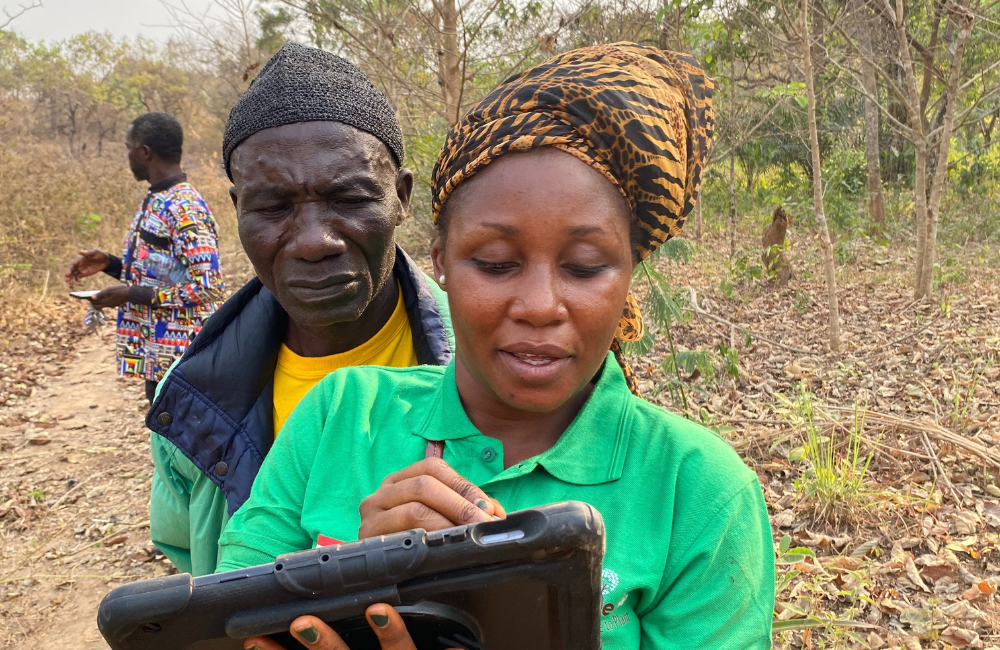
Accurate emissions data is the foundation of any successful decarbonisation strategy. More than 24,800 companies disclosed environmental data through CDP in 2024, reflecting the growing importance of carbon accounting in tracking emissions and climate progress.
Poor data is one of the most common reasons companies fall behind on their targets, so:
Move beyond spend-based estimates: Replace spend-based calculations with activity-based or supplier-specific data wherever possible.
Invest in carbon accounting software: Platforms that connect to procurement, finance, and operational data in real time allow you to identify and track emissions.
Set quarterly internal milestones: Annual reporting cycles create the illusion of progress. Quarterly reviews will help you create accountability.
Build an audit-ready data trail: As CSRD, ESRS, and California SB 253 tighten disclosure requirements, companies with clean, traceable emissions data move faster through regulatory reporting and spend less time defending their numbers.
Procurement teams play a big role in achieving science-based targets. By incorporating sustainability criteria into purchasing decisions, businesses can influence emissions across their supply chains:
Factor carbon into major business decisions:
When comparing suppliers, facilities, equipment, or logistics options, consider emissions alongside cost, quality, and performance. This can help prevent decisions that lock in higher emissions for years to come.
Make emissions reductions part of leadership goals:
If climate targets sit solely with the sustainability team, progress is likely to stall. Assign clear emissions reduction responsibilities to senior leaders and track progress alongside other business objectives.
Share ownership across the business:
Sustainability teams can set the strategy, but procurement teams influence suppliers, operations teams improve efficiency, finance teams allocate resources, and product teams shape lifecycle emissions. Meeting SBTi targets requires coordination across the business.
Use annual reporting to measure progress:
Frameworks such as CDP provide a structured way to track emissions, review performance, and identify areas where additional action is needed. Regular reporting can also help businesses meet growing expectations for transparency from investors, customers, and regulators.
Reducing emissions within your value chain should remain the priority. But under SBTi's Corporate Net-Zero Standard V2.0, businesses can also take structured responsibility for the emissions they continue to generate on the way to net zero, through the Ongoing Emissions Responsibility (OER) framework.
OER replaces the earlier Beyond Value Chain Mitigation (BVCM) concept with something more defined: companies make climate contributions toward their ongoing emissions - either by supporting verified mitigation outcomes or by setting a contribution budget - and can earn recognition across three tiers, Engaged, Advanced, and Leadership, depending on how much of their ongoing emissions they cover. (We unpack each tier, and what it means for Category A and B companies, in our
.)
such as forest restoration, mangrove conservation, peatland protection, and regenerative land management can remove or avoid emissions while supporting biodiversity and local communities.
By investing in high-integrity projects through
for climate action and
for nature recovery, businesses can help scale climate and nature finance, strengthen their sustainability strategies, and build a credible OER position ahead of the framework's mandatory phase for Category A companies from 2035.
The
, published 11 June 2026, effective for validation from 1 February 2027, and mandatory for all new targets from 1 January 2028. The updated standard introduces several changes businesses should prepare for:
Under V2.0, SBTi groups companies into Category A and Category B based on size and location.
A company is Category A if it meets either of these criteria:
Turnover above €450 million or 1,000+ employees, in any country
For medium-sized companies in high-income countries: Scope 1 and 2 emissions of 10,000 tCO2e or more, or at least two of the following: a balance sheet above €25 million, turnover above €50 million, or 250+ employees
All other companies fall into Category B, including small companies globally and medium-sized companies in lower-income countries that do not meet the thresholds above.
Category A companies must:
Publicly disclose their climate transition plan
Obtain independent assurance of their target base-year emissions data
Set Scope 3 targets
These three requirements are optional, though encouraged, for Category B companies.
Category A companies must set targets covering every Scope 3 category that accounts for 5% or more of their total Scope 3 emissions. This replaces the previous requirement to cover at least 67% of Scope 3 emissions overall, meaning companies will need a more granular view of emissions across their value chain to identify and address significant sources.
Companies must track and report progress throughout their target cycle and complete an end-of-cycle assessment. Category A companies must also obtain independent third-party assurance of the data and calculations used to assess their progress.
SBTi V2.0 introduces Ongoing Emissions Responsibility (OER), giving companies a structured way to take responsibility for emissions that continue while they work towards net zero.
Companies can voluntarily participate in the OER recognition programme at three levels:
Engaged: Take responsibility for at least 1% of ongoing emissions through verified mitigation outcomes, a contribution budget, or a combination of both. SBTi recommends a minimum contribution budget of $20 per tCO2e.
Advanced: Take responsibility for at least 10% of ongoing emissions, including 100% of Scope 1 and 2 emissions, through a contribution budget of at least $20 per tCO2e or matched verified mitigation outcomes.
Leadership: Take responsibility for 100% of ongoing emissions with a contribution budget of at least $80 per tCO2e. Category B companies can achieve Leadership by covering at least 10% of ongoing emissions, including 100% of Scope 1 and 2 emissions, at the same $80 per tCO2e benchmark.
From 2035, Category A companies must also support eligible carbon removals for a growing share of their ongoing emissions.
For a deeper look at the OER recognition levels, contribution budgets and the role of carbon credits under SBTi V2.0, read our
.
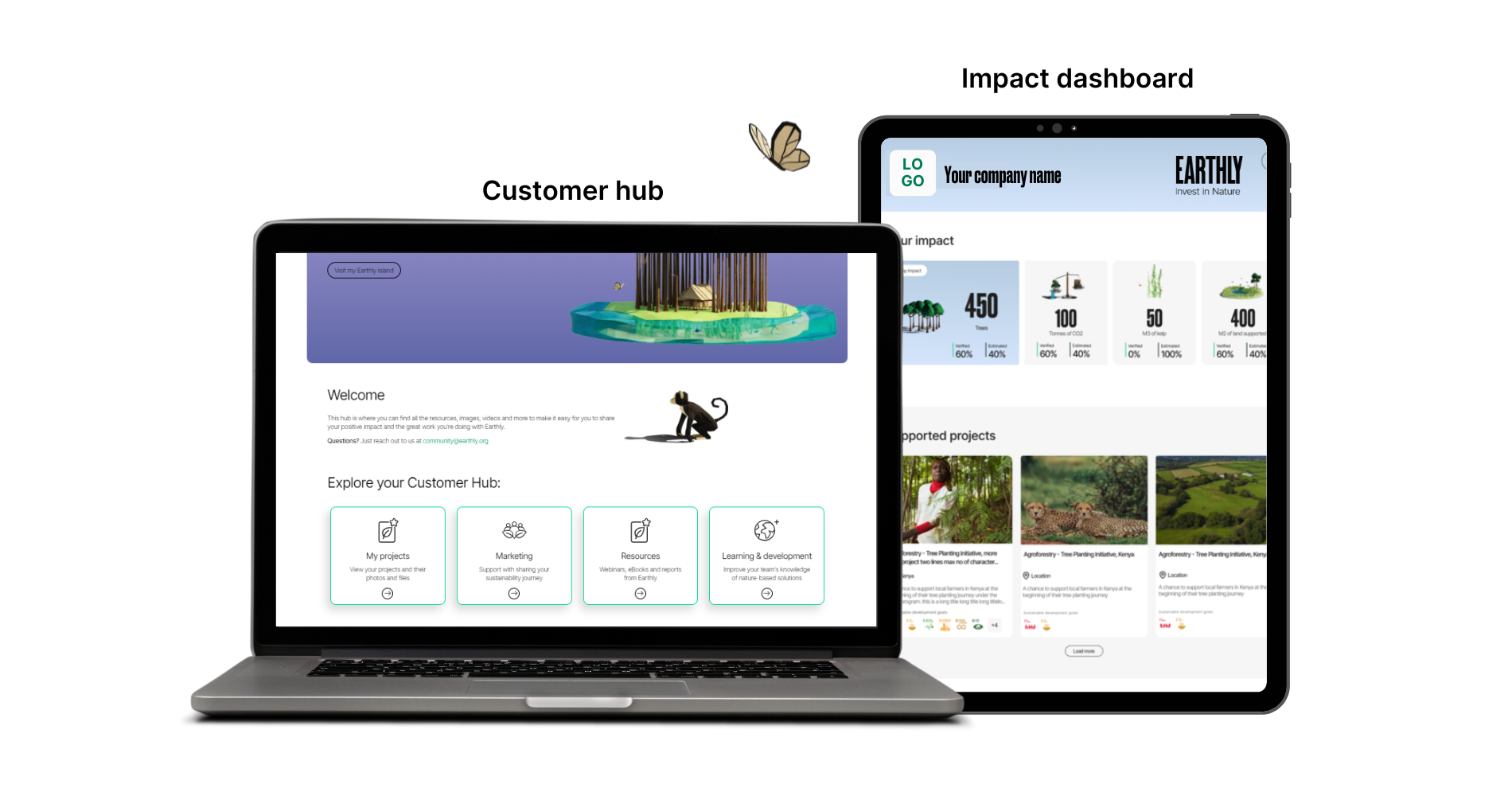
Earthly's impact dashboard and Customer Hub give you a real-time view of every project, every credit, and every verified outcome, so you always know exactly what your investment is delivering.
Reducing emissions within your value chain should remain the priority. But businesses can also support climate and nature action beyond their operations by investing in high-integrity projects that restore ecosystems, protect biodiversity, and remove or avoid emissions.
Earthly helps companies build nature investment strategies that are credible, verifiable, and aligned with SBTi's Ongoing Emissions Responsibility framework and wider TNFD and CSRD reporting requirements.
Earthly's
gives companies direct access to a curated portfolio of high-integrity nature-based projects from around the world. Every project on our marketplace has been assessed through
our rigorous nature assessment framework across carbon, biodiversity, and people. Fewer than 10% of screened projects meet our minimum standard, only the best make it to our marketplace.
When you invest through Earthly, you are investing in projects that are:
Additional: The climate benefit would not have happened without the investment.
Permanent: The carbon stored or avoided is protected over the long term.
Verified: Every project is independently assessed against recognised standards including Verra VCS, Gold Standard, and Plan Vivo.
Beyond carbon, Earthly offers
from rigorously assessed UK projects, allowing companies to demonstrate positive nature outcomes, build resilience against supply chain risks linked to ecosystem loss, and get ahead of TNFD and CSRD disclosure requirements.
Meeting your SBTi targets requires businesses to track progress, demonstrate emissions reductions, and communicate results credibly to investors, regulators, customers and supply chain partners.
Impact dashboard: A real-time view of your nature investment portfolio, showing verified outcomes across carbon, biodiversity, and community co-benefits.
Customer Hub: A centralised space to manage your projects, track credit retirement, and access verification documentation.
Biodiversity credit ledger: A transparent record of your biodiversity credit purchases and outcomes, built for TNFD and CSRD disclosure.
Meeting SBTi targets requires a clear plan, reliable data, and targeted action. Explore our
of nature-based projects or
about how Earthly can support your climate and nature goals.

Ongoing Emissions Responsibility (OER) gives businesses a structured way to take responsibility for the emissions they continue to generate through high-integrity climate contributions, while continuing to reduce emissions in line with science-based targets.
What is the SBTi?
The Science Based Targets initiative (SBTi) is a global partnership that validates corporate greenhouse gas reduction targets aligned with the Paris Agreement and a 1.5°C pathway. It is backed by CDP, UN Global Compact, World Resources Institute, and WWF.
How long does SBTi validation take?
SBTi Services has reduced average validation time to around 30 days. In practice, build in additional time for internal sign-off, data preparation, and any back-and-forth on methodology before you submit.
Can carbon credits count toward my SBTi targets?
No, carbon credits cannot be used to meet your Scope 1, 2, or 3 reduction targets. Reductions must come from within your value chain. However, high-quality carbon credits play an important role under SBTi's Ongoing Emissions Responsibility (OER) framework, supporting verified mitigation outcomes as a parallel climate contribution alongside your targets.
What is the difference between near-term and long-term SBTi targets?
Near-term targets cover a 5 to 10-year reduction horizon aligned with a 1.5°C pathway. Long-term net-zero targets extend to 2050 and require absolute reductions of at least 90 to 95% across all three scopes, with residual emissions neutralised through high-quality carbon removals.
What is Scope 3 and why does it matter to SBTi?
Scope 3 covers all indirect emissions in your value chain, upstream and downstream, across 15 categories. For most companies, Scope 3 emissions are on average 11 times higher than direct Scope 1 emissions and represent over 70% of total footprint. It is the hardest category to move and the most important.
What is the fastest way to reduce emissions and meet SBTi targets?
The fastest way to make progress is to focus on the largest sources of emissions first. For many businesses, this means improving energy efficiency, switching to renewable electricity, engaging suppliers, and reducing emissions from purchased goods and services.
What is Ongoing Emissions Responsibility (OER) under SBTi?
Ongoing Emissions Responsibility (OER) is the framework introduced under SBTi's Corporate Net-Zero Standard V2.0 for companies to take responsibility for emissions that continue while they work towards net zero. It sits alongside, rather than replaces, emissions reductions within a company's operations and value chain.
Through the voluntary OER recognition programme, companies can support climate contributions through verified mitigation outcomes, contribution budgets, or both, depending on the recognition level. From 2035, Category A companies will also be required to support eligible carbon removals for a progressively increasing share of their ongoing emissions.
Related articles
27.07.2026
Earthly brought together Lorienne Whittle, Rewilding Landscapes Manager at Nattergal ; Siobhan Stewart, Head of Delivery at …
)
08.07.2026
Eight in ten companies reporting on sustainability are now doing it across more than one framework simultaneously …
)
18.06.2026
On 11 June 2026, the Science Based Targets initiative (SBTi) published the final Corporate Net-Zero Standard …