The latest from highland restoration in Ethiopia

More than 54,495 seedlings were planted in 2025, helping the project deliver for climate, biodiversity and the community.

Faith Sayo

Faith Sayo

04 Feb, 2026

Loading...
The latest from highland restoration in Ethiopia

We recently received an exciting update from one of the projects we support,

Highland Restoration - Tigray, Ethiopia

, and we couldn’t be happier with the progress being made on the ground. This project is restoring degraded dryland ecosystems in the Tembien Highlands through indigenous tree planting and protected enclosures, while ensuring local communities directly benefit from climate finance. 

Nature-based solutions are increasingly recognised as one of the most effective ways to tackle the climate crisis, with their value going far beyond carbon. In fact, the UN Environment Assembly (UNEA) adopted a formal definition of

nature-based solutions

, framing them as actions to protect, conserve, restore, and sustainably manage ecosystems to address societal challenges, while also providing benefits for both human well-being and biodiversity.

At Earthly, before we support a project or include it in our marketplace, we

carefully evaluate

its integrity and long-term impact. This allows businesses to invest in high-quality nature-based solutions that deliver verified climate outcomes while also supporting biodiversity and community livelihoods.

The key highlights from the Ethiopia project:

Some of the project’s most recent updates include:

  • Restoration now covers a total of

    24,620 hectares

    in the Tembien Highlands

  • Over

    45,770 households

    are benefiting from project interventions

  • More than

    54,495 seedlings

    were planted in 2025 within protected enclosures

  • 60% of carbon credit revenues

    continue to be reinvested directly into local communities

  • Social initiatives funded include

    30 new classrooms

    , solar lights for

    696 households

    , and improved water access through

    15 ponds and 6 spring developments

highland-restoration-ethiopia-25

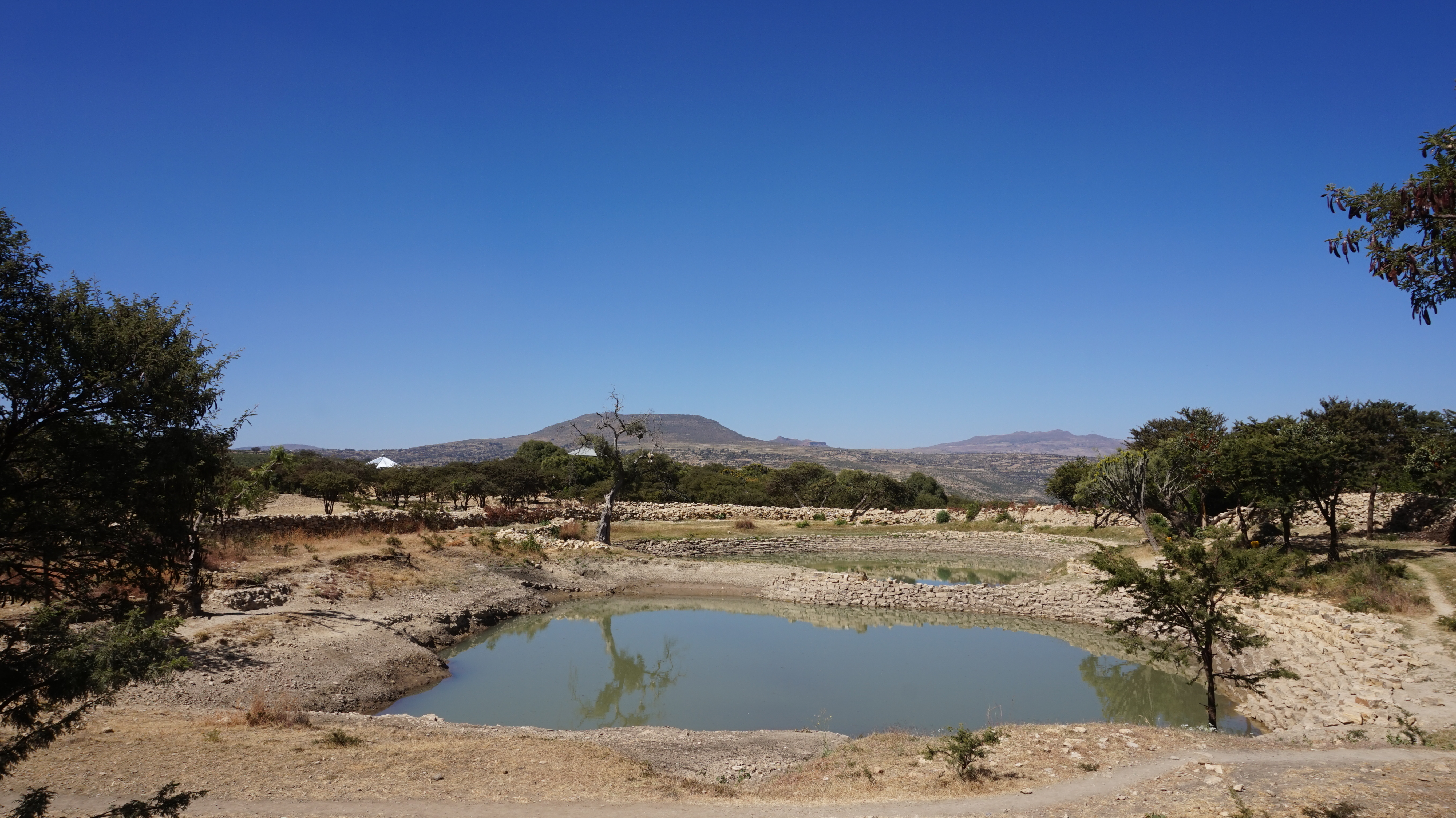
A view of the Tembien Highlands in northern Ethiopia, where degraded dryland landscapes are being restored through indigenous tree planting and protected exclosures.

About the highland restoration project in Ethiopia

The project

is based in the Tembien Highlands of northern Ethiopia, located at the northernmost limit of the African monsoons, a region highly vulnerable to land degradation and climatic change. The initiative is working to restore degraded dryland landscapes affected by drought, steep-slope erosion, and overgrazing.

This project supports natural regeneration through indigenous tree planting and the establishment of protected “exclosures” that prevent livestock grazing. This strengthens biodiversity, improves connectivity between important habitats such as sacred Orthodox church gardens, and enables long-term ecosystem recovery.

Alongside carbon sequestration, the project invests in sustainable land management practices, water access through percolation ponds on higher slopes, and the development of non-timber forest products such as frankincense and honey - helping deliver lasting environmental and community benefits.

Why this matters in Tigray, Ethiopia

Much of Tigray lies within

arid and semi-arid climatic zones

, where drought and low moisture availability make land and water resources highly sensitive to climate variability and human disturbance. These dryland conditions increase erosion and limit natural regeneration without sustained restoration efforts.

Tigray also contains some of the areas of greatest land degradation concern in Ethiopia’s highlands. Intensive soil erosion, declining soil fertility, and moisture stress continue to affect agricultural productivity and food security, making land degradation a major ongoing environmental challenge in the region.

These pressures were further compounded by the armed conflict in Tigray from 2020 to 2022, which triggered one of the most alarming socio-ecological crises in recent history. The war contributed to widespread deforestation, soil degradation, and the collapse of local conservation and land management systems. Even today, its long-lasting impacts continue to be felt across soil, water and vegetation infrastructure, undermining decades of restoration progress.

Satellite analysis shows that while vegetation cover in parts of Tigray increased modestly between 2000 and 2020, from 2020 to 2022, there was an approximate 5% decline in vegetation cover inthe studied areas, reflecting the environmental toll of the conflict.

In this context, high-integrity nature-based solutions are essential - helping restore degraded ecosystems, strengthen resilience to climate pressures, and support communities in rebuilding sustainable livelihoods alongside environmental recovery.

highland-restoration-ethiopia-24

Roughly 75% of Ethiopians depend on land-based activities such as farming and pastoralism - yet these livelihoods are highly vulnerable to drought, climate variability, and land degradation. The Highland Restoration project helps address these pressures by restoring degraded dryland ecosystems, improving water retention, and supporting more sustainable land management practices that strengthen communities.

What this update tells us about nature-based projects' co-benefits

The latest progress from the highland restoration projects shows that restoring landscapes in a way that strengthens ecosystems and supports communities, projects like this generate multiple, measurable benefits:

Carbon: Climate mitigation through restoration at scale

Nature-based solutions play an important role in climate action by removing carbon from the atmosphere and storing it in restored vegetation and soils. Globally, forests act as a major carbon sink, absorbing about

16 billion tonnes of CO₂ per year

, equivalent to about half of the annual emissions from burning fossil fuels, strengthening the power of trees and growing vegetation in climate mitigation. This project is achieving this through large-scale regeneration and indigenous tree planting.

The project now supports restoration across

24,620 hectares

of the highlands, demonstrating the climate potential of restoring degraded dryland ecosystems. In 2025 alone, more than

54,495 seedlings

were planted within protected enclosures, helping expand long-term carbon sequestration while strengthening ecosystem resilience.

Biodiversity: Regenerating ecosystems and reconnecting habitats

Beyond carbon, restoration delivers critical biodiversity benefits - particularly in fragile landscapes where habitat loss and degradation threaten native species.

By focusing on indigenous planting and natural regeneration, the project is rebuilding biodiversity-rich dryland habitats in the Tembien Highlands. The scale of restoration, combined with ongoing planting efforts, helps improve vegetation health, reduce erosion, and strengthen connectivity between culturally significant and ecologically important areas, such as Orthodox church forests.

People: Community-led impact through benefit-sharing

Perhaps most importantly, the project highlights how nature finance can support meaningful social progress when local communities are placed at the centre.

With

60% of carbon credit revenues reinvested

locally, the project demonstrates a strong commitment to community-led benefit-sharing.

Today, more than

45,770 households

benefit directly from its interventions. Recent initiatives funded through this model include:

  • Water access (

    SDG 6: Clean Water and Sanitation

    ):

    Improved water security through the construction of 15 ponds and 6 spring developments, helping communities better manage drought and long-term water availability.

  • Education

    (SDG 4: Quality Education

    ):

    The construction of 30 new classrooms, expanding access to learning opportunities in rural highland communities.

  • Clean energy and resilience (

    SDG 7: Affordable and Clean Energy

    ):

    Solar lights distributed to 696 households, supporting safer, more sustainable energy access.

These outcomes demonstrate how high-integrity NbS projects can strengthen livelihoods, resilience, and long-term development alongside environmental restoration.

These are just a few of the impacts highlighted in the latest update. The project also contributes to a wider range of Sustainable Development Goals, including support for women’s participation, improved livelihoods, employment opportunities, and long-term community resilience.

Earthly’s role in supporting the NbS project in Ethiopia

At Earthly, we help businesses invest in nature-based solutions that deliver real, measurable impact for climate, biodiversity and communities - to meet their sustainability goals. Before a project is featured in our marketplace, we

assess it

to ensure it meets high standards of integrity, transparency, and long-term value. All projects available through Earthly exceed a minimum score of 5.5/10.

The

highland restoration project in Tigray, Ethiopia

, has received an overall Earthly Rating of 8.01, with strong performance across each category: Carbon 7.7, Biodiversity 8.3, and People 8.4. Since the start of the project, it has supported the sequestration of 102,273 tonnes of CO₂, contributed to a 41% increase in tree species richness, and paid over $335,640 directly to participants.

Businesses investing in this project through Earthly are helping enable large-scale restoration across the Tembien Highlands, while also supporting initiatives that improve water access, livelihoods, and local resilience.

By sharing updates like these, we aim to provide businesses with confidence that their investment is contributing to credible, high-impact outcomes on the ground - and that nature-based solutions can deliver multiple co-benefits far beyond carbon alone.

Supporting high-integrity nature projects through Earthly’s marketplace

Projects like the highland restoration initiative in Tigray, Ethiopia, show what’s possible when businesses invest in nature with integrity - supporting climate mitigation, biodiversity recovery, and meaningful community outcomes at the same time. 

If your business is looking to invest in credible, high-impact nature-based solutions, learn more about this

Ethiopia project

and discover how you can support its continued progress in restoring landscapes and strengthening livelihoods in the Tembien Highlands.

You can also explore other high-integrity projects in

Earthly’s marketplace

, or

talk with our team

to find the right solution for your climate and nature goals.

highland-restoration-ethiopia-28

Despite progress over the past two decades, roughly 60 million people in Ethiopia still lack access to safe water, leaving many communities reliant on unsafe sources. The highland restoration project, with the support of Earthly, has helped improve access to water by building 15 ponds and 6 spring developments for the communities in Tigray.

FAQs: Nature-based carbon credits

What is a high-integrity carbon credit?

A high-integrity carbon credit represents a verified tonne of CO₂ reduced or removed through a credible project that meets strong environmental and social standards. High-quality credits come from projects with robust monitoring, transparent benefit-sharing, and measurable outcomes beyond carbon alone.

How do carbon credits support local communities?

When designed well, carbon credit revenues can finance long-term community benefits. In projects like the

highland restoration initiative in Tigray, Ethiopia,

revenues are reinvested locally to support initiatives such as water infrastructure, education access, clean energy solutions, and livelihood development.

How do nature-based solutions help fight climate change?

Nature-based solutions help mitigate climate change by removing carbon dioxide from the atmosphere and storing it in vegetation and soils. Restoration projects such as reforestation, agroforestry, and grassland recovery can contribute to long-term carbon sequestration while also strengthening resilience to drought and extreme weather.

What are the co-benefits of nature-based carbon projects?

Co-benefits are the additional positive impacts of nature-based projects beyond carbon sequestration. These may include:

  • Biodiversity recovery

  • Improved water access and retention

  • Soil restoration and reduced erosion

  • Job creation and income support

  • Community resilience and sustainable development

Why is restoration important in arid and semi-arid regions like Tigray, Ethiopia?

Arid and semi-arid regions are highly vulnerable to drought, erosion, and land degradation. In places like the Tembien Highlands of northern Ethiopia, restoration is essential to rebuild vegetation cover, improve water retention, and strengthen ecosystem resilience.

How can businesses invest in credible nature-based projects?

Businesses can support credible nature-based solutions by

investing in high-integrity projects

that have been carefully assessed for climate, biodiversity, and community outcomes. Working with trusted providers like

Earthly

helps ensure investments contribute to measurable, transparent, and lasting impact.