Malaysia’s first certified nature-based carbon project is investment-worthy

How the Kuamut rainforest project delivers verified climate, biodiversity and community impact - while helping businesses meet reporting and disclosure requirements

Faith Sayo

Faith Sayo

30 Apr, 2026

Loading...
Malaysia’s first certified nature-based carbon project is investment-worthy

The Kuamut Rainforest is a vital corridor for Bornean biodiversity and an essential carbon sink for the region. The

Rainforest Conservation Project in Sabah, Malaysia

developed by

Permian Global

holds the distinction of being the country's first certified nature-based carbon project supporting the rainforest. It is designed to also deliver tangible co-benefits to the indigenous communities neighbouring the reserve. 

TL;DR - Key Takeaways

  • 83,381 hectares of tropical forest protected from commercial logging

  • Nearly 4.84 million tonnes of CO2 reduced - verified under VCS

  • 75 rare, threatened or endangered species protected, including the Bornean orangutan

  • 914 people with improved healthcare; 50% of employment held by women

  • Earthly Rating: 7.6 (Carbon: 7.8, Biodiversity: 7.3, People: 7.7)

Like many tropical forests, the Kuamut rainforest has faced decades of logging and ongoing pressure from land-use change.

In a landmark joint

report

, the IPCC and IPBES confirmed that biodiversity loss and climate change mutually reinforce each other. Protecting and restoring landscapes like the Kuamut rainforest helps address the impacts of climate change while safeguarding the biodiverse habitats.

Yet for businesses, the challenge isn’t just supporting these projects, it’s ensuring that the impact behind them is credible, measurable, and able to withstand scrutiny from regulators, auditors, and stakeholders.

Why invest in the Kuamut rainforest conservation project and why now?

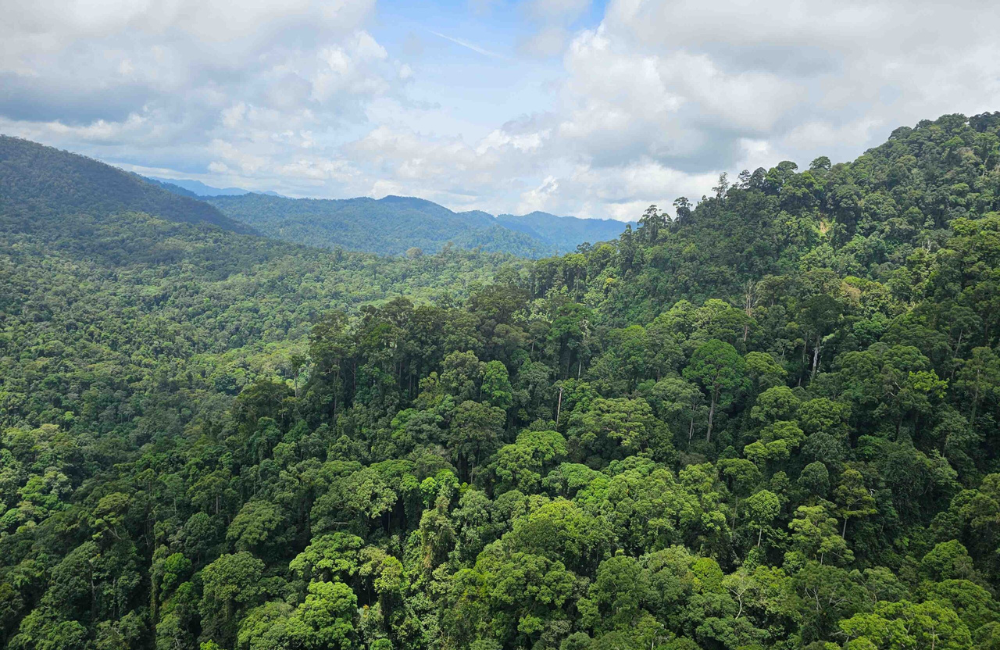
The Kuamut rainforest in Sabah spans more than 83,000 hectares of tropical forest in Malaysian Borneo. It supports species such as the Bornean orangutan, pygmy elephant and Sunda pangolin, and it sustains the Orang Sungai communities living in and around the landscape.

Today, the area is designated as a Class I forest reserve: Sabah’s highest level of legal protection. This status prevents further commercial exploitation and allows the forest to recover through natural regeneration, restoring both biodiversity and carbon stocks over time.

Historically, the Kuamut Rainforest suffered from decades of industrial logging, which degraded the landscape and left it vulnerable to being permanently converted into plantations. Today, the project faces the ongoing challenge of preventing illegal encroachment and timber extraction while managing the complex transition from a former commercial logging zone into a fully protected, high-integrity permanent forest reserve.

For businesses, investing in carbon credits from the Kuamut project contributes to the protection of a defined rainforest landscape. Investment is linked to a specific area of forest, with outcomes monitored over time - creating a clearer connection between corporate climate action and on-the-ground impact.

Rainforest conservation Malaysia Kuamut

An aerial view of the Kuamut rainforest in Sabah, Malaysia - over 83,000 hectares of protected forest supporting long-term carbon storage and biodiversity resilience.

About the rainforest conservation project in Sabah, Malaysia

The

Kuamut rainforest conservation project

is an improved forest management initiative located in the Tongod and Kinabatangan districts of Sabah, Malaysian Borneo. The project is structured as a public-private partnership, bringing together:

  • Permian Malaysia (a subsidiary of Permian Global)

  • Sabah Forestry Department

  • Rakyat Berjaya (Yayasan Sabah’s forest management company)

  • PACOS Trust

  • Southeast Asia Rainforest Research Partnership (SEARRP)

It is verified under the Verra Verified Carbon Standard (VCS) and holds Gold Level status under the Climate, Community and Biodiversity (CCB) Standards, demonstrating impact across climate, biodiversity, and community outcomes. 

BeZero Carbon has also rated Kuamut as one of the highest-rated improved forest management projects globally.

Verified carbon reductions your climate disclosure can rely on

Without intervention, an estimated 16 million tonnes of CO₂e would have been released if commercial logging had continued across the Kuamut landscape.

Since the project began, nearly 4.84 million tonnes of CO₂e have already been reduced - a figure that continues to grow as the forest regenerates and its carbon sink capacity increases over time.

These emissions reductions are independently verified, backed by third-party audits, satellite-derived monitoring, and internationally recognised standards, ensuring that impact is measured against real changes in the landscape.

For companies building CSRD-compliant climate disclosures or progressing toward Science Based Targets, regulators and investors now expect verifiable, audit-ready evidence. This project can demonstrate measured and independently validated outcomes making it easier to meet these requirements with confidence.

Substantive biodiversity outcomes for TNFD reporting

Kuamut sits within one of the most biodiverse landscapes on the planet, with species found nowhere else on Earth. The project currently protects 75 rare, threatened or endangered species, including: 

  • Bornean orangutan

    (critically endangered; severely impacted by habitat loss across Southeast Asia)

  • Bornean elephant

    (endangered; population declining due to fragmentation and human-wildlife conflict)

  • Helmeted hornbill

    (critically endangered; heavily threatened by habitat loss and poaching)

  • Banteng

    (endangered)

  • Bornean peacock pheasant

    (vulnerable; dependent on intact lowland forest habitat)

  • Storm’s stork

    (critically endangered; one of the rarest wading birds in Southeast Asia)

Thanks to the project, the cessation of commercial logging has allowed wildlife populations to recover as natural regeneration takes hold across the reserve. Guard posts at major access points, combined with systematic community-supported patrols, have also reduced illegal logging, poaching and encroachment. 

For businesses with nature-related disclosure obligations - whether under the Taskforce on Nature-related Financial Disclosures (TNFD), corporate nature-positive pledges, or supply chain biodiversity risk strategies, the project offers measurable, independently verified protection of high-conservation-value habitat at meaningful scale.

Rainforest conservation Malaysia Kuamut

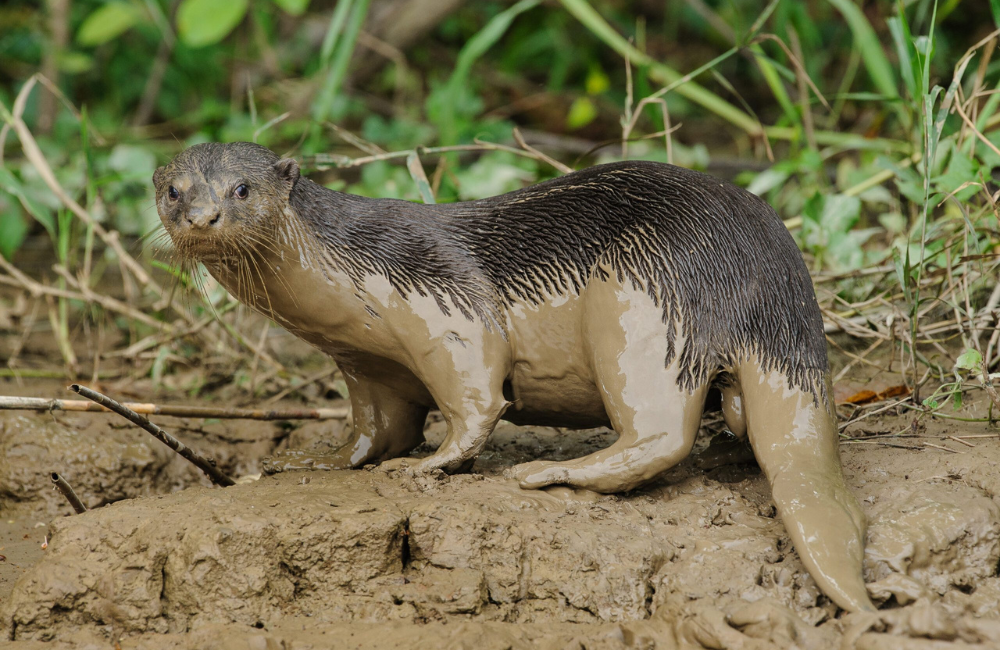
Bornean otter civet - a rare, endangered, semi-aquatic mammal native to Borneo, often found near rivers and forest streams, and recently spotted in Kuamut as a result of ongoing habitat conservation efforts.

Social impact that satisfies stakeholders and stands up to scrutiny

Approximately ten kilometres from the reserve boundary, two communities - Kuamut and Karamuak - live and work in the forest landscape. 

The project engaged both communities through Free, Prior and Informed Consent processes from the outset, and their involvement goes well beyond consultation.

As of 2024, the project had supported:

  • Livelihoods and employment:

    40 local residents employed directly, with 50% of roles held by women across activities such as forest patrolling and nursery management. Microfinance programmes also support local businesses, with a focus on women-led enterprises.

  • Healthcare access:

    914 people with improved access to healthcare, supported by a dedicated medical transportation boat - inaccessible roads make river travel the only viable route.

  • Water and infrastructure:

    Expansion of clean piped water supply to the Kuamut cluster, improving sanitation and community-wide health outcomes.

  • Education and capacity building:

    Scholarships for 100 students, alongside teacher training and investment in school facilities.

  • Community governance:

    A Community Executive Committee ensures local priorities guide project decisions, supported by ongoing community engagement.

For businesses reporting against SDG alignment or demonstrating social value as part of ESG and impact reporting frameworks, Kuamut's people pillar provides concrete, measurable evidence of positive community impact.

How this project scored in Earthly’s Keystone 3.0 assessment

Kuamut has been formally assessed and rated by Earthly under the

Keystone

3.0

- Earthly’s nature projects assessment framework evaluating projects across carbon, biodiversity, and people. 

The project achieved an overall

Earthly Rating of 7.6

, reflecting strong performance across all three pillars.

  • Carbon - 7.8:

    Reflecting the strength of its verified emission reductions, permanence safeguards, and additionality.

  • Biodiversity - 7.3:

    Recognising the scale and quality of habitat protection across one of the world’s most ecologically significant landscapes.

  • People - 7.7:

    Acknowledging the depth of community engagement, co-governance, and measurable social outcomes for neighbouring communities.

Rainforest conservation Malaysia Kuamut

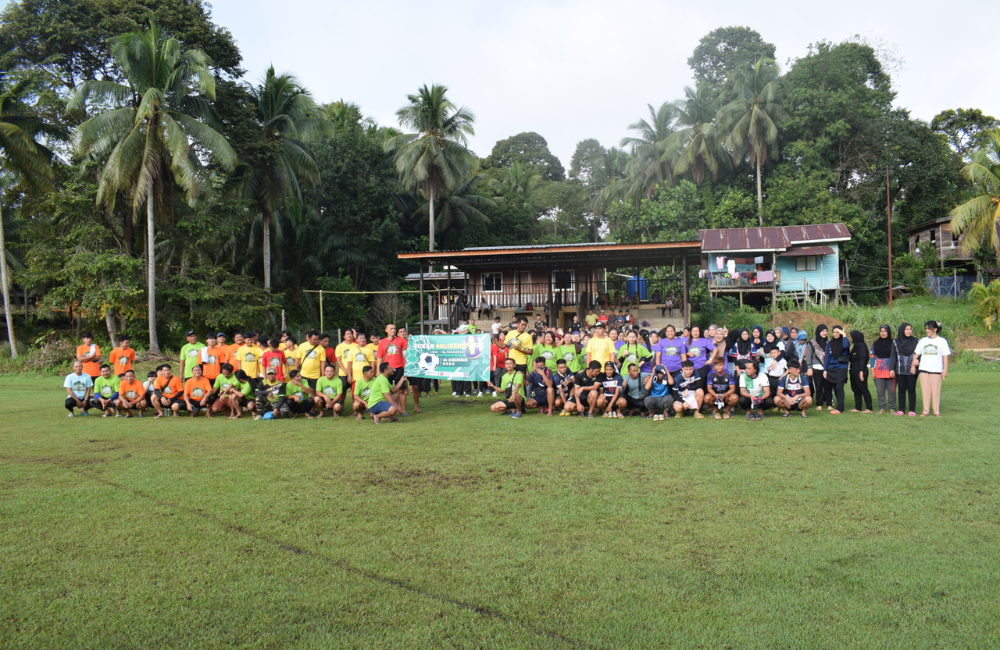
Local community members in Kuamut, Sabah, gathered for a group photo during a project event. Their involvement is central to the project’s co-designed conservation approach and long-term community outcomes.

CSRD, TNFD, ISSB: how this project helps you meet climate action disclosures and ESG

The regulatory environment for corporate nature and climate action is tightening. Businesses investing in high-integrity projects are better positioned to manage long-term climate and reporting risk.

EU Corporate Sustainability Reporting Directive (CSRD)

Large companies are now required to disclose material nature and climate impacts across their value chains, with evidence standards that go well beyond previous voluntary reporting norms.

Kuamut's verified carbon reductions are registered, retirement-traceable and independently audited under the Verra Verified Carbon Standard - giving your reporting team a fully documented, audit-ready record of your climate contribution that meets

CSRD's evidence threshold

.

Taskforce on Nature-related Financial Disclosures (TNFD)

TNFD

requires businesses to identify, assess and report on nature-related dependencies, impacts, risks and opportunities. 

Kuamut's biodiversity outcomes - 75 protected rare, threatened and endangered species, a legally enforceable Class I Forest Reserve boundary, and satellite-monitored canopy stability - provide substantive, documented evidence for TNFD disclosures.

ISSB Standards (IFRS S1 and IFRS S2)

ISSB standards

are establishing a global baseline for investor-focused sustainability disclosure, with multiple jurisdictions moving toward mandatory adoption. 

According to KPMG's Survey of Sustainability Reporting,

96%

of the world's largest companies now disclose ESG information - yet reporting without verifiable evidence creates legal and reputational exposure. 

Kuamut has been assessed by Earthly against the

Keystone 3.0 framework

- a rigorous 168-indicator methodology covering carbon, biodiversity and people - and passed. That assessment produces the structured, comparable, audit-ready data that ISSB-aligned disclosures require across climate risk, nature dependencies and resilience.

Kuamut elephant

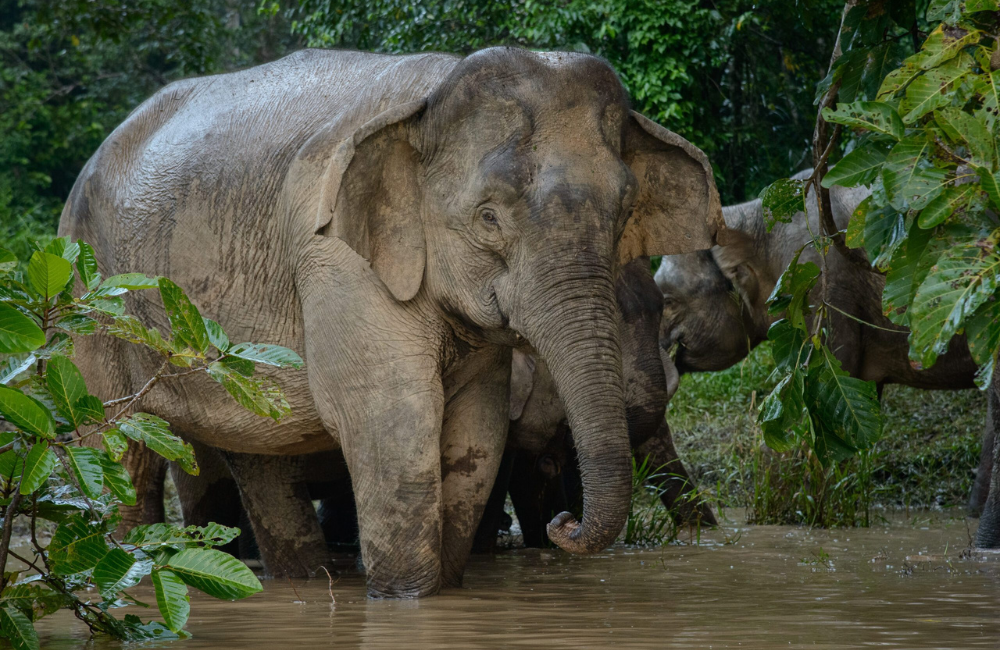
Bornean elephants in Kuamut, Sabah, moving through forest waterways. Their survival depends on the protection of intact rainforest habitats.

Reporting support to help sustainability teams report climate action with confidence

The advantage of a business investing in a high-integrity project is the ability to report on it with confidence in reports, disclosures and communicating it with confidence to the board, investors and stakeholders.

When you support the Rainforest Conservation Project in Sabah through Earthly, you get

project visualisation engagement tools

and support to help you tell your sustainability story without greenwashing:

  • Impact Dashboard:

    A live reporting tool that updates automatically as your contributions are registered - carbon, biodiversity and social impact in one place, without the manual burden of compiling evidence from multiple sources.

  • Verified carbon records:

    Every tonne registered and retirement-traceable on the Verra registry - documented, timestamped and independently auditable, ready for your sustainability report.

  • Three-pillar impact tracking:

    Carbon, biodiversity and people outcomes structured around the same Keystone 3.0 framework used to assess the project, so your reporting language aligns with your verification methodology.

  • Customer Hub:

    Guidance on claims language, what you can and cannot say, and how to tell your sustainability story in a way that is both compelling and compliant

  • Advisory support:

    Bespoke guidance from the Earthly team to help you integrate your nature investment into your wider sustainability strategy and maximise its reporting value

Earthly’s take: a nature based carbon credits project sustainability teams can stand behind

Earthly has assessed over 1,000 nature-based projects. Fewer than 9% meet our minimum standards. The Rainforest Conservation Project in Sabah, Malaysia is one of the strongest improved forest management projects we have seen, anywhere in the world.

What gives us confidence: 

  • Project permanence is legal, not voluntary - secured through Class I forest reserve status.

  • Verification is multi-layered and independently audited.

  • Biodiversity outcomes are documented and satellite-monitored.

  • Community impact is co-designed, co-governed, and measurable.

  • Assessed against 168 indicators within Earthly’s Keystone 3.0 framework, with integrity maintained across all dimensions.

We know that for many sustainability leaders, the hardest part of investing in nature is finding something you can genuinely stand behind when the

project credibility questions

get difficult. This project was built to meet that level of scrutiny - with the structure, verification, and transparency to stand up to it.

If you are building your nature strategy for the first time, this is an exceptional place to start. If you are deepening an existing portfolio with projects that can carry real reporting weight, it fits perfectly in your nature and climate action.

You can explore the

project and its full impact on our page

to see the verified outcomes, Earthly rating and project detail.

If you would like to talk through this project, or get a tailored portfolio of nature investments that could support your climate and nature commitments, please

get in touch with the Earthly team

Kuamut-17

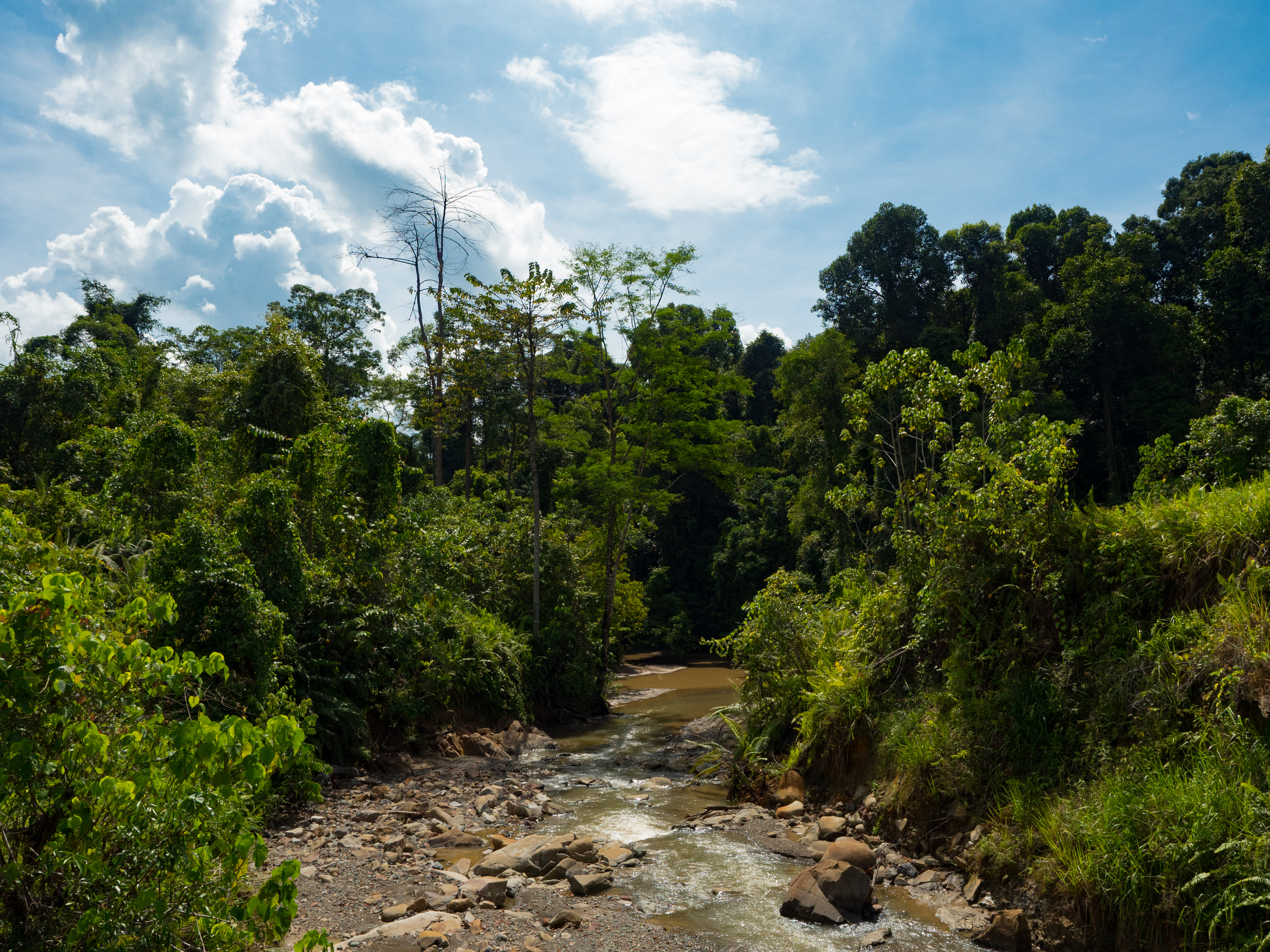
A river cutting through the Kuamut rainforest in Sabah, Malaysia - a landscape now protected and regenerating under long-term conservation efforts.

Frequently asked questions

How can businesses support the Rainforest Conservation Project in Sabah, Malaysia?

The Rainforest Conservation Project in Sabah, Malaysia is available on the Earthly marketplace. Businesses can

purchase verified carbon credits from the project

- each representing a tonne of CO2e avoided through permanent forest protection - and retire them against their climate commitments.

What type of project is the Kuamut rainforest conservation project?

Kuamut is an improved forest management (IFM) project focused on protecting and restoring a previously degraded rainforest landscape in Sabah, Malaysia, while generating verified carbon and biodiversity outcomes.

How is the carbon impact measured and verified?

Carbon impact is measured against a defined baseline and tracked over time using recognised methodologies. Emissions reductions are independently verified, supported by third-party audits, satellite monitoring, and internationally recognised standards.

What makes this project different from other nature-based solutions?

Kuamut combines legal forest protection, long-term monitoring, and independent verification, alongside measurable biodiversity and community outcomes. This creates a more structured and transparent approach compared to many projects in the market.

Is the Kuamut project impact long-term?

Yes, the rainforest conservation project in Sabah, Malaysia is longterm. The forest is secured under Class I protection, and the project includes ongoing monitoring and verification to ensure that both carbon and biodiversity outcomes are maintained over time.