Regenerative agriculture - a real-world carbon farming NbS project from Lithuania

A national-scale nature project transforming agriculture in Lithuania, while providing climate solutions for businesses navigating CSRD and TNFD requirements.

Faith Sayo

Faith Sayo

16 Apr, 2026

Loading...
Regenerative agriculture - a real-world carbon farming NbS project from Lithuania

Agriculture is a major contributor to climate change: responsible for roughly

23%

of global greenhouse gas emissions. It is also one of the most promising solutions for carbon sequestration if managed correctly. Shifting from conventional, extractive farming to regenerative agriculture allows the industry to transition from a net emitter to a carbon sink  restoring soil health, capturing atmospheric carbon dioxide, and enhancing biodiversity.

Earthly supports the

Improved Cropland Management in Lithuania

, a farmer-led regenerative agriculture programme that shows what happens when climate finance and soil science work together. Through this initiative, nearly 20,000 hectares of farmland are being transformed from conventional, input-heavy systems into regenerative, climate-positive landscapes. 

TL;DR - key takeaways

  • 138,000+ tCO₂e reduced or removed between 2020 and 2023

  • 19,500+ hectares under regenerative management across nine Lithuanian counties

  • €1.46M in zero-interest loans issued directly to participating farmers

  • Reduces nutrient runoff into the Baltic Sea - one of the world's most eutrophication-affected seas

  • Earthly rating: 6.9

    (Carbon: 6.4 · Biodiversity: 7.3 · Social: 6.9)

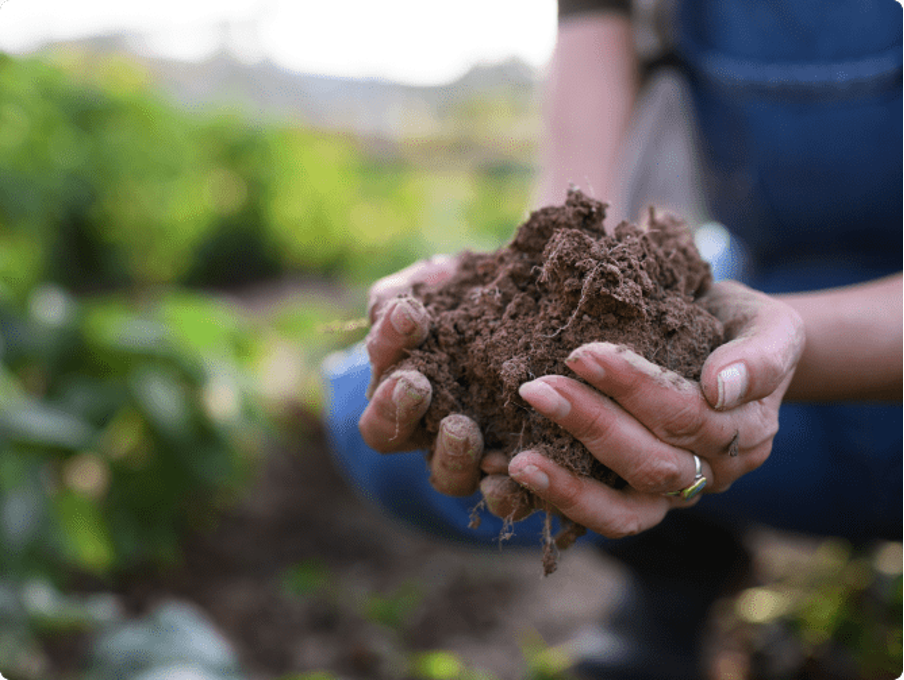
Hands gently holding rich, brown soil in a garden setting, with green plants blurred in the background.

Regenerative agriculture rebuilds topsoil structure, increasing soil organic matter and microbial biomass (up to 50% more than conventional farms), helping farmers reduce costs, improve yields, and strengthen long-term livelihoods.

Why regenerative farming in Lithuania?

Lithuania has strong agricultural foundations: fertile soils, a temperate climate, and a farming tradition that goes back centuries. 

But decades of intensive land management have left their mark. Soil organic carbon has declined. Nitrous oxide emissions from over-fertilised land have risen. And the nutrient runoff from Lithuanian croplands contributes to one of Europe's most pressing environmental challenges: the eutrophication of the

Baltic Sea

.

About the improved cropland management project in Lithuania

The project is implemented by

InSoil

and operates as a national-scale carbon farming programme across nine of the country’s ten counties. It supports 40 farms, covering 19,597.5 hectares of cropland, transitioning away from intensive conventional agriculture towards regenerative practices:

  • Reduced and no-tillage systems that protect soil structure

  • Residue retention to enhance organic matter

  • Cover crops and residue retention that keep soils continuously covered

  • Diversified crop rotations that support soil biology

  • Reduced synthetic fertiliser use

These are established methods, applied consistently, monitored rigorously, and backed by financial support.

The project impact is verified through a combination of farm records, soil sampling, and satellite-based remote sensing.

Carbon reduction and sequestration

The project delivers measurable climate impact by increasing soil organic carbon and reducing emissions from conventional farming practices.

  • Over 138,000 tCO₂e removed or reduced between 2020 and 2023

  • Improved soil carbon storage through regenerative practices

  • Reduced nitrous oxide emissions from lower synthetic fertiliser use

  • Lower fuel emissions through reduced tillage

Biodiversity benefits

By improving soil health and reducing chemical inputs, the project supports biodiversity both below and above ground.

  • Increased microbial activity, including fungi and beneficial bacteria

  • Improved soil structure supporting earthworms and other organisms

  • Reduced nutrient runoff, protecting rivers and groundwater

  • No land-use change, with strict safeguards to prevent ecosystem conversion

Positive changes for people

The project is designed to support farmers financially and improve long-term resilience in rural communities.

  • Supports forty farms across Lithuania

  • €1.46M in zero-interest loans provided to farmers

  • Additional income through verified carbon credits

  • Access to training, agronomic expertise, and ongoing technical support

  • Reduced exposure to synthetic fertilisers and pesticides

Water systems of the Baltic Sea

The Baltic Sea is one of the world's most severely eutrophication-affected marine ecosystems, with agricultural nutrient runoff - particularly nitrogen and phosphorus from fertiliser use - a major driver of the problem. 

By reducing synthetic fertiliser application across nearly 20,000 hectares of Lithuanian cropland, the project lowers the volume of nutrients entering rivers and ultimately the Baltic Sea, helping to reduce the algal blooms that deplete oxygen and damage marine ecosystems.

How Earthly assessed the project

Every project on the Earthly marketplace is assessed through

Keystone 3.0,

our industry-leading framework that evaluates 160+ data points across carbon, biodiversity and people. 

Improved Cropland Management - Lithuania scored 6.9 overall, with a balanced performance across all three pillars - Carbon (6.4), Biodiversity (7.3), and Social (6.9).

Our assessment also looks closely at how impact is measured and sustained over time. In this case, the project combines soil sampling, farm records, and satellite-based monitoring to track changes in soil carbon and farming practices. This level of data gives us confidence that the outcomes are not only measurable, but durable.

The programme runs to 2040, showing long-term commitment rather than short-term intervention. It is also developed under the VCS VM0042 methodology, a well-established framework for improved agricultural land management. This is important because it provides a consistent, science-based approach to measuring soil carbon changes, reducing uncertainty in how impact is calculated and verified.

What we find particularly compelling is the integrated design. This isn't a carbon project that happens to mention farmers; it's a farmer support programme that generates verified carbon outcomes.

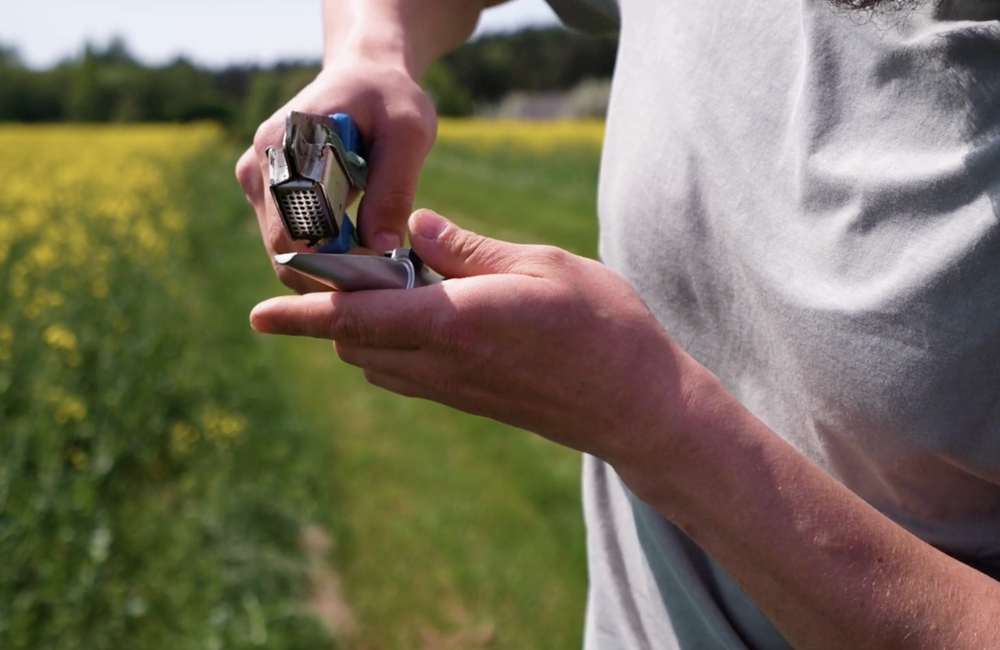
Improved cropland in Lithuania

Field-level monitoring in practice at the Improved Cropland Management - Lithuania project. Collecting data ensures changes in soil health and farming practices are accurately tracked over time, so project outcomes are reported transparently and reflect real impact.

How does this project help businesses meet CSRD and TNFD requirements?

For sustainability leaders, the regulatory backdrop has shifted.

Corporate sustainability reporting (CSRD)

now requires large companies to disclose material nature and climate risks, and to report on how they are managing them. 

The Taskforce on Nature-related Financial Disclosures (TNFD)

encourages businesses to assess their dependencies and impacts on nature - including agricultural supply chains. 

Supporting this project gives businesses a verified, traceable response to several converging pressures at once:

  • Carbon:

    Independently audited carbon credits under VCS, supporting credible emissions reporting and CSRD disclosures.

  • Biodiversity:

    Measurable improvements in soil health and reduced nutrient runoff, aligned with TNFD nature-related risk frameworks.

  • People:

    Strengthened farmer livelihoods and rural economic resilience, contributing to social value reporting and supply chain due diligence.

The project traceability is also strong:

  • Identifiable farms and project locations

  • Clear land area under management

  • Defined monitoring methodology (soil sampling, farm records, satellite data)

  • Annual, measurable results

This level of specificity makes a credible climate claim every year.

For businesses earlier in their nature and climate journey, this project also offers: a clear, well-evidenced starting point. Rather than navigating the voluntary carbon market from scratch, supporting a Keystone 3.0-assessed project means:

  • Due diligence is already completed

  • Co-benefits are verified across carbon, biodiversity, and people

  • Investment aligns with recognised frameworks such as CSRD and TNFD

Earthly's view

Earthly is genuinely excited to have the Improved Cropland Management project on our marketplace. 

It represents what we look for in a nature project: rigorous verification, community benefit benefit, biodiversity impact, and a design that treats climate and community as complementary rather than competing priorities.

Whether you're looking to strengthen your CSRD disclosures, respond to TNFD expectations, or simply invest in nature action you can stand behind, we'd love to talk.

Get in touch with our team

to explore how this project - and others like it - can work for your business.

How can my business support this nature project? 

Carbon credits from Improved Cropland Management - Lithuania are available through the Earthly marketplace. Visit the

project page

or

contact our team

to discuss volume, pricing, and how this project fits within your net zero or nature strategy.

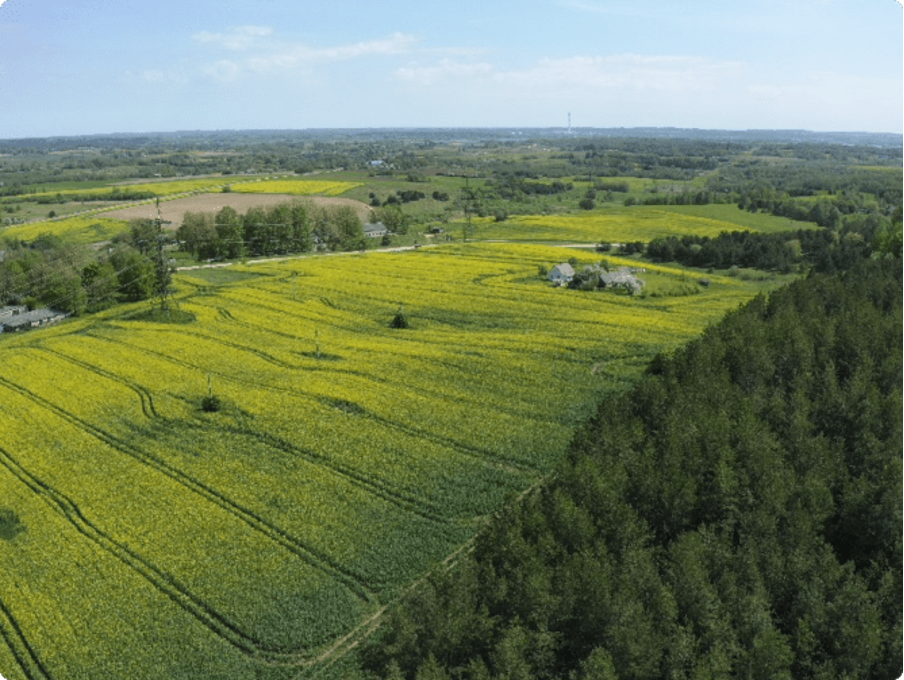
Aerial view of a scenic landscape with yellow fields, scattered trees, and a dense forest under a clear blue sky.

Global ESG assets are now estimated to be exceeding $50 trillion. Investors are demanding structured data, making high-integrity projects essential for credible disclosures and capital allocation. Businesses can meet these expectations by supporting verified, high impact projects ike this one.

FAQs

What is soil carbon, and why does it matter for climate?


Soil organic carbon is the carbon stored in the organic matter found in soil - decomposed plant material, microbial biomass, and related compounds. When soil is managed intensively through tillage and heavy fertiliser use, organic matter breaks down and carbon is released into the atmosphere. 

Regenerative practices such as reduced tillage and cover cropping slow this breakdown and allow soil organic carbon to accumulate, effectively storing carbon that would otherwise contribute to atmospheric greenhouse gas concentrations.

What is carbon farming?

Carbon farming is a set of agricultural practices designed to capture and store carbon in soil while reducing greenhouse gas emissions.

How does soil store carbon?

Plants absorb CO₂ through photosynthesis and transfer carbon into the soil through their roots, where it can be stored as organic matter.

Are agricultural carbon credits reliable?

When verified under recognised standards and supported by robust monitoring, they can provide credible and measurable climate impact.

What does VM0042 mean, and how does it verify carbon removals?


VM0042 is a methodology developed under the Verified Carbon Standard (VCS), administered by Verra. It provides a science-based framework for measuring and verifying greenhouse gas emission reductions and removals from improved agricultural land management. 

It requires robust baseline assessments, regular soil sampling, ongoing monitoring, and independent third-party verification - making credits issued under this methodology among the most rigorously substantiated available in voluntary carbon markets.