)
Innovation and tech
14.05.2026
The evolution of Keystone: Earthly’s best-in-class nature project assessment
The voluntary carbon market has changed a lot since 2020. Consequently, so has the way we assess projects. …

)
The people pillar in
evaluates whether nature-based projects deliver fair, inclusive, and lasting benefits for the communities involved. It assesses participation, rights, equity, livelihoods and governance to ensure social integrity is embedded alongside carbon and biodiversity outcomes.
TL;DR
The Keystone people pillar places communities at the centre of nature-based solutions.
Earthly’s Keystone 3.0 embeds social integrity directly into project assessment.
Strong community participation improves ecological resilience and long-term success.
Social outcomes are assessed with weighted indicators and verified evidence.
Nature-based solutions succeed when they balance environmental goals with the needs, knowledge, and participation of local communities.
At Earthly, this belief underpins the Keystone 3.0 people pillar, one of the three foundations of the Keystone 3.0 assessment framework, alongside carbon and biodiversity.
People are essential not only as stewards of the land but as decision-makers whose engagement shapes whether projects deliver long-term ecological and social benefits.
that projects involving local and Indigenous communities are far more likely to maintain restored ecosystems, prevent deforestation, and achieve lasting carbon sequestration.
Valuing local knowledge ensures interventions are culturally appropriate and responsive to real-world conditions. Indigenous practices, traditional land management, and community-led conservation often reveal solutions that science alone may overlook. Ignoring these perspectives can undermine project outcomes and even create unintended social or environmental harm.
is Earthly’s latest framework for evaluating the quality and impact of nature-based projects, combining carbon, biodiversity, and social metrics to provide a holistic, science-backed assessment. This new assessment methodology embeds this human-centred approach directly into its methodology.

A review of more than 250 studies by the Food and Agriculture Organization of the United Nations (FAO) and FILAC (Fund for the Development of the Indigenous Peoples of Latin America and the Caribbean) found that deforestation rates are significantly lower in Indigenous and Tribal territories where governments have formally recognised collective land rights.
A review of more than
by the FAO and FILAC found that deforestation rates are significantly lower in Indigenous and Tribal territories where governments have formally recognised collective land rights.
The social pillar, also called the people pillar, is one of the three foundations of the Earthly Keystone 3.0 Assessment, alongside carbon and biodiversity. Its purpose is to ensure that nature-baseds solutions (NbS) deliver real and lasting benefits for both people and nature, going beyond carbon accounting to take a more inclusive and holistic approach to impact.
Each pillar is assessed using 40 to 60 quality indicators, weighted by importance and supported by evidence such as:
Community surveys
Project documentation
Free, Prior, and Informed Consent (FPIC) records.
The social pillar is a core part of Keystone 3.0 - and what elevates it above other assessments - designed to evaluate how nature-based projects engage and benefit people while supporting lasting ecological outcomes. Rather than only measuring outputs such as jobs created or hectares restored, it examines the quality, fairness and sustainability of project impacts on local and Indigenous communities.
The pillar focuses on key dimensions, including:
Community participation
Respect for land and resource rights
Equitable benefit-sharing
Gender equality
Social co-benefits like improved livelihoods, education, and health.
This ensures that communities are active partners in project design and implementation, not just passive recipients.
Projects incorporating local and Indigenous knowledge are consistently
. Community engagement fosters stewardship, improves monitoring, and strengthens social license, helping projects maintain long-term ecological gains.
Keystone 3.0 integrates these insights by systematically evaluating governance, participation, and local context, providing a holistic assessment of social impact. By prioritising people alongside carbon and biodiversity outcomes, the Social Pillar helps investors and businesses support initiatives that deliver meaningful, enduring benefits for both communities and ecosystems.

The IUCN Global Standard for Nature-based Solutions exists specifically to ensure NbS deliver for both people and nature, with criteria/indicators including governance and social safeguards.
The
exists to ensure NbS deliver for both people and nature, with clear criteria on governance and social safeguards.
Keystone 3.0 measures social impact using a structured scoring methodology that balances maturity and confidence:
Maturity
evaluates how well-developed a project’s social measures are
Confidence
assesses how well-supported those measures are by evidence.
Together, they provide a nuanced view of both the design and reliability of social outcomes.
Evidence comes from multiple sources, including project documentation, community surveys, feedback from local and Indigenous stakeholders, and contextual research on local governance and social conditions. This allows assessors to verify whether projects are delivering meaningful participation, equitable benefits, and health-related improvements.
Each criterion, such as rights recognition, participation, equity, and benefit-sharing, is weighted based on its importance for long-term project success. The weighted results are then normalised to a 1-10 scale, allowing transparent comparison across projects and consistency with the carbon and biodiversity pillars.
Keystone introduces a stronger emphasis on equity, inclusion, and health outcomes, ensuring these dimensions are explicitly captured rather than implicit. While the scoring approach is consistent with other pillars, social criteria account for community-specific risks and opportunities, reflecting the human context that underpins the effectiveness and resilience of nature-based projects.

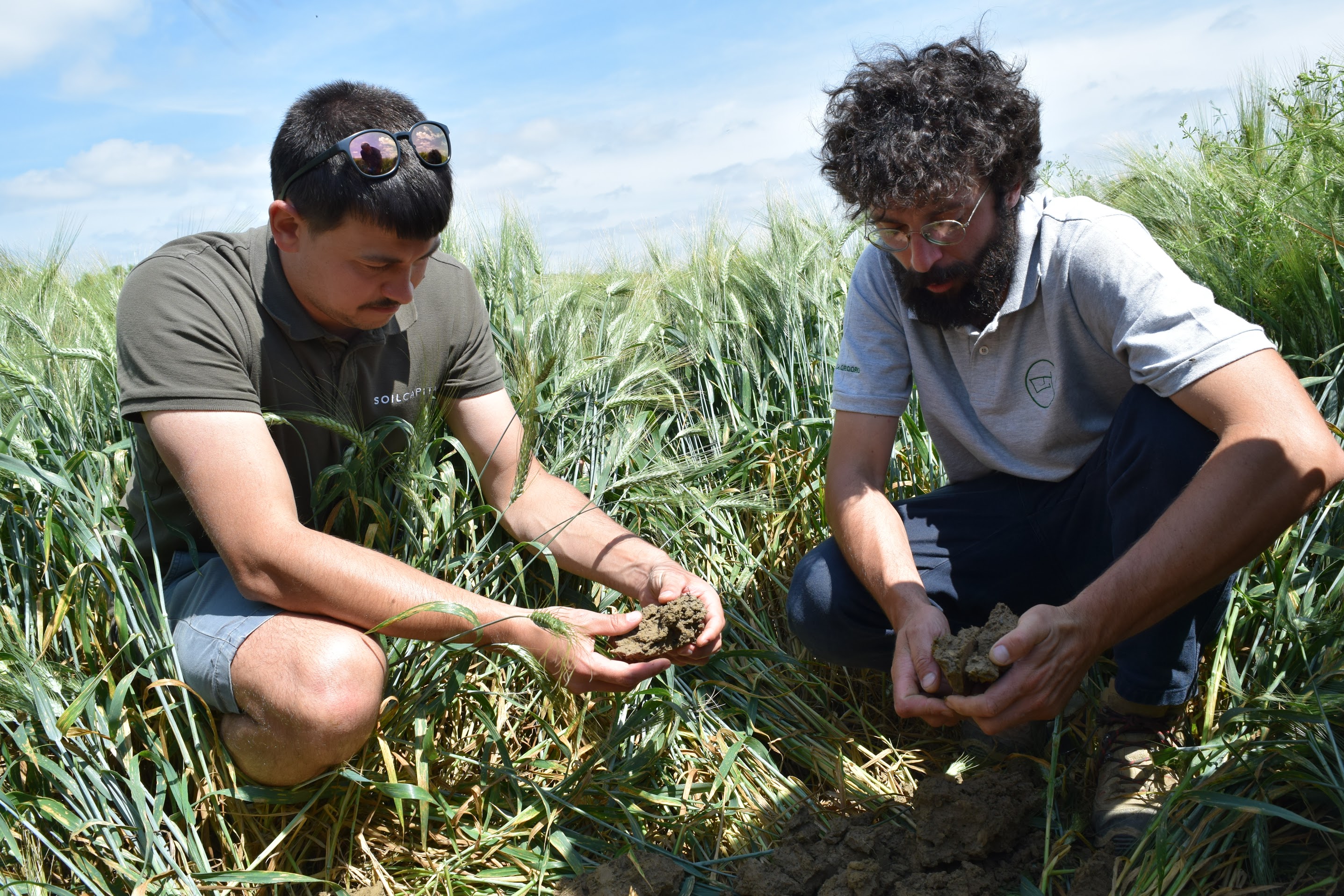
At its core, this pillar recognises that the success and longevity of NbS depend on the people who live and work within these landscapes. These could be farmers restoring degraded soils, forest managers leading reforestation efforts, coastal communities running mangrove nurseries, or Indigenous leaders safeguarding ancestral territories. Their local knowledge and cultural understanding guide restoration strategies that are effective, ethical, and resilient to change.
The social pillar measures how projects engage, benefit, and empower communities through criteria such as equity, stakeholder participation, livelihoods, education, health, and rights-based governance. Livelihood creation, fair benefit-sharing, and inclusive participation are central to lasting results. When communities have secure income, access to training, and a voice in decision-making, restoration becomes self-sustaining. Earthly’s analysis shows that projects with strong community participation demonstrate higher resilience and improved environmental outcomes over time.
According to the ILO, UNEP and IUCN, over
already work globally in nature-based solutions, with the potential for 32 million additional jobs through targeted investment.
Keystone 3.0 reflects this by rewarding projects that demonstrate equitable workforce participation, transparent governance, and clear benefit-sharing mechanisms. By embedding safe, fair, and inclusive working conditions into its assessment, Earthly ensures that human well-being is not treated as an afterthought but as an essential part of ecosystem restoration and long-term project success.
From Earthly’s experience assessing nature-based projects globally, strong environmental outcomes are inseparable from strong social foundations. Projects that invest in community voice, fairness, and wellbeing are more resilient, credible, and impactful over the long term.
Earthly’s Keystone 3.0 project assessment places people at the centre of lasting climate impact. By assessing social, ecological, and carbon outcomes together, we help projects deliver real benefits for communities and nature.
Explore the full framework in our Keystone 3.0 assessment whitepaper to see how your business can identify and support credible, high-quality nature-based solutions.
According to the ILO, UNEP and IUCN, over 60 million people already work globally in activities categorised as nature-based solutions. The same report estimates that with targeted investment, NbS employment could increase by up to 32 million jobs globally.
What is Earthly’s Keystone 3.0 Assessment?
Keystone 3.0 is Earthly’s latest framework for evaluating the integrity, impact, and risks of nature-based solutions across carbon, biodiversity, and social outcomes. It provides a holistic, science-based assessment of project quality and effectiveness.
What is the social pillar in Earthly’s Keystone 3.0 Assessment?
The social pillar, also called the people pillar, evaluates how nature projects engage, benefit, and empower local and Indigenous communities. It measures outcomes such as equity, livelihoods, education, health, and governance.
Why is the social pillar important for nature-based solutions?
People are essential to the long-term success of nature-based solutions. Community knowledge, participation, and well-being directly influence ecological outcomes and project resilience.
What makes Earthly’s approach different from standard social safeguards?
Earthly combines quantitative and qualitative evidence, contextual analysis, and continuous monitoring to assess social impact holistically. It rewards projects with strong community engagement, equitable benefit-sharing, and safe, inclusive working conditions.
How can businesses use the social pillar in their sustainability strategy?
Businesses can use social pillar scores to identify projects that deliver credible social and environmental impact, strengthen ESG reporting, and support inclusive, responsible nature-based investment.
To see how the People pillar fits into the bigger picture, explore the
and our other pillar deep-dives -
and
- or download the
.
Related articles
14.05.2026
The voluntary carbon market has changed a lot since 2020. Consequently, so has the way we assess projects. …
)
13.04.2026
The voluntary carbon and nature markets are at an inflection point. Retirement volumes declined 4% in …
)
09.02.2026
Keystone 3.0 is Earthly’s next-generation nature projects assessment framework, designed to help businesses identify high-integrity carbon credits, …