)
Sustainable business
27.07.2026
Webinar recap: How businesses can build a credible biodiversity investment strategy
Earthly brought together Lorienne Whittle, Rewilding Landscapes Manager at Nattergal ; Siobhan Stewart, Head of Delivery at …

)
On 11 June 2026, the
published the final Corporate Net-Zero Standard Version 2.0 - the biggest redesign of their flagship corporate climate framework since 2021. The standard takes effect on 1st February 2027, with target validation opening under the new rules from Q1 2027.
The central question that has hung over the carbon markets for two years is now answered:
carbon credits do have a formal place in SBTi-aligned climate strategies
. For companies with SBTi-validated targets, the update brings new expectations for how and when carbon credits should be used on the path to net zero.
The old SBTi Beyond Value Chain Mitigation (BVCM) guidance is replaced by the Ongoing Emissions Responsibility (OER) framework.
From 2027, companies can earn public SBTi recognition for taking responsibility for ongoing emissions through verified credit purchases.
Every company must declare its OER position at target validation.
From 2035, Category A companies are legally required to buy carbon removal credits.
Earthly's Keystone 3.0 framework and verified project portfolio can help businesses meet V2.0 requirements.
The
is the Science Based Targets initiative's flagship framework for corporate climate target setting. It defines how companies set, validate, and report science-based net-zero targets.
The update does three things:
Reporting
: Defines how companies set and report near-term reduction targets, introduces annual reporting requirements, five-year review cycles, and stricter scope 3 coverage for large companies.
It replaces
with the
: OER is a structured programme with public recognition tiers, mandatory disclosure requirements, and from 2035, a binding obligation for large companies to purchase carbon removal credits.
Compliance deadline and carbon credits:
From 2035, large companies must begin covering a rising share of their ongoing emissions with carbon removal credits.

SBTi's Corporate Net-Zero Standard V2.0 introduces mandatory annual reporting, a two-tier company classification system, a formal Ongoing Emissions Responsibility framework with three public recognition tiers, and a binding carbon removal requirement for large companies from 2035.
This is the first time SBTi has given carbon credits a defined, structured place across the full journey to net zero:
The voluntary OER recognition programme (from 2027):
Companies can earn public Engaged, Advanced, or Leadership status for taking responsibility for ongoing emissions through verified credit purchases, before it becomes mandatory.
The mandatory removal requirement (from 2035 for Category A companies):
Large companies in high-income countries must begin purchasing carbon removal credits, starting at 1% of their ongoing emissions and scaling to 100% by their net-zero year.
Neutralisation of residual emissions at the net-zero year:
Whatever a company still emits at and after its net-zero year must be offset with removal credits matched to the durability of the emissions being neutralised.
Companies that take responsibility for ongoing emissions before the 2035 mandatory deadline can earn formal Engaged, Advanced or Leadership status under the OER programme.
Participation must be declared when targets are validated. That decision, including any explanation for opting out, is then published on the ,
making it visible to investors, customers and regulators.
is based on size and geography.
Category A are companies with annual turnover above €50 million in high-income countries and above €450 million in lower-income countries. They face the strictest obligations:
Mandatory transition plans
Mandatory scope 3 targets
Mandatory third-party assurance
The 2035 removal requirement
Category B companies, mostly SMEsmall and medium-sized enterprises (SMEs) in all markets with turnover below €50 million, as well as companies in lower-income countries with turnover below €450 million. They face lighter obligations, though their emissions data will be requested by Category A customers up the value chain.
Scope 1 and 2 for all companies
Scope 3 for Category A companies only
Setting long-term net-zero targets is a company's choice, not a requirement. This gives companies more flexibility in how they structure their climate commitments while maintaining the rigour of near-term accountability.
Companies must report scope 1 and 2 emissions annually, with a full scope 1-3 report submitted to SBTi at the end of each five-year cycle.
Under V2.0, companies are expected to demonstrate ongoing progress, with their climate actions visible year after year.
Companies can now set targets using multiple pathways:
Supplier alignment targets:
Setting expectations for suppliers to establish their own validated science-based targets.
Product alignment targets:
Targeting emissions intensity at the product or service level.
Volume-based targets:
Measuring progress against emissions per unit of output or revenue.
Shared responsibility provisions:
Scope 3 emissions coverage can be split across value chain partners under a written agreement - useful where direct traceability has historically been the bottleneck.
Like before, carbon credits cannot be used to meet scope 1, 2 or 3 emissions reduction targets, and emissions reductions remain the foundation of credible climate action.
The SBTi continues to emphasise that carbon credits should complement decarbonisation efforts, not replace them.
Companies also have time to prepare for the transition, with Version 1.3.1 remaining available for new target submissions until 31 January 2028.

SBTi's new OER framework formally recognises carbon credits as part of corporate climate strategy for the first time. Earthly's Nbs carbon credit projects are assessed across 160 data points covering carbon, biodiversity, and people - and verified under Verra VCS, Gold Standard, and Plan Vivo - meaning they are built to meet the qualifying requirements.
The
formalises carbon credit procurement as a named, publicly visible part of corporate climate strategy for the first time.
The framework recognises three levels, each measured against cumulative scope 1, 2, and 3 emissions across the five-year target cycle.
Cover at least 1% of total ongoing scope 1-3 emissions. Companies can do this either tonne-for-tonne with retired, independently verified credits, or by applying a contribution budget at a recommended minimum of $20 per tonne directed toward eligible climate action.
Cover 100% of scope 1 and 2 emissions, and at least 10% of total ongoing scope 1-3 emissions. The same instrument options apply: retired credits tonne-for-tonne, or a $20/tonne contribution budget across the covered volume.
Cover 100% of all ongoing scope 1-3 emissions with a contribution budget of at least $80 per tonne, and retire verified credits for the full covered volume. SBTi describes Leadership as the full internalisation of the cost of climate change.
The $80 per tonne figure has attracted attention since the release of SBTi's draft standard. However, it is not a market price, compliance requirement or minimum carbon credit price.
Instead, $80 per tonne is the defined contribution budget for the Leadership tier within SBTi's proposed OER framework. Companies pursuing the Engaged tier work towards a recommended budget of $20 per tonne.
The financial impact depends on a company's emissions footprint.
At the Leadership tier:
A company with 50,000 tCO₂e of ongoing Scope 1-3 emissions would face a contribution budget of approximately $4 million per year.
A company with 500,000 tCO₂e of ongoing emissions would face a contribution budget of approximately $40 million per year.
At the Engaged tier:
A company with 500,000 tCO₂e of ongoing emissions would face a contribution budget of approximately $100,000 per year.
From 2035, the Ongoing Emissions Reduction programme stops being voluntary for Category A companies. Large companies headquartered in high-income countries will be required to purchase carbon removal credits.
The obligation phases in over time:
From 2035, companies must address at least 1% of ongoing Scope 1-3 emissions using carbon removal credits.
The requirement increases annually, reaching 100% of ongoing emissions by the company's net-zero target year.
Durable removals will also be phased in, rising from 10% of the removal requirement in 2035 to 100% by the net-zero year.
Companies also have less time than they may think: SBTi's five-year review cycle means many businesses will transition to V2.0 before 2035, making the next target cycle, not 2035 itself, the point at which planning needs to begin.

SBTi's Corporate Net-Zero Standard V2.0 takes effect on 1 February 2027, introducing mandatory reporting cycles, a formal carbon credit framework, and, from 2035, a binding obligation for large companies to purchase carbon removal credits.
Here are the four things that matter most before the new rules take effect.
Determine your category.
Category A or B determines your mandatory obligations from 2028 and your 2035 removal requirement. If you are near the threshold - broadly $450 million in revenue in a high-income country - or if you supply Category A customers, clarify this now.
Find your five-year review trigger date.
This is the date your existing targets were set, plus five years. That review is when you will need to set new targets under V2.0.
Make your OER declaration decision.
At your next target validation, you must state whether you are participating in OER. If the answer is no, you need a written justification for SBTi. It is worth deciding your position now, and if you are participating, which tier you are targeting.
Start building your removal portfolio.
Removal credit supply is limited and prices are expected to rise as the 2035 mandate approaches. Source verified removal credits now to earn OER recognition immediately and avoid competing in a tighter market closer to the compliance date.
In V2.0, nature-based solutions remain eligible and materially important, and their role evolves over time.
Under the voluntary OER recognition programme (20270-2035), nature-based reduction, avoidance and removal credits all qualify. This includes projects that protect, manage or restore ecosystems.
The standard explicitly recognises nature-based solutions for both their climate impact and their wider social and environmental benefits.
After 2035, the mandatory OER requirement shifts to removals only, with durable removals gradually increasing over time.
Nature-based removals account for up to 90% of the removals requirement in 2035, with their share gradually declining as durable, long-lived removals are phased in.
SBTi's supplementary guidance is clear that nature-based solutions and engineered removals are intended to be complementary. The standard encourages a diversified portfolio that combines nature-based projects with emerging carbon removal technologies.
Carbon credits used under OER must:
Be measured after the fact (ex-post outcomes only)
Be independently verified against a recognised standard
Be permanently retired when claimed
Be generated within five years of the reporting year
Credits that do not meet these requirements are ineligible.

Nature-based solutions can provide up to 37% of the emissions reductions needed by 2030 to keep global warming below 2°C. Beyond carbon, they also restore ecosystems, support biodiversity, and create lasting benefits for local communities.
Earthly helps businesses identify and support high-integrity nature-based projects, making it easier to build a carbon portfolio that aligns with OER quality standards.
Earthly's
assesses every project across 160+ data points before it reaches a buyer. Over 90% do not achieve our quality standards. The assessment covers:
Additionality:
Would the emissions reduction or removal have happened without the project?
Permanence:
Is the carbon stored durably enough to match the claim being made?
Biodiversity co-benefits:
Does the project deliver measurable nature-positive outcomes beyond carbon?
Social outcomes:
Are local communities genuinely benefiting and are rights being respected?
Governance:
Is the project managed and reported to a standard that holds up to scrutiny?
The rigorous assessment of project integrity provided by Keystone 3.0 helps buyers invest in high-quality nature projects with confidence while reducing procurement risk.
Projects on our marketplace are always verified the latest industry standards, including:
Verra VCS:
The world's most widely used voluntary carbon standard, with established independent auditing infrastructure.
Gold Standard:
Recognised for its rigorous social and environmental co-benefit requirements.
Plan Vivo:
Designed specifically for community-based land use projects, with strong local governance standards.
Projects also align, where relevant, with biodiversity frameworks including the DEFRA Biodiversity Net Gain Metric and SBTN. All credits are ex-post, independently audited, and permanently retired at the point of claim - meeting V2.0's quality.
For companies pursuing OER recognition at the Advanced or Leadership tier, biodiversity co-benefits demonstrate that credit purchases are contributing to nature-positive outcomes, not just meeting a tonnage threshold.
Each project delivers:
Verified, measurable habitat restoration and species recovery.
Independently assessed biodiversity units alongside carbon credits.
Outcomes that go beyond carbon to support a company's broader nature strategy.
Removal credit supply is currently limited, estimated at
per year against a voluntary market of around 180 million tonnes. As the 2035 mandatory requirement approaches, that gap will narrow and prices will rise. Earthly's
service allows companies to:
Secure verified removal credits from projects currently in development
Lock in supply and pricing ahead of the compliance window
Build a forward-looking removal portfolio that meets V2.0's quality bar from the point of delivery
For companies planning their OER portfolio over a five to ten year plan, future sourcing or early-stage project origination supports ongoing supply chain mitigation.
For companies working toward a specific OER recognition tier, the
is where portfolio-level planning becomes actual procurement. Credits available include:
Nature-based carbon credits across forest conservation, reforestation, and wetland restoration.
Voluntary Biodiversity Credits from UK habitat restoration projects.
Removal credits suitable for the 2035 mandatory requirement and net-zero neutralisation
To support transparent reporting and stakeholder communication, Earthly also provides
that help businesses track, measure, and demonstrate the outcomes of their climate and nature investments.
Browse
to explore verified carbon and biodiversity credit projects, or
to build a procurement strategy mapped to your OER tier and net-zero timeline.
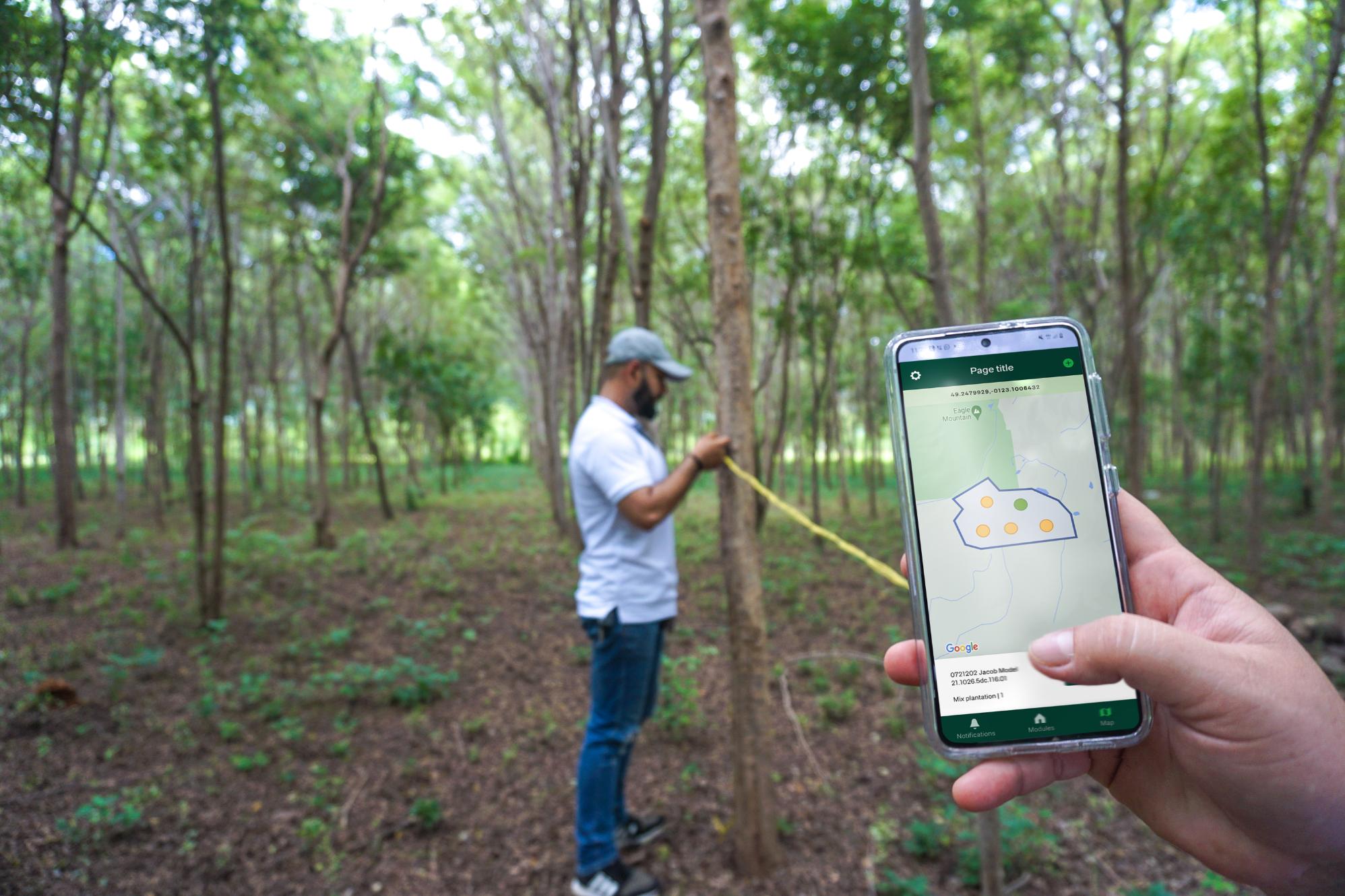
According to MSCI Carbon Project Ratings, just under 30% of nature-based projects achieve a high-quality rating (BBB+ or higher). Earthly supports projects with robust monitoring and field verification, helping ensure they meet the highest standards of quality and integrity so buyers can invest with confidence.
Can carbon credits now count toward my SBTi scope 1, 2, or 3 targets?
No, carbon credits cannot replace emissions reductions needed to meet Scope 1, 2, or 3 targets. The SBTi Net-Zero Standard V2.0 prioritises reducing emissions within a company's value chain, while introducing a greater role for carbon removals in addressing residual emissions on the path to net zero.
Does my existing SBTi target still apply?
Yes, existing near-term targets remain valid until the end of their target timeframe or the mandatory five-year review date, whichever comes sooner.
Is participation in the OER programme mandatory?
The recognition programme itself is voluntary until 2035 for Category A companies. But at target validation, every company must state publicly whether it is participating. Opting out requires a written explanation to SBTi, published on the SBTi Dashboard.
Are nature-based credits still eligible under V2.0?
Yes, high-quality nature-based carbon removal projects are an important way for companies to address residual emissions under the draft Net-Zero Standard V2.0, provided they meet V2.0's quality criteria.
Related articles
27.07.2026
Earthly brought together Lorienne Whittle, Rewilding Landscapes Manager at Nattergal ; Siobhan Stewart, Head of Delivery at …
)
08.07.2026
Eight in ten companies reporting on sustainability are now doing it across more than one framework simultaneously …
)
11.06.2026
More than 11,000 companies worldwide have set or committed to science-based targets through the Science Based …