)
Innovation and tech
14.05.2026
The evolution of Keystone: Earthly’s best-in-class nature project assessment
The voluntary carbon market has changed a lot since 2020. Consequently, so has the way we assess projects. …

)
is Earthly’s next-generation nature projects assessment framework, designed to help businesses identify high-integrity carbon credits, biodiversity credits, and wider nature-based solutions. It strengthens how projects are evaluated across carbon, biodiversity, and people, ensuring investment supports measurable, lasting benefits for ecosystems and communities.
TL;DR - Key takeaways
Keystone 3.0 helps businesses trust the quality and integrity of nature projects.
Earthly assesses projects across carbon, biodiversity, and social impact.
The framework now covers biodiversity credits and compares project types.
Keystone raises scientific rigour through independent validation and monitoring.
Context-specific evaluation ensures projects deliver equitable local outcomes.
If you’ve ever struggled to know which nature-based projects truly deliver, you’re not alone. As more organisations look to invest in nature, to reach climate goals, support biodiversity, or engage employees and customers, one question keeps coming up:
How can we be sure our investment is making a real difference?
The truth is, not all nature projects live up to their promises. Some lack data. Others overclaim. And too many fail to show how people and ecosystems actually benefit.
That’s why we built
Keystone 3.0: the latest evolution of the Earthly assessment
.
Keystone 3.0 is Earthly’s rigorous integrity assessment for nature-based solutions, ensuring that carbon and biodiversity investments are grounded in credible baselines, additionality, robust monitoring, and lasting benefits for ecosystems and communities.
Over the past year, Earthly's Research Team has transformed our assessment to create
, the next generation of our assessment framework and a major step forward in how quality is defined.
It is built around three core goals: to become more holistic, better adapted to different social contexts, and more rigorous:
Holistic
: We have expanded beyond focusing on carbon credit projects to assess a wider range of nature-based solutions.
Context-specific
: We now embed a structured analysis of each project´s local social context to ensure evaluations are culturally relevant and equitable.
Rigorous
: We have deepened the scientific depth of our indicators across all three pillars, setting a new benchmark for what integrity in nature-based projects truly means.
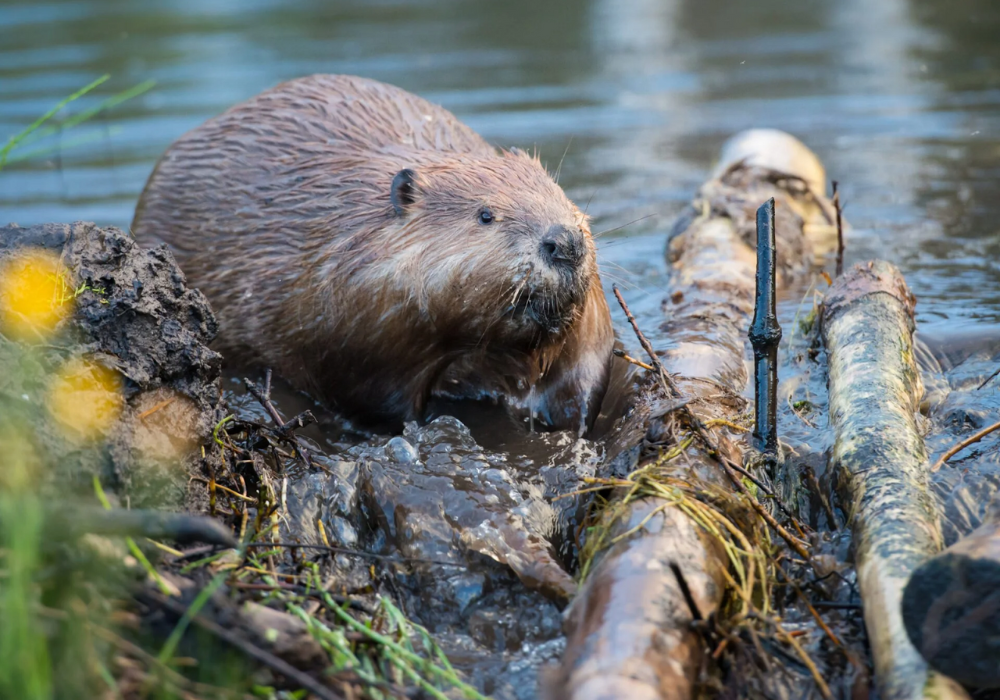
Our Keystone 3.0 project assessment is able to evaluate a broader spectrum of nature-based solutions, such as beaver reintroduction.
Nature-based solutions are not defined by a single model or market, and our assessment framework shouldn’t be either. Keystone 3.0 expands beyond assessing carbon credits to embrace a wider spectrum of nature-based solutions, including biodiversity credits, tree planting programmes, and innovation projects. This evolution enables us to evaluate projects that previously fell outside our scope, such as beaver reintroduction, native oyster restoration, and kelp forest recovery, but still support critical ecological processes that are important to finance and scale.
Keystone 3.0 achieves this breadth by tailoring its criteria to each project type and context, ensuring that measures of quality remain both rigorous and relevant. Crucially, it is registry and project-type agnostic, assessing projects based on their intrinsic quality and impact, rather than their registry affiliation or category of nature-based solution.
By widening our lens, we unlock new opportunities to guide investment towards a broader range of projects that restore nature with integrity.
According to WWF’s Living Planet Report, monitored wildlife populations have declined by an average of
since 1970, showing the scale and urgency of global biodiversity loss. The biodiversity crisis is as urgent as the climate crisis, which is why Earthly is proud to offer high-quality, voluntary biodiversity credits, enabling businesses to support nature restoration directly.
Biodiversity credits are measurable units that represent verified investments in habitat restoration and ecosystem recovery.
Each credit represents a defined area within a project where targeted actions are taking place. But biodiversity is inherently complex and interconnected, making it challenging to measure, monitor, and evaluate.
To meet that challenge, Keystone 3.0 introduces Earthly’s first dedicated Biodiversity Credit Assessment, a framework built to evaluate both ecological integrity and long-term resilience.
This framework examines three key dimensions:
Suitability
: We assess whether restored habitats and species are ecologically appropriate and guided by a clear, measurable Theory of Change.
Monitoring
: We evaluate the strength of the indicators, tools, and sampling methods used to track biodiversity outcomes and progress over time.
Resilience
: We examine how effectively restoration results are safeguarded into the future, including whether projects address the root causes of ecosystem degradation to secure lasting recovery.
Together, these dimensions form a holistic, science-based framework that can be applied across diverse restoration types, ecosystem conditions, and geographies worldwide.
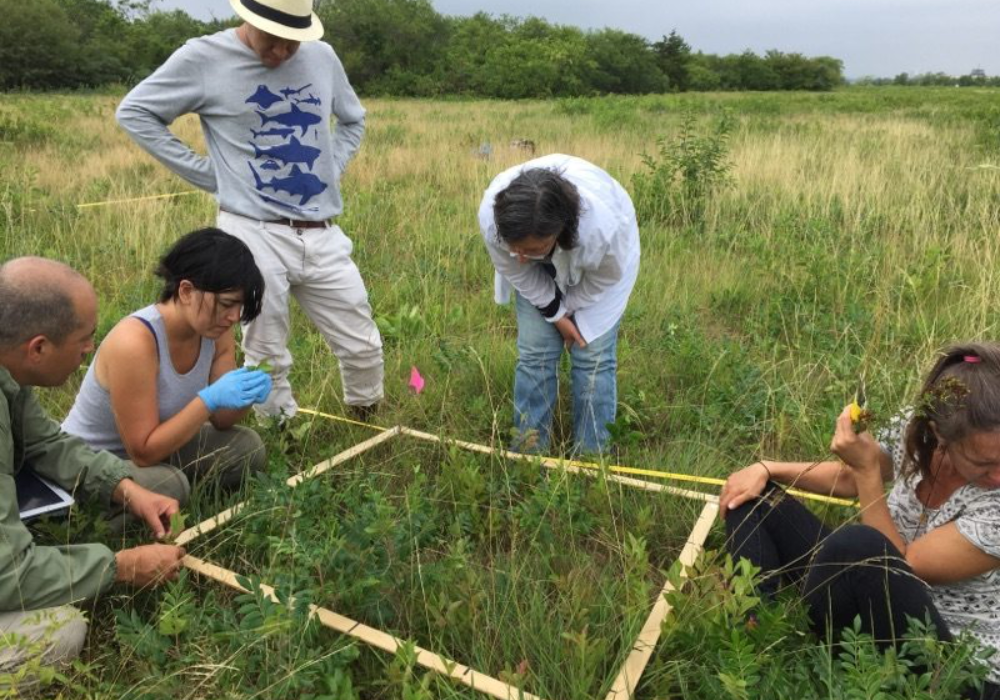
Biodiversity projects employ a range of monitoring techniques to quantify ecological impact, tailored to the restoration activity and ecosystem type.
The UN estimates that effective nature and climate solutions must include
, as these groups protect a significant share of global biodiversity.
Earthly projects span diverse regions around the world, each with its own social realities. Land tenure, livelihoods, and community structures vary widely, meaning that a “one-size-fits-all” approach to assessing the People pillar risks overlooking what truly defines success. Understanding the local social context is therefore essential, as it shapes what quality and impact look like on the ground.
A project in an area with limited access to education, for instance, might contribute most meaningfully by strengthening local education systems directly. In contrast, a project where education is already well established might focus on environmental awareness and conservation education instead. The benchmark for quality is never universal; it must be rooted in relevance.
To ensure this, Keystone 3.0 now requires every Earthly assessor to conduct an independent contextual analysis before scoring a project. This includes:
Land tenure:
Examining ownership and land-use conditions, and assessing how effectively projects recognise and strengthen customary and Indigenous land rights.
Socio-economic baseline:
Reviewing local conditions such as access to education, healthcare, and employment, and evaluating how the project responds to these needs and opportunities.
Stakeholder mapping:
Identifying both direct and indirect stakeholders to understand their level of participation and influence in project decision-making.
Community and Indigenous rights and practices:
Ensuring cultural traditions, rights, and knowledge systems are respected, valued, and incorporated into project design and implementation.
By grounding every assessment in its local social context, Keystone 3.0 ensures that evaluations are fair, culturally relevant, and genuinely equitable.
Social contexts vary across projects, depending on the location, restoration activity, land tenure systems, and local socio-economic conditions.
The International Emissions Trading Association’s updated VCM Guidelines 2.0
outline clear principles designed to build confidence in verified carbon credits by ensuring only high-quality credits are used and that credit use is transparently accounted for and disclosed. This emphasis on transparency and clear evidence enables organisations to integrate carbon credits into climate strategies with greater confidence and reduces the risk of reputational concerns that can slow investment.
Keystone 3.0 is raising the standard for project quality across every dimension, expanding its scope with new sections and indicators that strengthen how we evaluate project quality across the three pillars of carbon, biodiversity, and people.
Carbon remains one of the three cornerstones of our analysis, and we have significantly strengthened how we assess and verify carbon performance across all project types:
Accuracy
: One major area of improvement in Keystone is accuracy. It evaluates whether a project’s issuance of carbon credits matches real, measurable benefits. In earlier versions, assessments drew primarily from project documents and registry data.
Independent verification:
In Keystone 3.0, we independently recalculate carbon impact, creating a benchmark against which project claims are tested. This allows us to detect risks of overestimating carbon impact with far greater precision.
Permanence
: We have also advanced how we assess permanence. We are developing a live monitoring system through continuous remote sensing analysis that tracks risks such as fire, flooding, and deforestation within and around the project area. This enables early detection of potential reversals and signs of leakage.
Carbon across all nature-based solutions:
Finally, Keystone 3.0 introduces a dedicated carbon pillar for projects that are not primarily designed as carbon credit initiatives, such as biodiversity restoration and tree planting. This ensures we capture both the short- and long-term carbon impact of all nature-based solutions, recognising that climate change remains one of the greatest threats to ecosystems globally.
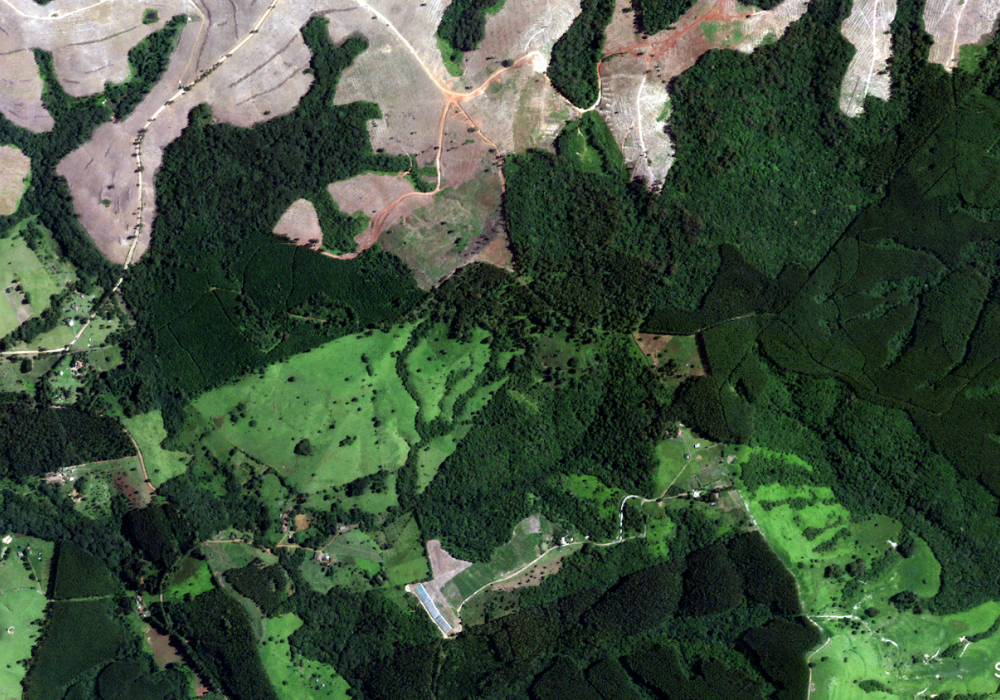
Earthly uses geospatial imagery to assess project baselines and to monitor impact, leakage and non-permanence risks, including fire.
For sustainability teams, investing in nature supports climate goals, contributes to biodiversity recovery, and engages stakeholders. But navigating carbon credits, biodiversity credits, and nature restoration projects is complex - and the risks of low-quality or poorly evidenced projects can create hesitation.
Keystone 3.0 helps businesses overcome these challenges by providing a clear, science-based way to identify high-integrity nature projects that deliver measurable impact.
Through Earthly’s assessment, businesses can:
Reduce integrity and reputational risk
by supporting projects that are independently evaluated against rigorous criteria for carbon, biodiversity, and people.
Make better-informed investment decisions
with transparent evidence on project baselines, additionality, monitoring strength, and long-term resilience.
Support both climate and nature goals
through access to high-quality carbon credits and voluntary biodiversity credits, assessed using a holistic framework.
Strengthen sustainability reporting and claims
by grounding contributions in credible data and robust indicators, aligned with rising expectations for transparency.
Engage employees, customers and stakeholders
through high-impact nature projects that deliver real benefits for ecosystems and local communities.
Keystone 3.0 enables businesses to move beyond uncertainty and direct funding toward nature restoration with integrity - helping ensure contributions create lasting value for the planet and the people who depend on it.
Through our experience assessing and working with nature projects across different ecosystems, geographies, and social contexts, we’ve seen firsthand how important rigorous, transparent evaluation is to delivering real impact.
The Earthly Assessment is a living framework, continuously evolving as knowledge improves and nature-based solutions grow and diversify. By refining how we measure quality and impact across different types of projects, Keystone 3.0 marks another important step in our mission to channel funding toward the projects that regenerate the planet, for nature and for people.
You can now explore Keystone 3.0 in more depth:
Read our
Explore the
Explore the
Explore the
Download the
to see the full assessment framework
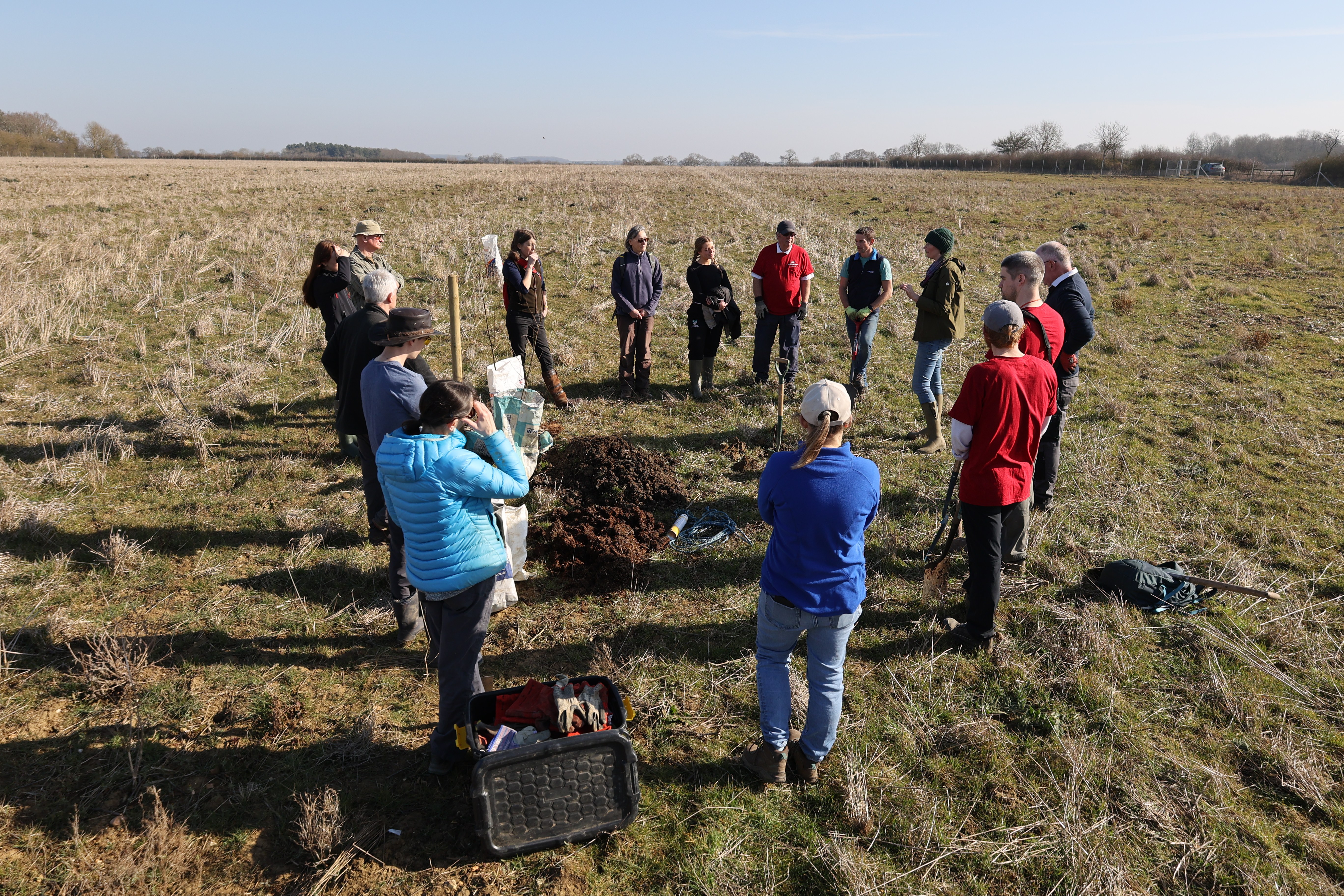
Keystone 3.0 assesses carbon, biodiversity, and people outcomes of nature projects to help businesses invest in high-integrity planet restoration and regeneration with confidence.
What is Keystone 3.0?
Keystone 3.0 is Earthly’s latest assessment framework for evaluating carbon credits, biodiversity credits, and wider nature-based solutions with scientific rigour.
How does Keystone 3.0 improve integrity in nature projects?
Keystone 3.0 strengthens baseline testing, additionality checks, leakage analysis, monitoring, and permanence evaluation to ensure projects deliver real outcomes.
Does Keystone 3.0 assess biodiversity credits?
Yes, Keystone 3.0 introduces Earthly’s first dedicated Biodiversity Credit Assessment focused on suitability, monitoring, and resilience.
Why is context-specific assessment important
Context-specific assessment for nature-based projects is important because social realities vary widely. Keystone 3.0 embeds local contextual analysis to ensure projects are equitable, culturally relevant, and impactful.
Who should use Keystone 3.0?
Sustainability professionals and organisations seeking high-quality, high-impact nature projects for carbon offsetting, biodiversity investment, or stakeh
Related articles
14.05.2026
The voluntary carbon market has changed a lot since 2020. Consequently, so has the way we assess projects. …
)
13.04.2026
The voluntary carbon and nature markets are at an inflection point. Retirement volumes declined 4% in …
)
27.01.2026
Keystone 3.0 is Earthly’s holistic nature-based assessment framework for evaluating the integrity and impact of nature projects …