26.09.2024
Partnering with a future-focused bank
Launched in January 2016, imagin has already reached more than a million customers. They are Spain’s …
)
At Halnaker Hill Farm in West Sussex, decades of continuous monoculture (farming where the same crop fills the same fields, year after year, with no rotation and no respite for the soil) has finally given way to something more ambitious. A 130-hectare downland farm is being transformed into a rich mosaic of calcareous grassland, native woodland, species-rich hedgerows, and restored dew ponds. It's one of the UK's largest Biodiversity Net Gain (BNG) and voluntary biodiversity credit (VBC) schemes. And it's now available for businesses to support on Earthly's
.
130 hectares of intensively farmed arable land in the South Downs is being transformed into a diverse habitat mosaic.
The project restores lowland calcareous grassland, one of England's rarest and most biodiverse habitats.
A Section 106 legal agreement with South Downs National Park Authority guarantees stewardship for at least 30 years.
The site supports legally protected species including great crested newts, common lizards and skylarks.
Earthly's Keystone assessment gave this project an overall score of
7.0
:
Carbon: 6.5 / Biodiversity: 7.2 / People: 5.7
A single square metre of well-managed chalk grassland can support more plant species than a hectare of improved farmland.
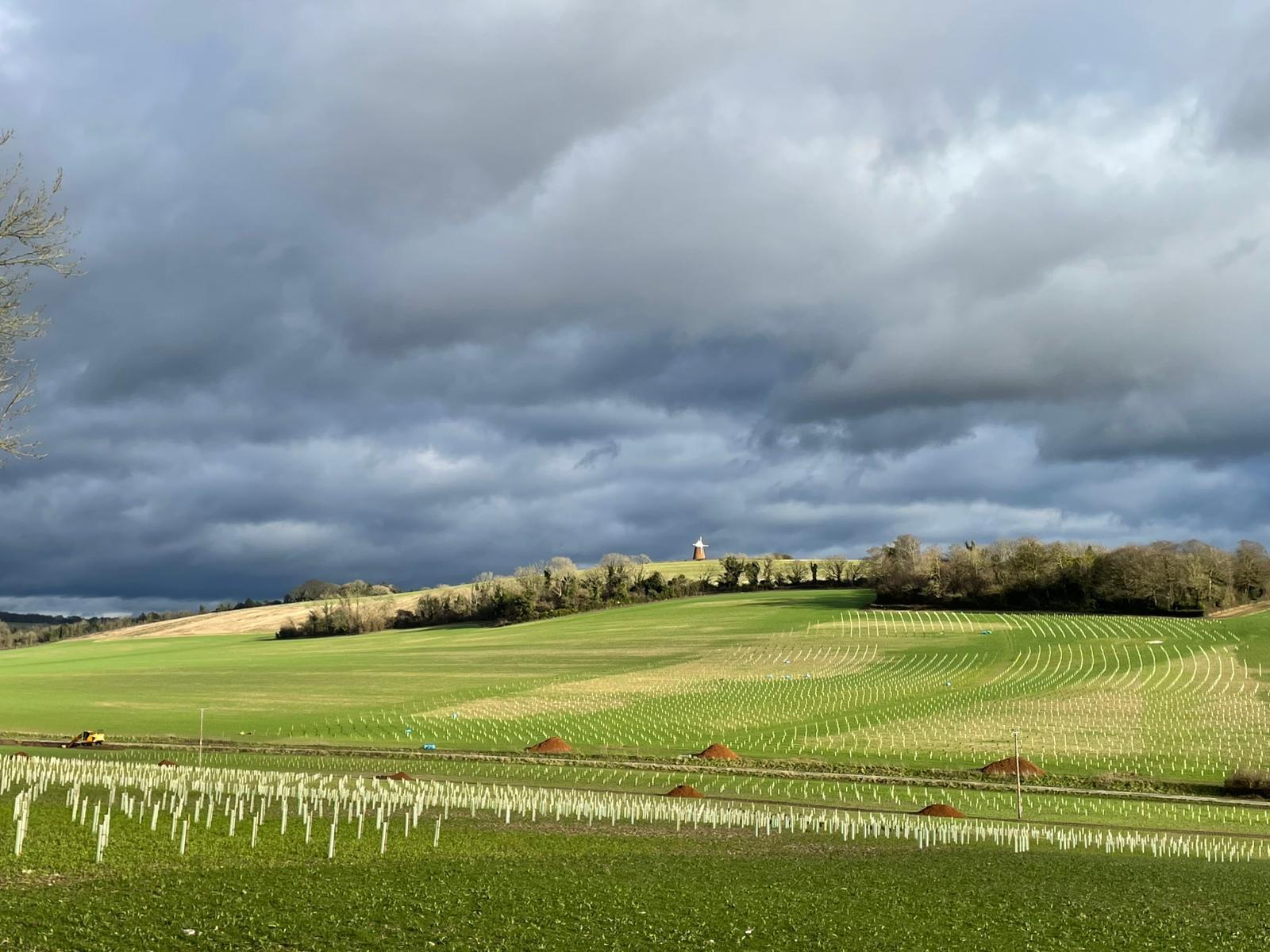
Imagine the South Downs as they looked in 1795: the ancient Yeakell and Gardner maps from that year shows a patchwork of small fields separated by miles of mature hedgerows. At least half of the farm is covered in rough grazing pasture and wildflower meadow; chalk banks are alive with orchids and butterflies; and dew ponds are buzzing with insects at the valley bottom. At the top of the hill, a windmill built in the 1740s stands inside a Neolithic enclosure, four thousand years of human history layered into one view.
That landscape largely disappeared after 1979, when Halnaker Hill Farm shifted to intensive wheat production. The hedgerows were ripped out, the meadows were ploughed and the dew ponds dried out. Today, that history has become the blueprint, and the restoration has begun.

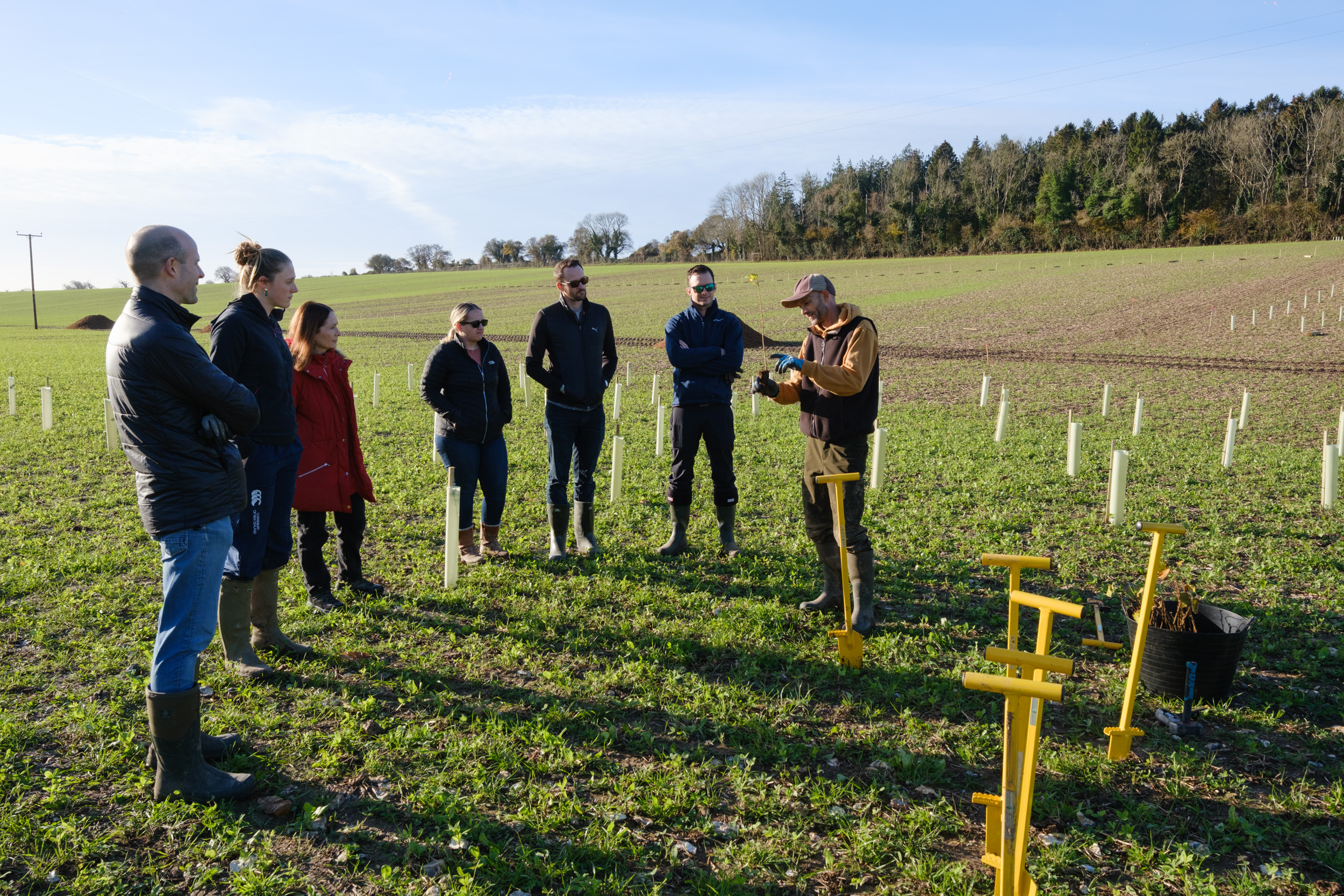
The team on the ground at Halnaker Hill farm, where 425 native trees are being planted as part of one of the UK's largest BNG and VBC schemes.
Located near Chichester, West Sussex, Halnaker Hill Farm is owned by Halnaker Hill Natural Capital and managed commercially by
, an established developer of environmental projects across the south of England. The farm was purchased from a retiring farmer whose land (Grade 3–4 agricultural land, comparatively poor quality) had been sustaining continuous wheat crops through high volumes of synthetic fertilisers, pesticides, herbicides and fungicides. The result was significant soil degradation and a decades-long decline in biodiversity.
The project is now reversing that trajectory across 130 hectares. Within the area available to support through
, the focus is on the restoration of
lowland calcareous grassland
, one of the most ecologically rich habitats in the UK and a regional conservation priority for the South Downs. Eight distinct habitat types are also being established across the wider site:
Lowland calcareous grassland
Other calcareous and neutral grassland
Mixed scrub
Priority ponds (two new dew ponds restored in 2025)
Native broadleaved woodland (forming a new east–west ecological corridor)
Species-rich native hedgerows with trees (over 11 kilometres)
425 native trees
This is not a passive rewilding project. The Habitat Management and Monitoring Plan (HMMP) sets out a detailed, phased timeline for how each habitat type is created, enhanced, and maintained, with clearly defined condition targets and an adaptive management approach that is already being put to use. In year one, drought conditions prompted a pragmatic switch from cut-and-collect mowing to grazing on calcareous grassland; stocking rates were scaled from 250 sheep in August 2025 to over 850 by December to manage grass growth ahead of wildflower establishment in 2026. That kind of responsive, evidence-based management is exactly what a high-quality biodiversity project looks like in practice.
Ecologists have called lowland calcareous grassland a "biodiversity hotspot in miniature." A single square metre of well-managed chalk grassland can support more plant species than a hectare of improved farmland. The shallow, lime-rich soils over chalk and limestone that characterise the Halnaker Hill Farm site are the same substrate that historically supported the iconic chalk downland of southern England: a landscape of pyramidal orchids, cowslips, kidney vetch, adonis blue butterflies and skylarks. This habitat has lost around 80% of its coverage in England since the 1930s, driven almost entirely by agricultural intensification.
What makes the Halnaker Hill Farm project especially compelling is the site's existing ecology. Soil sampling by specialist ecologists confirmed that phosphorus levels in the north-east of the site (the primary target for calcareous grassland restoration) are already close to optimal for specialist chalk flora, suggesting a viable seed bank may still be present. The eastern chalk banks retain remnant grassland vegetation that provides both a seed source and a reference point for target conditions.
Several notable species are already recorded in the area. Great crested newts, a UK Biodiversity Framework priority species fully protected under the Wildlife and Countryside Act 1981, are present adjacent to the southern boundary, and the new dew ponds are expected to significantly increase breeding habitat for them. Skylark, yellowhammer and brown hare are recorded on and adjacent to the site. Basil thyme and broad-leaved cudweed, listed as Vulnerable and Endangered on the GB Vascular Plant Red Data List respectively, occur in the vicinity. The chalky topography also places the site within a landscape that already supports notable invertebrates, including the rosy-striped knot-horn moth, a nationally restricted species with records immediately adjacent to the eastern boundary.

Lowland calcareous grassland has lost around 80% of its coverage in England since the 1930s. Halnaker Hill is restoring 130 hectares of it through native tree planting, species-rich hedgerows, and the return of chalk downland habitat.
Earthly assessed Halnaker Hill Farm using its
, which evaluates projects across 168 indicators spanning carbon, biodiversity and people with a level of scrutiny that is driving quality in the market.
On biodiversity
, the project scores well for ecological design integrity, with a comprehensive and science-informed management plan grounded in historical land-use data. The intervention logic is strong: the site has been formally confirmed as suitable for calcareous grassland restoration through detailed soil analysis and species surveys, the target habitats are ecologically appropriate for the location, and the risk register demonstrates a mature approach to anticipating and managing challenges. The legal architecture is particularly robust. A Section 106 agreement between Halnaker Hill Natural Capital and the South Downs National Park Authority provides enforceable 30-year stewardship, and the project operates within the high-governance context of the UK, with strong political stability and active national policy support for nature recovery.
On carbon
, the project does not generate carbon credits and is not positioned as a carbon offset product. What the Keystone assessment found, however, is a clear and well-reasoned account of positive carbon impacts across the intervention. The cessation of ploughing stops ongoing soil carbon losses. The establishment of permanent grassland, scrub, woodland and hedgerows increases both above-ground biomass carbon and below-ground soil organic carbon over time. The project explicitly addresses leakage risk (the possibility that agricultural activity has simply moved elsewhere) and provides a credible, evidence-based argument for why it has not.
On people
, the project performs solidly on equity, labour rights and cultural heritage. Anti-discrimination policies are formally documented through the Kingsbridge Estates employee handbook. The project has widened and improved a public footpath running through the farm and is planning to install information boards to educate visitors about habitat restoration. Local suppliers have been used for all significant works to date, including fencing, tree planting, seed drilling and pond creation. The main gap identified in the assessment is formal social monitoring, which is not yet in place; Earthly is in active dialogue with the project developer on this point.
Biodiversity projects like Halnaker Hill Farm occupy a distinctive and important position in the nature investment landscape. Biodiversity Net Gain units there are regulated under UK law and mandatory under the Environment Act 2021. The land use for both BNG and voluntary biodiversity credits is monitored by a local planning authority with legal step-in rights, and secured by binding land agreements that are enforceable in the courts. This is a different risk profile to many voluntary carbon or tree-planting projects, and one that corporate sustainability teams should understand.
For companies with nature-related disclosure obligations under the
(TNFD) or with commitments aligned to
(SBTN), supporting habitat creation in a National Park within your own country of operation is a meaningful and demonstrable contribution to measurable biodiversity improvement. The project directly supports the UK Government's
of protecting and managing 30% of land for nature by 2030, and contributes to the South Downs National Park Authority's
by the same year.
There is also the question of quality. Earthly's Keystone evaluation showed a project with a credible theory of change, appropriately qualified ecologists, and a realistic budget of £8 million over 30 years. The year-one monitoring report demonstrates genuine adaptive management in action. The first year of implementation has already delivered two new dew ponds with established aquatic vegetation and early invertebrate colonisation, thousands of hedgerow and woodland saplings with a mortality rate below 7%, and calcareous grassland swards achieving 8–10 plant species per square metre. This is a strong foundation for achieving an exciting target condition.
Halnaker Hill Farm is the kind of project that reminds you why nature restoration matters, and why doing it well is both harder and more valuable than it looks. Forty years of continuous monoculture in one of England's most ecologically sensitive landscapes has left real ecological debt. The team at Halnaker Hill Natural Capital and Kingsbridge are paying it down methodically, hectare by hectare, guided by science and backed by legal certainty.
We are genuinely excited to bring this project to Earthly's marketplace. If you want to understand how supporting Halnaker Hill Farm could contribute to your corporate biodiversity or TNFD strategy, or if you'd like to discuss your wider approach to nature investment,
. We'd love to talk.

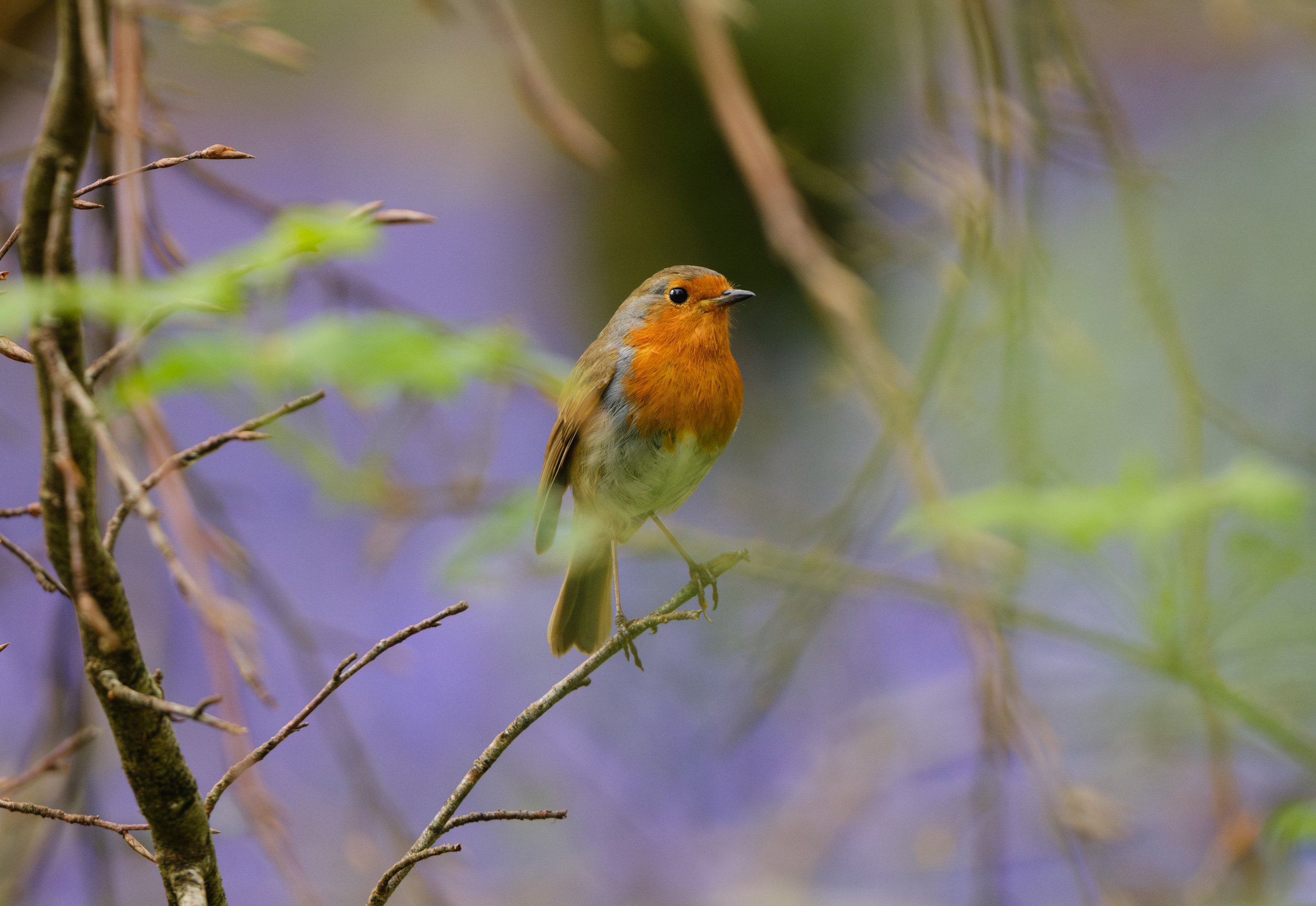
A robin spotted among the restored habitats at Halnaker Hill. Your business can help support habitats for robins and countless other species by investing in nature projects through Earthly. Every project is rigorously assessed using our Keystone framework, ensuring your investment delivers measurable impact for biodiversity, carbon and people.
What is lowland calcareous grassland, and why is it important?
A priority habitat on shallow, lime-rich soils over chalk or limestone, lowland calcareous grassland is among the most species-rich environments in northern Europe. A single square metre can support 30 or more plant species. It has declined by roughly 80% in England since the 1930s, driven almost entirely by agricultural intensification.
What species could benefit from the Halnaker Hill Farm restoration?
The Halnaker Hill Farm project is expected to benefit great crested newts, common lizards, slow worms, brown hares, skylarks and yellowhammers. Chalk scrapes seeded with kidney vetch and horseshoe vetch will also support specialist butterflies, including adonis blue, which are closely associated with well-managed calcareous downland.
How is the project's impact monitored and enforced?
A Section 106 agreement gives the South Downs National Park Authority the right to inspect the site, issue breach notices, and carry out remedial works at the developer's cost. Ecological surveys by The Ecology Co-op are scheduled at years 1, 2, 5, 10, 15, 20, 25, and 30.
Can businesses use Halnaker Hill Farm as part of their biodiversity or TNFD disclosure strategy?
Yes. The project delivers measurable, legally secured biodiversity outcomes in a nationally significant landscape, aligned with the UK's 30x30 commitments. Earthly can help your team understand how it maps to your TNFD, SBTN, or wider environmental reporting requirements.
Related articles