)
Community and partners
26.09.2024
Partnering with a future-focused bank
Launched in January 2016, imagin has already reached more than a million customers. They are Spain’s …

)
All images:
Jonathan Perugia for Nattergal
Earthly is proud to introduce
to our marketplace: Nattergal’s landmark 617-hectare rewilding project in Lincolnshire that is transforming grade 3 degraded arable land into a thriving mosaic of habitats. Independently assessed using Earthly's rigorous Keystone 3.0 framework and awarded an overall score of 8.16 out of 10, this is exactly the kind of bold, credible and community-rooted nature project that we think sustainability leaders should know about.
617 hectares of degraded arable land converted to rich habitat mosaic in Lincolnshire
Voluntary biodiversity credits (VBCs) verified under the UK’s statutory Biodiversity Net Gain metricStrong community co-benefits: education, ecotourism, employment, and access to nature
Developed by Nattergal, an award-winning nature restoration company, which stemmed out of the Knepp Estate,the UK's most celebrated rewilding success story
Earthly Keystone 3.0 score: 8.2 (Carbon: 8.25 | Biodiversity: 8.07 | People: 8.03)
The open landscape of South Lincolnshire is a quiet horizon of fields that, for decades, have yielded cereal crops in industrial rotation. Now imagine that same land beginning to breathe again: wildflowers appearing in ex-arable fields; beavers quietly rewiring the hydrology of a river valley; threatened songbird returning; and children from local schools and Scout groups crouching by a restored pond, pipette in hand, discovering a world of invertebrate life. This is Boothby Wildland. It is not a restoration project that waits for the future to arrive; it is already well underway, led by people who believe that what was lost can be found again, and that the countryside can be productive for communities,abundant for nature and deliver valuable economic benefits.
Boothby Wildland sits south of Grantham in South Kesteven, Lincolnshire, in a county that ranks among the most intensively farmed in England. The 617-hectare site was purchased in December 2021 by
, with the vision to transform a Grade 3 arable landscape into a haven for biodiversity. The site underwent a three-year phased reversion from intensive arable production, whilst being the stage for carefully considered, evidence-led interventions which will accelerate ecological recovery.
Recovery of the land is being led by nature, which aims to create a dynamic, resilient, habitat mosaic: a multi-ecosystem approach that goes well beyond simple tree planting or grassland seeding. The project is creating species-rich grasslands, scrub, wetlands, ponds and riparian habitats alongside a growing woodland structure. Neighbouring woodlands provide seed sources and strengthen broader ecological connectivity. The site draws revenue from various natural capital markets and includes voluntary carbon and
schemes. The majority of the site has been formally designated as Habitat Banks, generating BNG units and
verified under DEFRA’s statutory biodiversity metric, one of the most robust biodiversity credit frameworks in the world.
The land has been legally secured for nature restoration for a minimum of 30 years via a section 106 agreement, ensuring that the land will remain protected for nature even if ownership changes. This framework provides the long-term permanence that serious corporate nature commitments require and that sustainability leaders rightly expect.
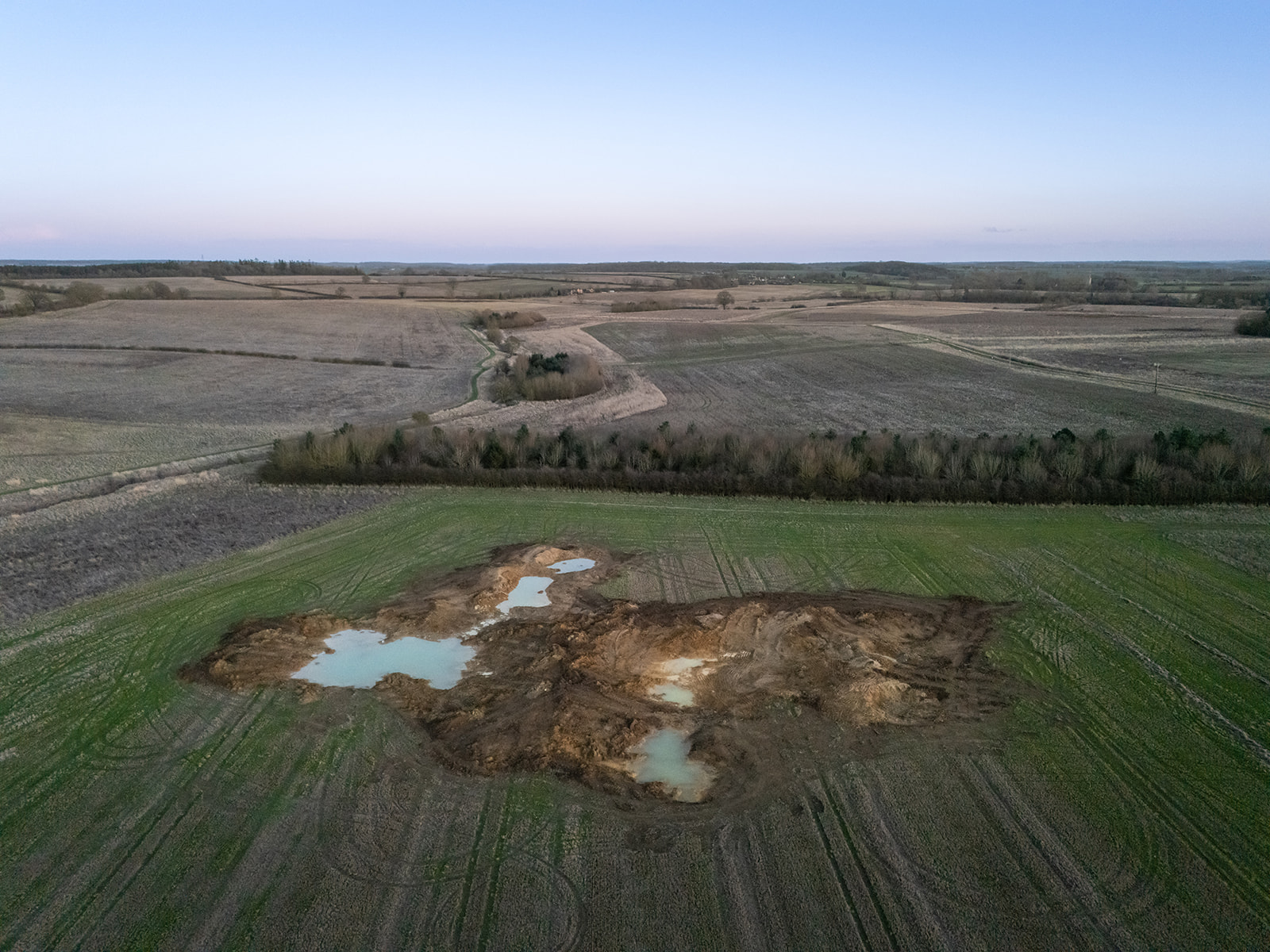
54% of UK plant species have decreased in distribution, alongside 59% of mosses and liverworts. Restoration of degraded farmlands and wetland creation like this at Boothby Wildland supports long-term nature recovery.
The cessation of intensive arable farming at Boothby is already delivering meaningful climate benefits. The project is sequestering carbon in soils and growing biomass, while eliminating the direct and indirect emissions associated with cereal cropping - from machinery fuel to nitrogen fertiliser production, one of agriculture's most carbon-intensive inputs.
The carbon monitoring at Boothby goes beyond minimum requirements; they measure soil carbon at an unprecedented sampling rate, down to 1m in depth, and use drone mounted LiDAR and photogrammetry to a 2.5cm resolution for biomass carbon measurements. The site is expected to capture a gross amount of 138,000TCO2 equivalent across its soils and woodlands over the next 50 years.
Boothby is waiting for the verification of its woodland and soil carbon Pending issuance units (PIUs) with the Woodland Carbon Code in 2030 and the UK Carbon Code of Conduct (UKCCC) in 2028.The areas of land used for BNG units and carbon credits are precisely defined to avoid additionality issues. The site’s contribution to climate action through carbon sequestration, reduced emissions, and enhanced ecosystem resilience is substantial and independently verified.
The project's water management activities are also directly relevant to climate adaptation. The Boothby team are restoring the site’s natural hydrology by breaking land drains, creating ponds and wetlands, re-meandering the West Glen river and allowing natural vegetation to take hold. By adding over 4000m
2
of water storage across the site, Boothby is actively reducing flood risk, a benefit that will be keenly felt by communities downstream. They have recently reintroduced a family of beavers to further help the wildland hold water, as well as creating valuable wetland habitat.
The key to this project is letting nature take the reins, following carefully planned ecological ‘kickstarters’ to help reinstate natural processes. Over time the soils and vegetation in the large arable fields will rewild themselves into an ever-evolving kaleidoscope of habitats. The introduction of free-roaming herbivores will bring a multitude of ongoing benefits to the wildland, whilst providing a source of pasture-fed local meat.
The early ecological monitoring results at Boothby are already striking. A baseline bioacoustic bird survey conducted in winter 2023 recorded 52 species on-site, including 41 species deemed of conservation concern on the UK Red List for birds such as: skylark, yellowhammer, and grey partridge. These are not just impressive numbers; they represent species that have declined catastrophically across the UK agricultural landscape, and their presence on a site still in the early stages of recovery speaks to the latent ecological potential of the land.
As habitats mature, Boothby is hoped to become a breeding ground for iconic species such as turtle dove, nightingale, and cuckoo: legends of the English countryside that have become tragically rare. Invertebrate populations are expected to increase substantially, enhancing bat diversity and supporting a cascade of ecological recovery throughout the food web.
Perhaps the most exciting individual feature of the project is the beaver habitat, which at over 200 hectares is the largest of any beaver project currently operating in England. Beavers are nature's own hydrological engineers; their activity creates and maintains wetland habitats that support extraordinary concentrations of biodiversity. Combined with new ponds, scrapes, and the restoration of the West Glen River corridor, Boothby is building a functioning wetland ecosystem in a landscape that had almost entirely lost one.
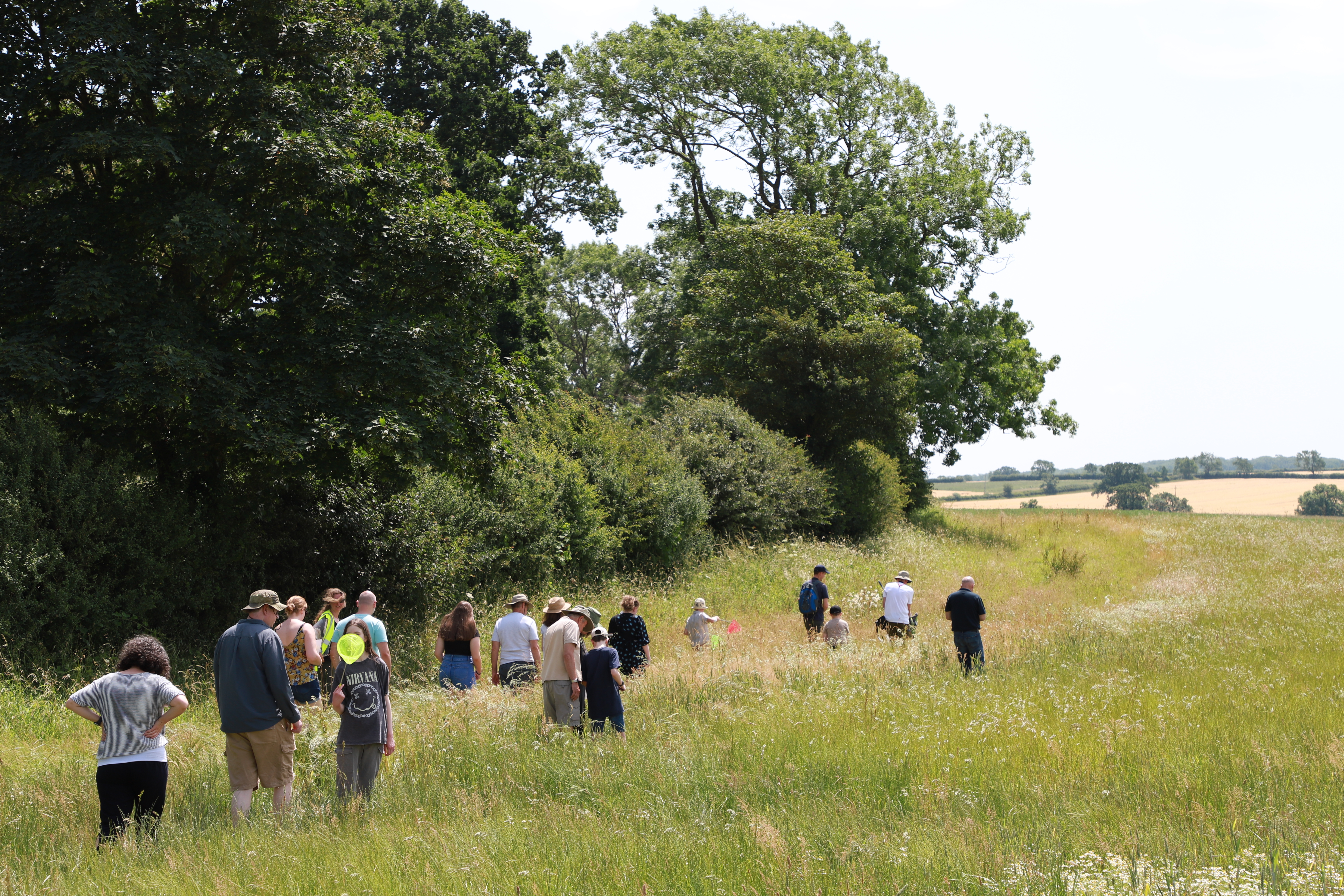
According to a Conservation Biology study, over 80% of community-based conservation projects deliver positive outcomes. Involving local people is important, and verified projects like Boothby Wildland that involve them have lasting impact for nature, climate, and communities.
The project has been designed with local people at its core, and the evidence of community engagement is extensive and genuine. Boothby has achieved the highest ‘people’ score of all our biodiversity credit projects to date. Weekly volunteer days, an annual Nature Day that drew enthusiastic local participation from its very first year, school visits, guided rewilding tours, and a stakeholder steering group all reflect a project that understands that nature recovery and community wellbeing are inseparable. Nattergal recently announced a partnership with the Scouts; they are sponsoring the “nature badge”, creating an opportunity to connect over half a million youths to Nature.
Following community consultations, the route of permissive footpaths were re-designed and works are underway to build an additional 6km, creating a network of 25km of pathways across the Wildland, enabling the local community to benefit from access to wild nature. Importantly, over 1km of accessible paths will be included to ensure that nature is available to all. By 2030, the project aims to engage 500 school-aged children annually in educational visits. Employment on-site has also grown to four full-time team, with roles spanning ecology, land management and community engagement
The project organises regular guided rewilding tours and welcomes organisations for immersive team days. It is building a sustainable rural economy around nature, in a district where the Local Plan explicitly identifies tourism and rural economic diversification as strategic priorities.
Earthly assesses nature-based projects using our Keystone 3.0 framework, a rigorous, independently conducted process that evaluates projects across carbon, biodiversity, and social dimensions. Boothby Wildland's overall score of 8.16 out of 10 is a strong result, and reflects a project that genuinely excels across all three pillars:
Carbon: 8.25
Biodiversity: 8.07
People: 8.03
What distinguishes Boothby is the combination of ambition, evidence and accountability. Their baseline data is comprehensive and methodologically sound. The monitoring framework is detailed and independently verifiable. Nattergal, the developer, has built on the proven model of
(the UK's pioneering large-scale rewilding project), bringing together a team of rewilding specialists, financial experts, and ecologists to create something genuinely replicable. The community engagement is not performative; it is documented, responsive and evolving. And the use of legal conservation covenants means that the ecological gains are secured for the long term, regardless of what happens to investors or ownership structures.
For companies needing to demonstrate credible nature commitments, whether in response to TNFD disclosure requirements, corporate biodiversity targets, or voluntary commitments, this is the quality benchmark.
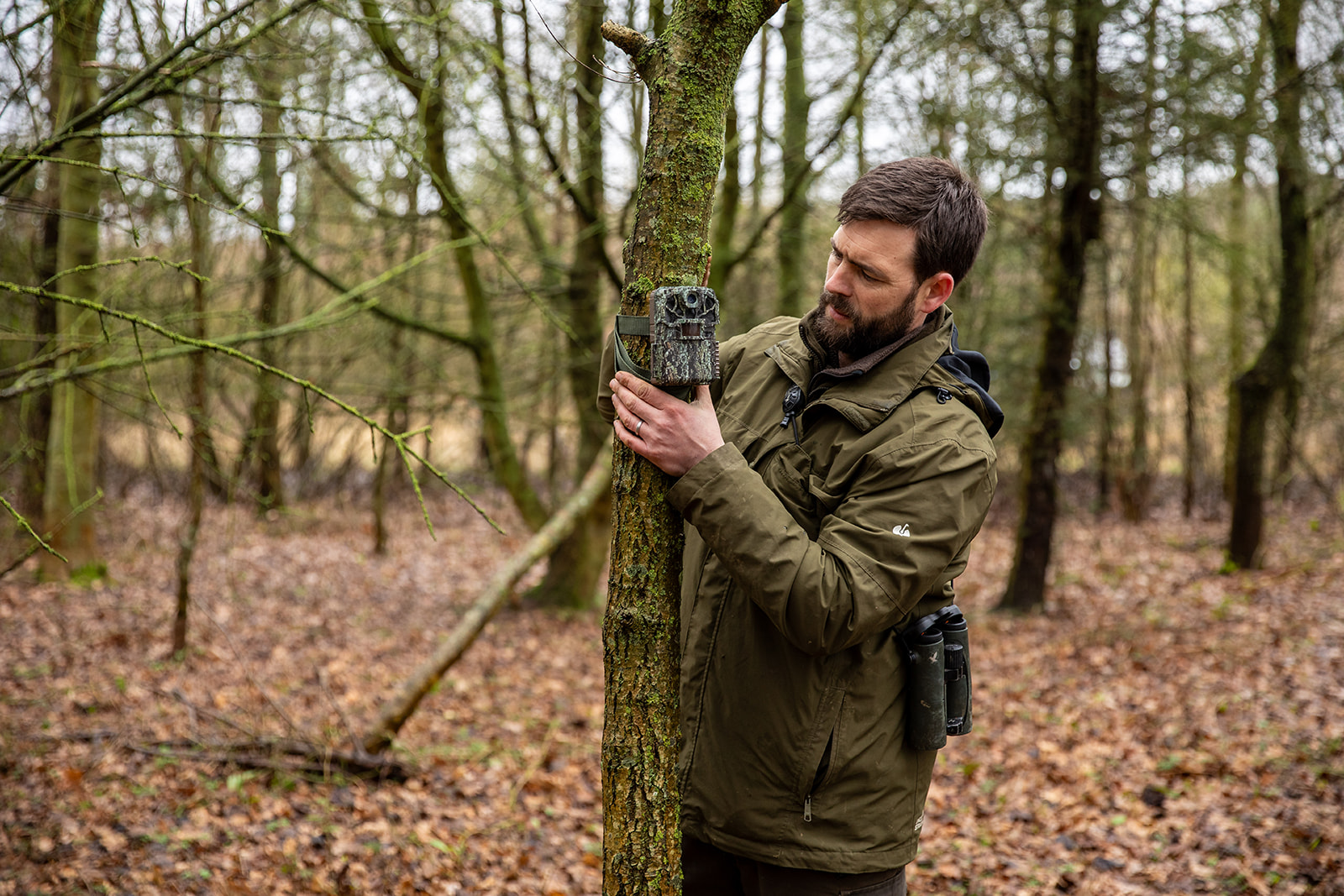
Boothby is highly rated (8.2/10) under Earthly’s Keystone 3.0 framework. It offers businesses a trusted, science-backed way to go beyond carbon and invest in nature through verified biodiversity credits to meet sustainability goals.
For sustainability leaders evaluating where to direct nature investments, Boothby Wildland offers something rare: a UK-based, rigorously assessed, community-embedded project that delivers measurable impact across climate, biodiversity, and social co-benefits simultaneously. Supporting Boothby means contributing to nature restoration in the midst of one of England's most intensive agricultural landscapes, where benefits will overspill into the surrounding landscape, helping to secure a viable future for species on the brink; investing in a rural community's economic resilience; and demonstrating to internal and external stakeholders that your company's commitment to nature is backed by genuine, high-quality action.
Organisations can also reserve the site’s facilities to organise bespoke events for their employees and partners, creating a meaningful connection with the project they invest in and enabling their stakeholders to deepen their understanding of their sustainability impact.
We are genuinely excited to bring Boothby Wildland to our marketplace. It exemplifies what we look for in a nature-based project: rigorous science, transparent governance, strong community roots, and ambitions that match the scale of the biodiversity and climate crises we face. It is also, frankly, an inspiring project - one that shows what is possible when rewilding expertise, patient capital, and community commitment combine.
If you would like to explore supporting Boothby Wildland, or if you are ready to start a broader conversation about your company's nature and climate strategy, we would love to hear from you.
; we are here to help you find the right projects, build the right strategy, and make a genuine difference.
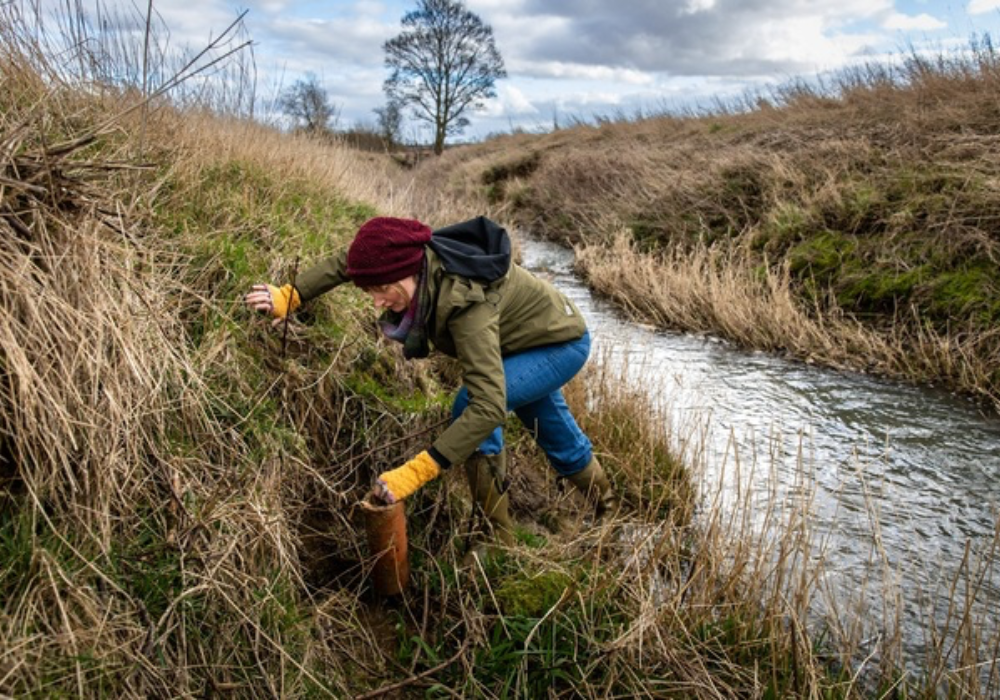
River restoration at Boothby Wildland - supporting the project through Earthly helps businesses drive verified biodiversity and climate impact across the UK.
What is habitat mosaic creation, and why does it matter for biodiversity?
Rather than creating one large block of a single habitat type, habitat mosaic creation produces a patchwork of grassland, scrub, wetland, and woodland within a single landscape. This variety is crucial because different species depend on different environments - and on the transitional edges between them - supporting far greater biodiversity than any monoculture habitat could.
Why are beavers being reintroduced, and what ecological role do they play?
Beavers are keystone species whose dam-building creates ponds, wetlands, and diverse riparian habitats that support extraordinary concentrations of invertebrates, birds, and mammals. At Boothby, the beaver enclosure - the largest of its kind in England at over 200 hectares - will also slow water flow through the landscape, helping to reduce downstream flood risk for surrounding communities.
How does investing in a UK project like Boothby Wildland support my company's sustainability strategy?
Boothby generates biodiversity credits under England's statutory BNG framework and carries an Earthly Keystone 3.0 score of 8.16/10 - providing independently verified evidence of impact for TNFD disclosures, Science Based Targets for Nature (SBTN) commitments, and corporate sustainability reporting. It is a high-quality, credible contribution to nature recovery that stands up to stakeholder and investor scrutiny.
What makes Boothby Wildland different from other rewilding projects?
Boothby is built on the proven model of Knepp Wildland (the UK's most celebrated rewilding project) giving it an unusually strong methodological foundation. It combines biodiversity and carbon credits, eco-tourism, and nature-based enterprise for long-term financial resilience, pairs this with exceptionally deep community engagement, and backs everything with some of the most rigorous ecological monitoring of any UK nature project.
Related articles
26.09.2024
Launched in January 2016, imagin has already reached more than a million customers. They are Spain’s …
)
21.07.2021
Please note, we have evolved our Climate Positive Certification and the process outlined in his case study may …
)
12.04.2021
Born from Saracen Education, a leading Education Consultancy operating from Doha, Qatar for the last 3 …