
Sustainable business
22.12.2025
The 5 best carbon credits providers in 2026 (ranked for quality and business fit)
Carbon credits are an effective tool for businesses to finance climate action once they measure and reduce their …

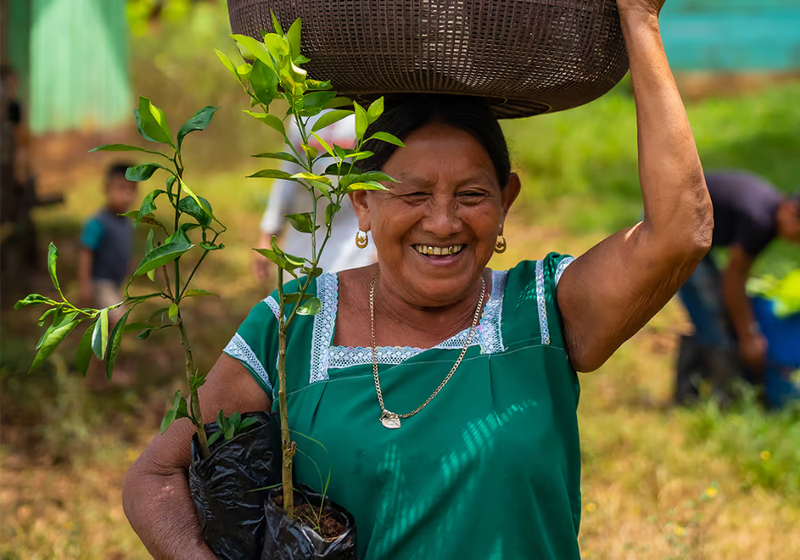
Earthly's five highest-scoring carbon credit projects, incorporating their carbon, biodiversity and people scores, highlighting what each does best and how it can support your business’ climate and nature reporting.
TL;DR - key takeaways
Three projects actually tied with a top score of 6.9/10.
All five projects exceeded Keystone 3.0’s standards: fewer than 9% of projects do.
Different projects showed top scores for each of people, carbon and biodiversity.
Each project supports evidence for your CSRD and TNFD reporting.
In Earthly’s 2026 CSO survey, we asked Chief Sustainability Officers and sustainability leaders what would make them more confident about investing in nature. 70% pointed to independent, science-based project assessments as the most important factor. Alongside this demand for independent assessments, new EU rules on green claims place stricter requirements on how businesses communicate their environmental impact to consumers.
To help businesses identify high-quality carbon projects and make evidence-backed climate and nature claims, we are spotlighting the five highest-scoring carbon credit projects that have been scored by Earthly's independent Keystone 3.0 assessment.
Project | Overall | Carbon | Biodiversity | People |
6.9 | 6.7 | 6.9 | 7.0 | |
2. Reforestation, Agroforestry, and Natural Regeneration - Petén, Guatemala | 6.9 | 7.3 | 7.0 | 6.5 |
6.9 | 6.4 | 7.3 | 6.9 | |
6.8 | 7.1 | 7.0 | 6.5 | |
6.7 | 7.2 | 6.1 | 6.8 |
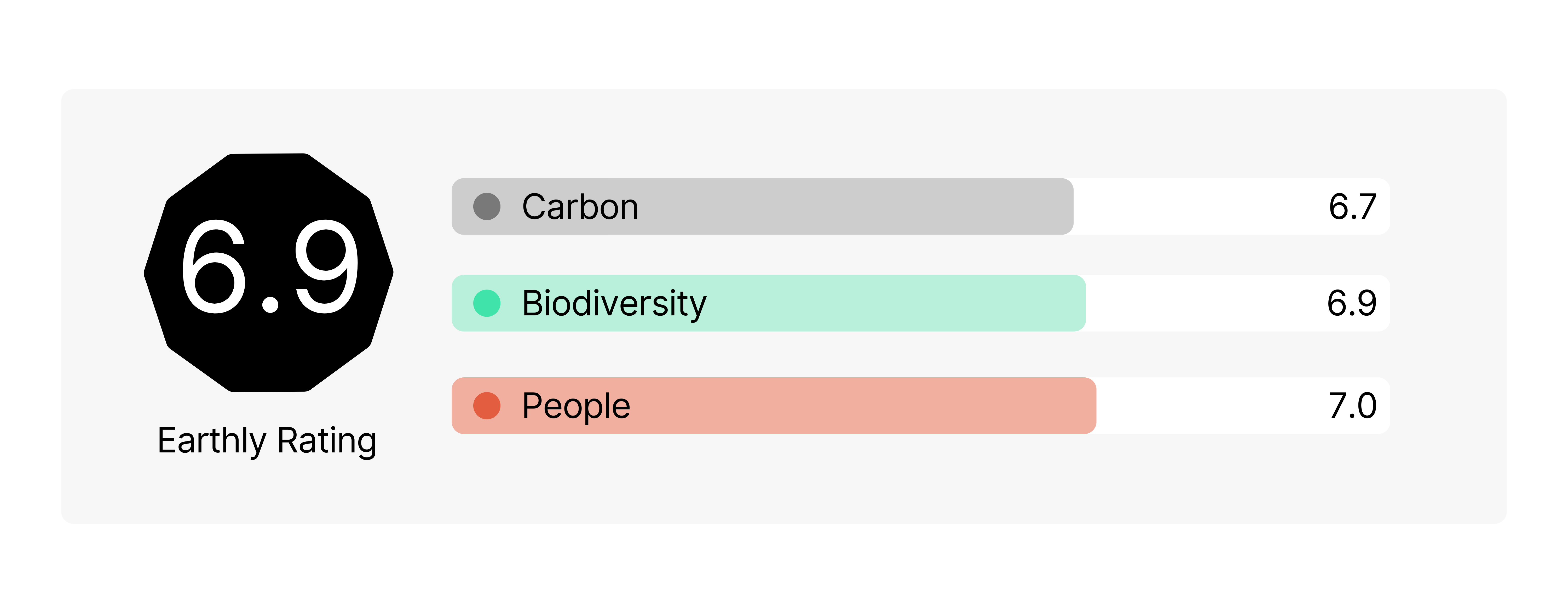 Removal credits: The project delivered 266,162 tCO₂e in net removals in its latest monitoring year, through forest growth and native reforestation.
This community-led forest management and reforestation project earned the highest people score on our list, at 7.0. It is managed by more than 300 members of Ejido Caoba, a local community that collectively owns 23,435 hectares of tropical forest in Quintana Roo, on Mexico’s Yucatán Peninsula. The project generates carbon removal credits only from measurable forest growth through sustainable harvesting and native reforestation.
Social context (8.1): Ejido Caoba has held legally recognised communal land ownership since the 1940s, with no land disputes identified in a 2024 FSC audit. It was also among the first community forestry operations in Mexico to achieve FSC certification in the early 1990s.
Biodiversity benchmark (7.8): The project has mapped its forest types, soils and 127 native tree species. The forest provides habitat for jaguars and the Endangered Geoffroy’s spider monkey and forms part of the Mesoamerican Biological Corridor, which connects the Sian Ka’an and Calakmul Biosphere Reserves.
Carbon accuracy (7.3): The project uses regionally adjusted forest growth models to calculate carbon removals. It has a 100-year permanence agreement and a 29.39% buffer pool to provide safeguards against the risk of those removals being reversed.
Of the carbon credit revenue the ejido receives, 20% goes to a Social Fund that the community assembly directs to local projects of its choice.
Why it matters for your business: These are carbon removal credits from a community-owned forest secured for 100 years, giving you a durable claim and a clear story of local benefit to share with stakeholders.
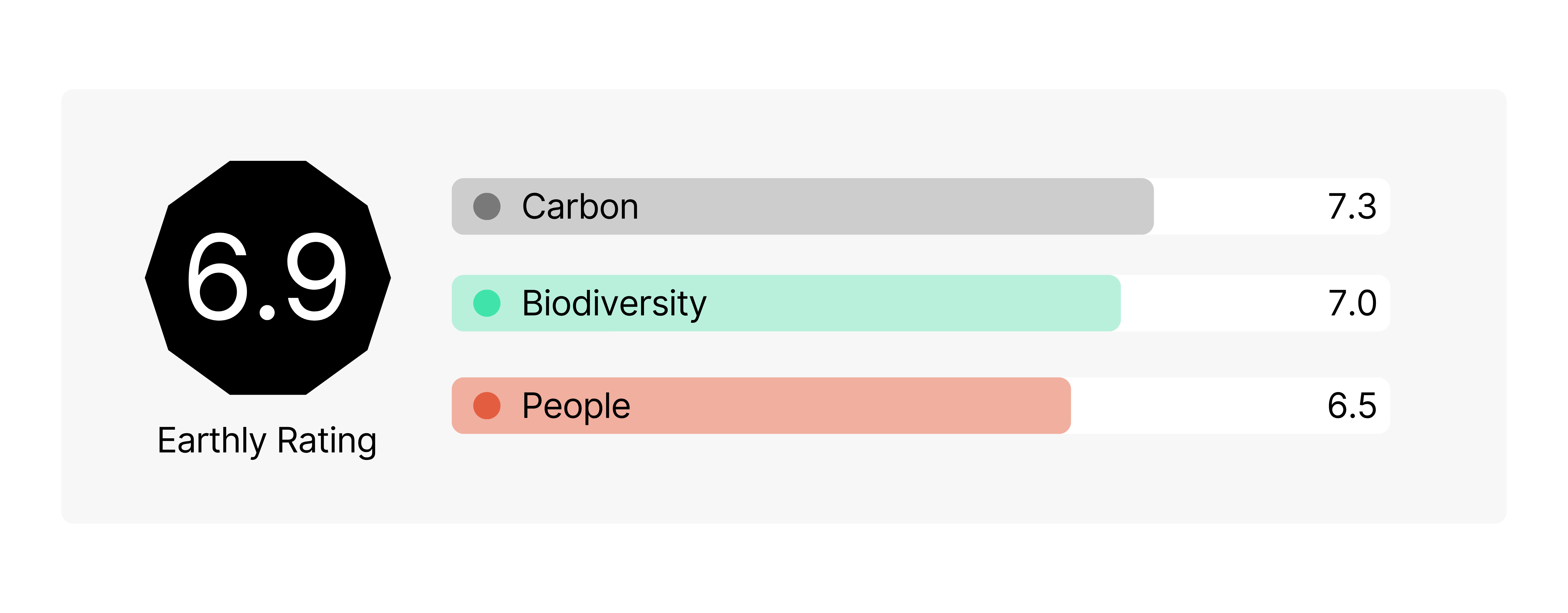 Removal credits: Around 2,606 tCO₂e has been verified as removed across 418.9 hectares to date, with more expected as the forest grows.
The reforestation, agroforestry and natural regeneration project transforms degraded pasture and cropland in northern Guatemala’s Petén region through native timber plantations and assisted natural regeneration. It is the only project on our list focused on restoring degraded agricultural land to forest, and it earned the highest carbon score on our list, at 7.3.
Between 2020 and 2024, the project worked with local farmers to plant more than 679,000 trees and help restore forest cover.
Monitoring, reporting and verification (8.8): The project shares its monitoring reports publicly and has a strong carbon monitoring framework. Technicians visit each plot up to three times a year during its first three years to assess tree growth, survival rates and restoration progress.
Suitability and risks (7.6): The project replants cedar and mahogany, two native timber species listed as Vulnerable on the IUCN Red List following years of overharvesting. It also supports assisted natural regeneration, allowing other native plants to grow alongside the planted trees. So far, 38 additional native species have been recorded across the restoration areas.
Benefit sharing (7.5): 60% of carbon revenue goes to local stakeholders. By 2024, €463,100 had been directed to participants through payments, training and operational support.
The project involves more than 200 smallholder farmers across 46 rural communities.
Why it matters for your business: Removal credits backed by public monitoring reports give your sustainability and finance teams a clear evidence trail for CSRD (ESRS E1-7) disclosures and for plans under the SBTi’s new Ongoing Emissions Responsibility programme. With 60% of carbon revenue going to local communities, you also get specific social outcomes to report.
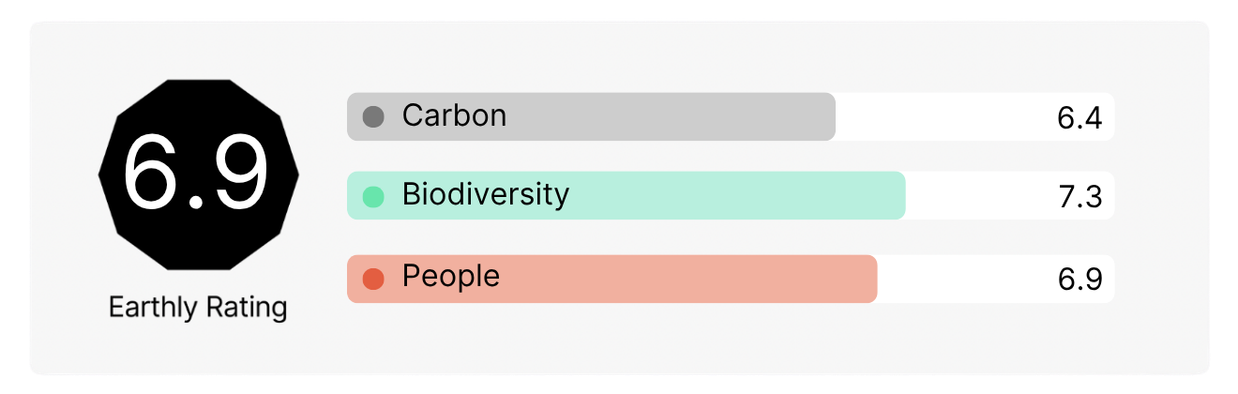 Avoidance and removal credits: The project delivered 137,177 tCO₂e in net emission reductions and removals between mid-2020 and the end of 2023.
This farmer-led project in Lithuania shows how agricultural land can support biodiversity and carbon removal without taking farmland out of production. The project covers 18,510 hectares of farmland, working with 72 farmers across 40 farms to adopt regenerative practices. Reduced tillage, cover crops, crop residue retention and lower synthetic fertiliser use help improve soil health, increase soil carbon storage and create better conditions for biodiversity.
The project earned a biodiversity score of 7.3, the highest on our list.
Biodiversity monitoring (7.7): The project uses annual farmer surveys, farm visits and satellite imagery to track changes in farming practices that support biodiversity. Soil carbon is sampled at least every five years to monitor changes in carbon storage.
Suitability and risks (7.6): Participating farmers have expanded their crop rotations from 4 or 5 crops to as many as 9, and use multi-species cover crop mixes of up to 11 species. These practices are designed for existing farmland, so no natural habitat is converted.
Leakage (7.4): The project monitors crop yields to ensure they don’t fall by more than 5%, which prevents agricultural production from shifting onto other land.
The project issued €1.46 million in zero-interest green loans to help farmers switch to regenerative practices. Thirteen farms have cut nitrogen fertiliser by 20% or more.
Why it matters for your business: The project’s biodiversity and soil health monitoring gives your sustainability and reporting teams farmland-based nature data to support TNFD and CSRD (ESRS E4) reporting, from a project rooted in European agriculture.
Avoidance and removal credits: The project delivered 233,769 tCO₂e in net emission reductions and removals in its latest monitoring year (2023-2024).
This is the largest project on our list by area, covering 195,491 hectares of farmland across France, Belgium and the UK. It supports arable farmers in adopting regenerative practices in countries where only 1% to 8% of farms currently farm regeneratively.
Farmers reduce tillage, keep soil covered all year with cover crops, diversify their crop rotations and cut synthetic inputs. These practices rebuild soil carbon, improve soil health and lower greenhouse gas emissions.
Water (9.0): Healthier soils with year-round cover hold more water and reduce erosion, runoff and nutrient leaching. The project tracks its water impacts every year as part of a wider set of metrics that go beyond carbon.
Carbon accuracy (7.5) and baseline (7.4): Emissions are calculated with the Cool Farm Tool, a third-party tool developed by researchers at leading European universities. Panels of at least three independent agricultural economists per region define the baseline farming practices.
Benefit sharing (7.2): Farmers receive 70% of carbon revenue, and they can see exactly how their results translate into payments.
Farmers commit for at least five years, renewable up to four times, so the project can run for up to 30 years.
Why it matters for your business: Annual water, soil and emissions data give your sustainability and reporting teams farmland evidence for CSRD disclosures on water (ESRS E3) and biodiversity (ESRS E4), as well as TNFD reporting. Its scale across three countries also makes it a practical choice for businesses with operations or supply chains across Europe.
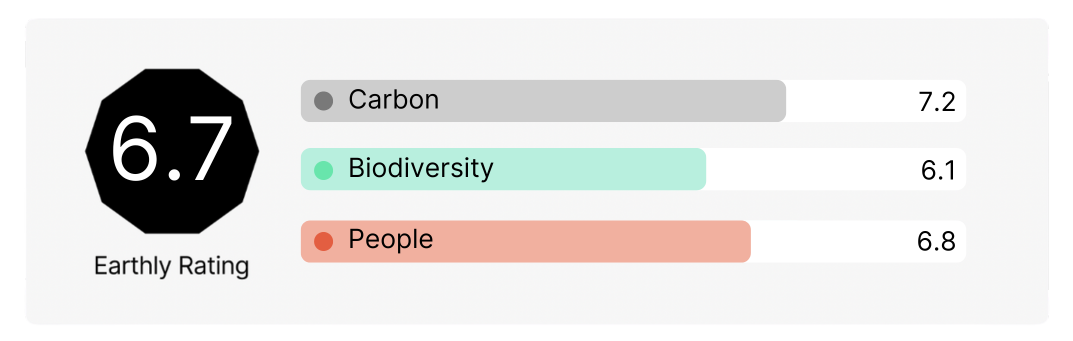 Avoidance and removal credits: The project delivered 75,689 tCO₂e in net emission reductions and removals over its first 23 months of monitoring.
This regenerative farming project earned the highest social monitoring score (8.4) and the highest carbon accuracy score (8.0) on our list. It supports Italian farmers in adopting regenerative practices across 1,400 hectares of olive groves, orchards, vineyards and arable land.
Farmers use minimum tillage, cover crops, improved crop rotations, tree planting and agroforestry, while reducing their use of synthetic fertilisers and pesticides. These practices help tackle the challenges facing Italy’s Mediterranean farmland, including shrinking water resources, soil erosion and soil degradation.
Social monitoring (8.4): The project conducts annual farmer surveys and farm visits to monitor income, crop yields, crop diversity and food security. Farmers' feedback also informs project activities, including the use of mulching and pruning residues instead of burning them.
Carbon accuracy (8.0): The project uses RothC, a peer-reviewed soil carbon model, alongside field sampling to estimate and verify changes in soil carbon storage. It also holds a BBB rating from independent carbon ratings agency BeZero.
Benefit sharing (7.5): Farmers receive 70% of the project's net revenue, providing a financial incentive to continue adopting regenerative farming practices.
Farmers sign 15-year contracts, and the project aims to cover at least 200,000 hectares by 2030.
Why it matters for your business: Yearly data on farmer income, yields and food security gives your sustainability and reporting teams social outcomes to report alongside carbon figures. The project’s BBB rating from BeZero also gives your procurement team independent evidence for due diligence.
“Plenty of projects look good on paper. What sets these five apart is the evidence behind them: public monitoring reports, regular field visits, soil sampling and annual farmer surveys. Keystone 3.0 gives every indicator two scores, one for how well the project meets the criterion and one for how well that is backed up, so a claim we can’t check doesn’t score highly, however good it sounds. Our research team also runs its own geospatial analysis to test what projects report, and we keep reviewing scores as new monitoring data comes in. For buyers, that means the scores rest on evidence their auditors and reporting teams can follow.”
— Sharan Ghai, Research Portfolio Lead at Earthly, leads the research team behind Keystone 3.0, Earthly’s nature project assessment.
Every project on this list was assessed under Keystone 3.0, Earthly’s nature project assessment, built on five years of research, project evaluation and field insights.
One system for every nature project: Keystone 3.0 is ecosystem-agnostic and registry-agnostic, and it assesses carbon and biodiversity projects in one system, so results are comparable across project types and markets.
Three equal pillars: Projects are scored across 168 indicators covering carbon, biodiversity and people, with each pillar carrying equal weight.
Evidence quality: Each indicator receives two scores: maturity, which measures how well the project meets the criterion, and confidence, which reflects the strength of the supporting evidence. Projects with well-substantiated outcomes score higher than those relying on unverified claims.
Independent cross-checks: External inputs, including BeZero carbon ratings and our own geospatial analysis, help validate project findings.
Minimum quality threshold: Projects must achieve an overall Keystone 3.0 score of at least 5.5 out of 10 to qualify for the Earthly Marketplace.
Fewer than 9% of the projects we assess meet our standards, and each one is scored against 168 data points. The scores below come from each project's Keystone 3.0 scoring and match its published assessment report.

According to the Integrity Council for the Voluntary Carbon Market (ICVCM), high-quality carbon credits must represent genuine, measurable and verifiable emission reductions or removals, supported by robust safeguards and transparent reporting.
Our five highest-scoring projects show how these principles work in practice:
Additionality: Baseline scenarios and financial assessments showing that forest restoration or regenerative farming would be unlikely to happen at scale without carbon finance.
Permanence: Long-term commitments, such as Mayab’s 100-year permanence agreement and multi-year farmer contracts, backed by buffer pools and ongoing monitoring.
Measurement and verification: Satellite imagery, regular field visits, soil carbon sampling and publicly available monitoring reports that help verify project outcomes.
Leakage management: Crop yield monitoring and land-use assessments to identify whether project activities could shift emissions or agricultural production elsewhere.
Carbon integrity is only one part of project quality. The University of Oxford’s Principles for Net Zero Aligned Carbon Offsetting also stress the importance of protecting ecosystems and communities. That’s why Earthly’s Keystone 3.0 assessments evaluate biodiversity and people alongside carbon performance.
These rankings come from Earthly’s own assessment data, built over more than five years of reviewing nature-based projects.
Track record: Earthly has helped more than 900 businesses invest in nature-based projects, giving us firsthand experience in helping companies identify projects that align with their climate and nature goals.
Scientific rigour: Our research team evaluates projects against 168 indicators across carbon, biodiversity and people, drawing on registry documentation, independent ratings and our own geospatial analysis.
Industry recognition: Keystone 3.0 won bronze in the Technology and AI for Good category at the 2026 Global Good Awards, while our 2026 CSO survey gathered insights from more than 200 sustainability leaders.
Assessment transparency: Fewer than 9% of the projects we screen pass Keystone 3.0. Every project must meet our assessment standards before joining the Earthly Marketplace, and we publish individual pillar scores so businesses can see where each project performs well and where limitations remain.
Are you looking to support one of these projects or find the best fit for your business’s climate and nature goals? Contact our team to discuss pricing, availability and reporting requirements, or explore our Marketplace to discover more high-quality carbon projects.
What is Keystone 3.0?
Keystone 3.0 is Earthly’s nature project assessment framework. It scores carbon and biodiversity projects across 168 indicators in three equally weighted pillars (carbon, biodiversity and people), and works across all ecosystems and registries.
Can a project’s Keystone 3.0 score change?
A nature project’s scores can change as new monitoring data and evidence become available, so we keep reviewing projects after they are assessed.
Why look at biodiversity and people as well as carbon?
A project’s carbon score shows how credible its climate impact is. Biodiversity and people scores show whether it also restores nature and benefits the communities who live alongside it.
Do higher Keystone scores mean a project is better for my business?
Overall scores offer a useful comparison, but your business should also consider the type of credits they need, their climate objectives, each project’s pillar scores and the specific environmental or social outcomes they want to support.
How can businesses make credible claims about carbon credit investments?
Businesses should describe their contributions accurately, distinguish between emission reductions and removals, and make sure claims are supported by appropriate project evidence. Independent assessments can help your business understand project quality, but they don’t automatically make an environmental claim compliant with applicable regulations.