
How regenerative carbon farming projects are unlocking the Mediterranean's carbon removal potential

Southern Europe has some of the continent's fastest-degrading soils and some of its best-placed farmland for carbon removal.

Radica and Earthly

Radica and Earthly

19 Oct, 2025

Loading...
How regenerative carbon farming projects are unlocking the Mediterranean's carbon removal potential

Across the Mediterranean, rising temperatures, prolonged droughts and soil degradation are putting agricultural landscapes and farmer livelihoods under pressure. Yet, these landscapes offer potential for carbon removal, biodiversity restoration and more resilient farming systems.

TL;DR

  • Mediterranean farmland is losing soil quality fast: around 74% of Spain’s land is exposed to desertification. 

  • Most Mediterranean farms are small and grow several crops side by side; measuring and verifying their carbon takes more care than on large single-crop farms.

  • Earthly supports a regenerative farming project in Italy that supports farmers to adopt practices like cover crops, minimum tillage and agroforestry, backed by financial incentives and expert guidance.

  • Earthly assessed the project with Keystone 3.0 and gave it an overall rating of 6.7 out of 10, with strong scores of carbon (7.2), biodiversity (6.1) and people (6.8).

About the regenerative farming project in Italy

Through its regenerative carbon farming projects in Southern Europe,

Radica

is helping farmers restore soil health, increase carbon sequestration and access financial incentives for adopting regenerative practices. The project currently covers 1,474.89 hectares across 67 farms, with around 1,400 hectares implementing regenerative agricultural practices.

Carbon impact

The project supports farmers to adopt practices that can increase carbon stored in soils while reducing emissions associated with conventional agriculture.

These include:

  • Minimum tillage, reducing soil disturbance and helping retain soil organic carbon.

  • Cover crops and continuous herbaceous cover, keeping soils covered between growing periods and adding organic matter.

  • Improved crop rotations, supporting healthier soils and more diverse root systems.

  • Reduced use of synthetic fertilisers and pesticides, lowering agricultural inputs and associated emissions.

  • Agroforestry, integrating trees and other woody vegetation into agricultural land.

According to project estimates, these interventions reduce or remove an average of 5.14 tCO₂e per hectare each year.

Alberami-1

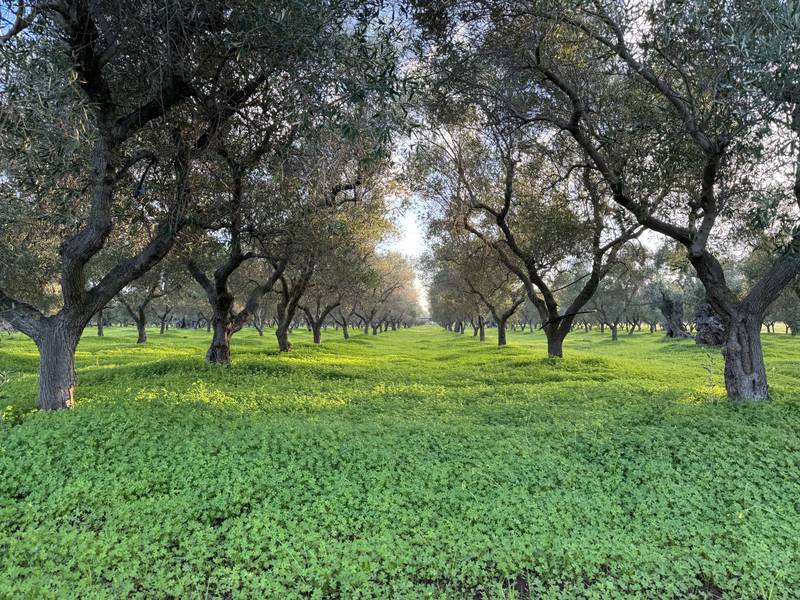
Mediterranean regions account for almost 70% of the EU’s total soil loss, despite covering just 11% of its land area (European Court of Auditors). Regenerative Farming - Italy helps farmers protect their soil with cover crops, reduced tillage and agroforestry across around 1,400 hectares.

Biodiversity impact

The same practices that help rebuild soil carbon can also address some of the pressures affecting biodiversity across Mediterranean agricultural landscapes.

The project promotes:

  • Tree planting and agroforestry to restore degraded land and introduce more varied habitats.

  • Cover crops and continuous vegetation cover to protect soils from erosion and support soil biodiversity.

  • Intercropping to introduce more diverse root structures and improve soil health.

  • Hedges, tree rows and forest patches to provide habitat, reduce erosion and improve local microclimates.

  • Reduced synthetic fertiliser and pesticide use to limit their impacts on soils, wildlife and surrounding ecosystems.

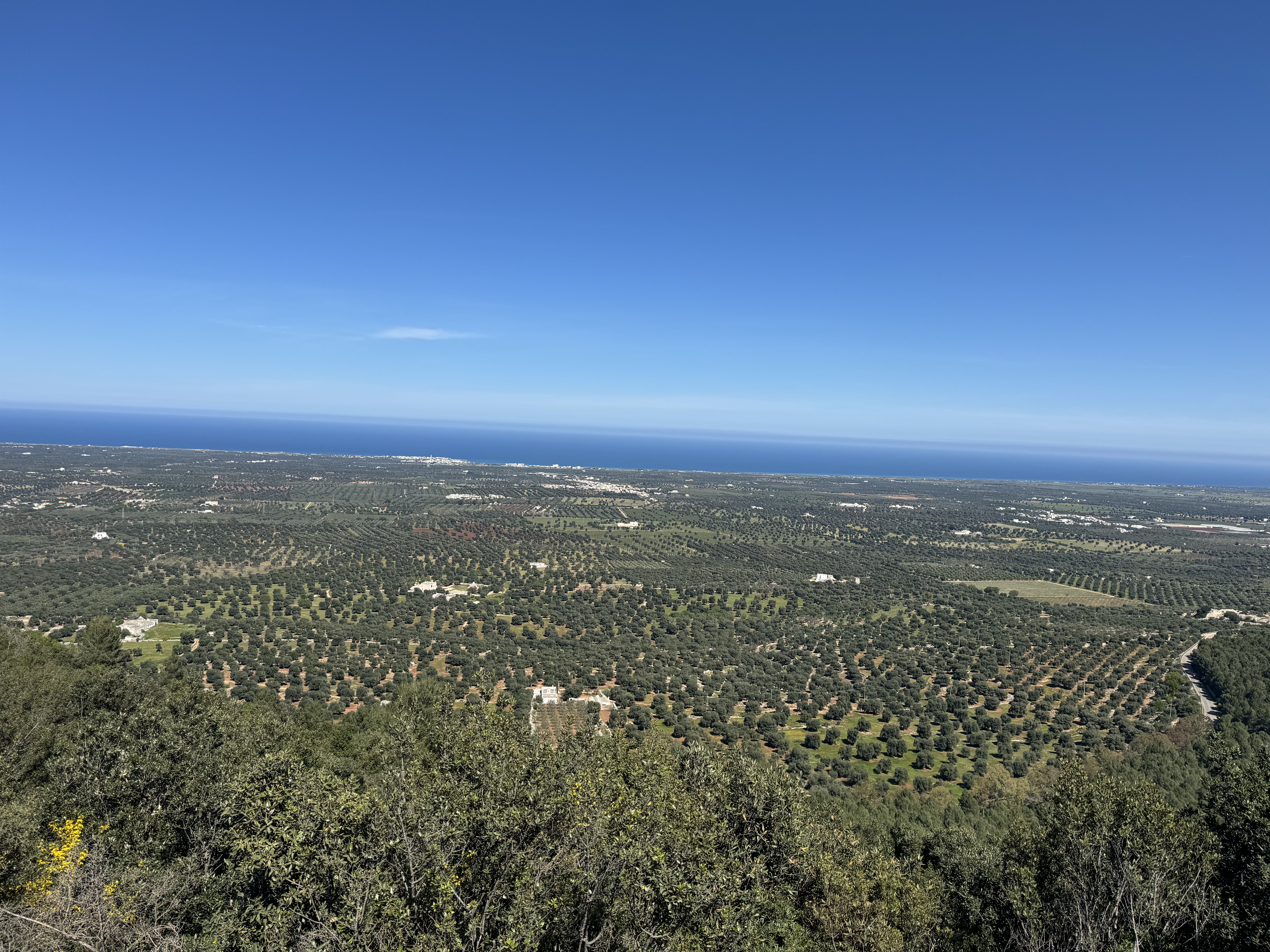
This is particularly relevant in southern Italy, where Xylella fastidiosa has devastated olive groves. By improving soil and ecosystem health, Radica aims to strengthen the resilience of these agricultural landscapes to pressures including disease and extreme weather.

The project has also reported positive outcomes including reduced erosion and nutrient runoff, improved habitat quality and greater resilience to extreme weather.

People impact

For farmers, transitioning to regenerative agriculture can require new knowledge, changes to established practices and additional investment. The project combines financial incentives with expert guidance to help farmers make and maintain that transition.

Its approach includes:

  • Additional income from carbon finance, giving farmers access to revenue generated through the sale of carbon credits.

  • 70% of the project’s net revenue shared with participating farmers, providing a direct financial incentive for adopting regenerative practices.

  • Agronomic guidance and skills development to support farmers as they introduce new practices.

  • Partnerships with local stakeholders to extend benefits beyond individual farms and into surrounding rural communities.

  • A focus on fair labour conditions and employment quality, alongside improving the long-term economic resilience of agricultural communities.

Through these measures, the project aims to make regenerative agriculture more financially viable for farmers while contributing to wider goals around poverty reduction, decent work and rural economic resilience.

Together, these carbon, biodiversity and social impacts provide a broader picture of the project’s potential value. They are also central to how Earthly assesses project quality.

Why is measuring carbon on Mediterranean farms more complex?

One of the challenges facing Mediterranean carbon farming projects is that existing carbon accounting methodologies are not always well suited to the region's agricultural landscape.

Verra's VM0042 methodology

, which quantifies greenhouse gas reductions and soil carbon removals from improved agricultural land management, can be applied across different farming systems. However, implementing it can be more complex across smaller, diverse farms than across large agricultural holdings with relatively uniform crops and management practices.

Mediterranean agriculture is often fragmented into small and medium-sized farms, with olive groves, vineyards, almond orchards and citrus trees sometimes growing alongside one another. Differences in soil conditions, crop types and farming practices make it more challenging to establish baselines, measure changes in soil carbon and coordinate monitoring across multiple farms.

This creates additional challenges for developers looking to scale credible carbon removal projects across the Mediterranean. Addressing them requires monitoring approaches that account for the region's agricultural diversity while maintaining rigorous standards for carbon measurement and verification.

How Radica measures and verifies carbon removals

To address the challenges of measuring carbon across diverse Mediterranean farms, Radica combines regenerative agriculture frameworks, carbon accounting methodologies and independent verification.

Its approach involves four key steps:

  1. Identifying regenerative practices:

    Radica uses C-Farms, a framework supported by the EU LIFE programme, to identify and track Best Agroecological Practices suited to Mediterranean farming systems. This helps establish which practices farmers are adopting and where.

  2. Quantifying carbon impacts:

    Radica uses two Verra methodologies. VM0042 accounts for changes in soil organic carbon, while VM0047 addresses carbon stored in woody biomass, including trees.

  3. Modelling and monitoring:

    Soil carbon changes are modelled using RothC, a soil carbon model developed by Rothamsted Research. The model is calibrated using soil samples across 144 soil-management strata, with satellite data providing an additional monitoring layer.

  4. Independent verification:

    Project data undergoes third-party verification before credits are issued, providing an additional check on the carbon outcomes reported.

Radica applies this approach through its Regenerative Farming - Italy project, registered as

ICR-48

on the International Carbon Registry. The project has also received a

BBB rating from BeZero Carbon

.

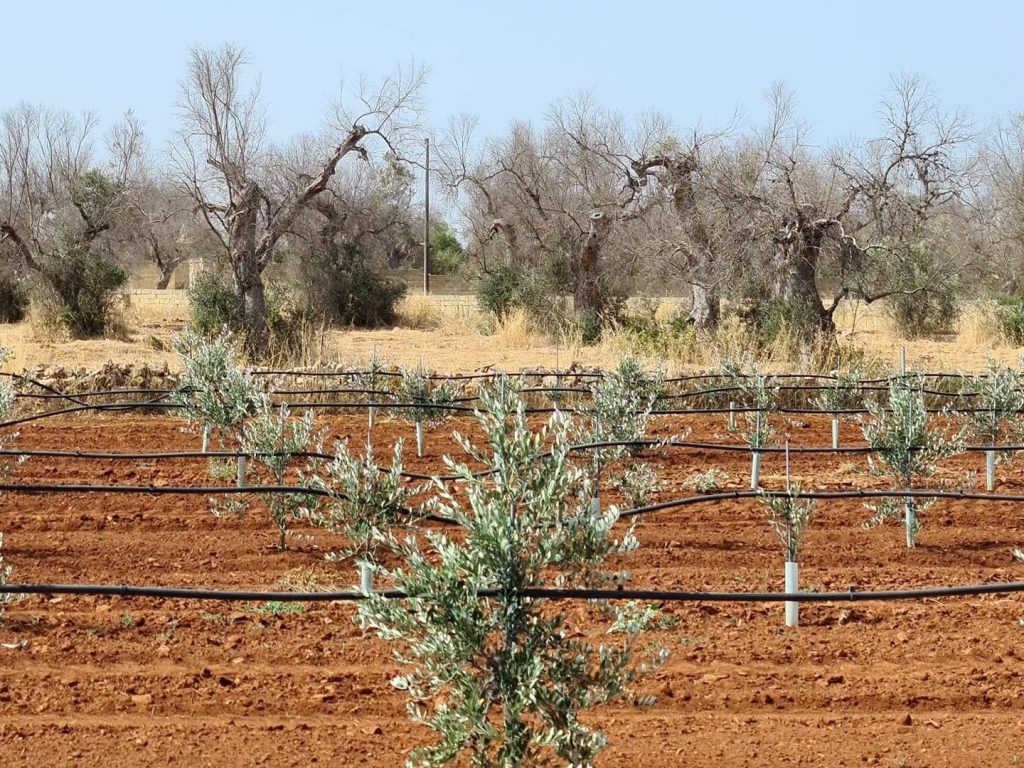
Rows of young olive trees with irrigation systems in a dry, red soil field, surrounded by bare, leafless trees under a clear blue sky.

Part of the Regenerative Farming in Italy project, young olive trees grow alongside older trees, with irrigation systems supporting their establishment in a dry Mediterranean agricultural landscape.

Why should European businesses invest in Mediterranean carbon farming?

For European businesses, Mediterranean carbon farming offers an opportunity to support carbon removals while addressing environmental challenges in a region closely connected to their supply chains.

As companies respond to evolving sustainability reporting requirements and climate targets, understanding agricultural emissions and land-use impacts is becoming increasingly important. Frameworks such as the CSRD and SBTi FLAG guidance are bringing greater attention to emissions from agriculture, forestry and land use.

Mediterranean carbon farming offers several potential benefits:

  • Greater traceability:

    Projects linked to identifiable farms and agricultural regions can help businesses understand where carbon finance is directed and what activities it supports.

  • Supply-chain relevance:

    For businesses sourcing olive oil, wine, wheat, nuts and other Mediterranean agricultural products, regenerative farming can support healthier soils and more resilient agricultural landscapes.

  • Measurable carbon outcomes:

    Projects with robust monitoring and independent verification can provide evidence of carbon removals and emissions reductions.

  • Farmer and community benefits:

    Carbon finance can create additional income opportunities for farmers while supporting the adoption of regenerative agricultural practices.

  • Biodiversity benefits:

    Practices such as agroforestry, cover cropping and habitat restoration can contribute to healthier agricultural ecosystems.

For businesses with Mediterranean agricultural supply chains, these benefits may be particularly relevant. Supporting regenerative agriculture in sourcing regions can complement wider efforts to address climate and nature-related risks.

However, investing in a carbon project within a company's supply-chain region is not automatically the same as reducing its own value-chain emissions. Businesses need to distinguish between purchasing carbon credits and implementing verified interventions within their value chains.

Ultimately, the value of Mediterranean carbon farming depends on more than geographical proximity. Project quality, additionality, permanence, independent verification and measurable benefits for local communities all matter when assessing whether a project can deliver credible long-term outcomes.

Earthly's take: How does Regenerative Farming in Italy perform?

Carbon measurement and third-party verification are important, but they don't tell the full story of a project's quality. Buyers also need to understand the risks associated with carbon outcomes, the project's impact on biodiversity and whether local communities benefit.

Earthly has independently assessed Radica's Regenerative Farming in Italy project using

Keystone 3.0

, our project assessment framework covering carbon, biodiversity and people.

The project received an overall score of 6.7/10, with the following results:

  • Carbon - 7.2/10:

    Assessment of the project's carbon outcomes, including the credibility of its climate impact and associated risks.

  • Biodiversity - 6.1/10:

    Assessment of how the project's activities affect ecosystems, habitats and biodiversity.

  • People - 6.8/10:

    Assessment of social impacts, including benefits and potential risks for participating farmers and local communities.

These scores provide a more comprehensive picture of project quality than carbon accounting alone. They also highlight why evaluating environmental and social outcomes alongside carbon performance is essential when considering nature-based carbon credits.

Keystone 3.0 evaluates projects against 168 indicators, examining both the maturity of project activities and the confidence in the supporting evidence. This helps buyers understand not only what a project aims to deliver, but also how well its reported impacts are supported.

For businesses considering Mediterranean carbon farming credits, independent assessment provides an additional layer of due diligence to support more informed purchasing decisions.

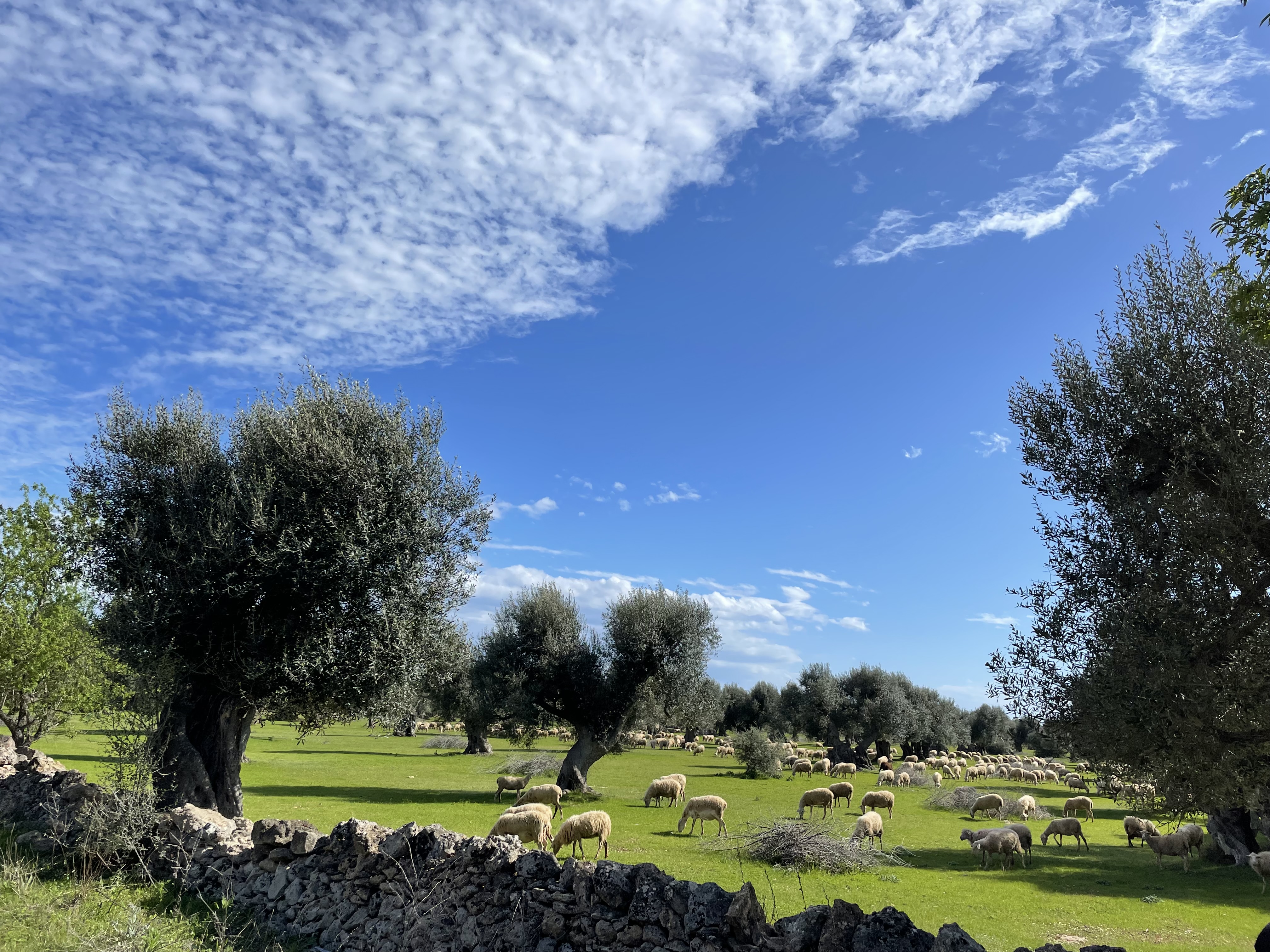
A serene landscape with sheep grazing in a lush green field, scattered olive trees, a stone wall, and a blue sky with wispy clouds.

Sheep grazing among centuries-old olive trees in a Mediterranean landscape, illustrating how traditional agriculture and biodiversity can coexist.

Frequently asked questions

What is regenerative carbon farming?

Regenerative carbon farming involves adopting agricultural practices that improve soil health, increase carbon storage and reduce greenhouse gas emissions. These can include cover cropping, reduced tillage, agroforestry and improved crop rotations. When changes in carbon storage are measured and verified, eligible activities may generate carbon credits.

How does regenerative agriculture remove carbon from the atmosphere?

Plants absorb atmospheric CO₂ through photosynthesis. Some of this carbon enters the soil through roots, plant residues and organic matter. Practices such as cover cropping, reduced tillage and agroforestry can help increase the amount of carbon stored in agricultural soils and vegetation over time.

How are soil carbon removals measured and verified?

Soil carbon projects typically combine soil sampling, modelling, farm management records and monitoring data to estimate changes in carbon stocks. Methodologies such as Verra's VM0042 establish requirements for quantification, monitoring and verification. Independent third-party verification provides an additional check before credits are issued.

How can businesses assess the quality of regenerative carbon farming projects?

Businesses should evaluate additionality, permanence, carbon measurement, independent verification and potential reversal risks. They should also consider biodiversity impacts, farmer benefits and the quality of project monitoring. Earthly's

Keystone 3.0

assessment framework evaluates projects across carbon, biodiversity and people to help businesses make more informed purchasing decisions.

Is buying carbon credits the same as cutting my own supply chain emissions?

No, supporting a project in your sourcing region can complement your climate work, but it isn’t the same as reducing the emissions inside your own value chain. Carbon credits should complement, not replace, efforts to reduce emissions across your supply chain.