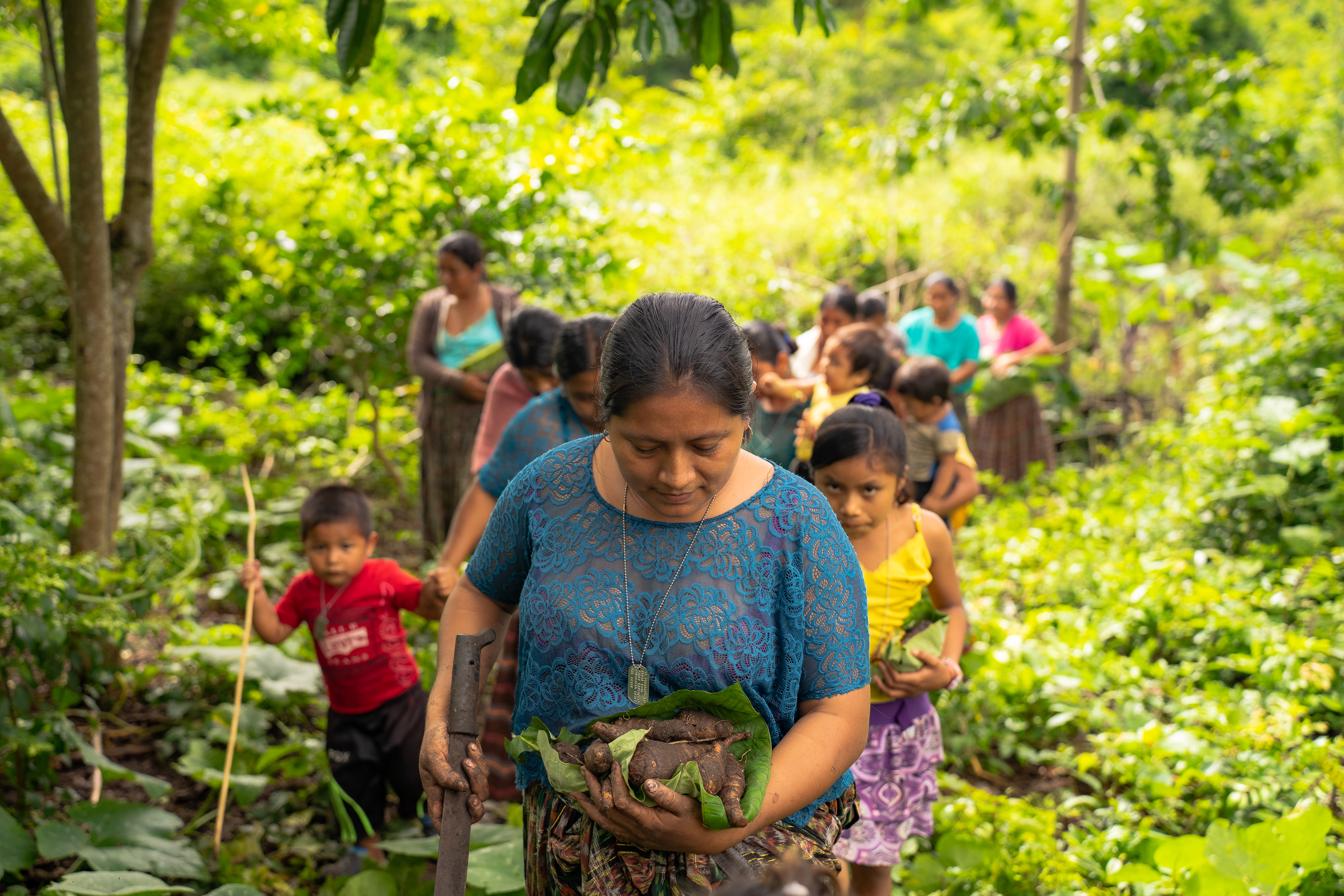
Earthly on the ground: We visited a reforestation and agroforestry project in Guatemala

Nine municipalities, 46 communities and 200+ farmers are helping restore one of Mesoamerica's most important tropical forests.

Monica Mayorga - Research Associate, Earthly

Monica Mayorga - Research Associate, Earthly

22 Jul, 2026

Loading...
Earthly on the ground: We visited a reforestation and agroforestry project in Guatemala

In northern Guatemala, the Petén department is home to one of Mesoamerica's largest remaining tropical forests. It is also one of the country's deforestation hotspots, where agricultural expansion, cattle ranching and slash-and-burn farming continue to fragment forests and degrade the land. The

reforestation, agroforestry, and natural regeneration project

is helping reverse the loss by restoring degraded farmland, supporting local communities and creating healthier landscapes for people and wildlife.

TL;DR - key takeaways

  • In December 2025, Earthly’s Research Associate Monica Mayorga travelled to Petén to see the project firsthand.

  • The project restores degraded pasture and cropland across nine municipalities in Petén.

  • ~2,606 tCO₂e verified carbon reduction across 418.9 hectares, via over 200 smallholder farmers.

  • The project has adapted to El Niño-driven climate volatility.

  • Earthly Keystone 3.0 rating of 6.9, with strong scores across carbon (7.3), biodiversity (7.0), and people (6.5).

Reforestation, Agroforestry, and Natural Regeneration - Petén, Guatemala

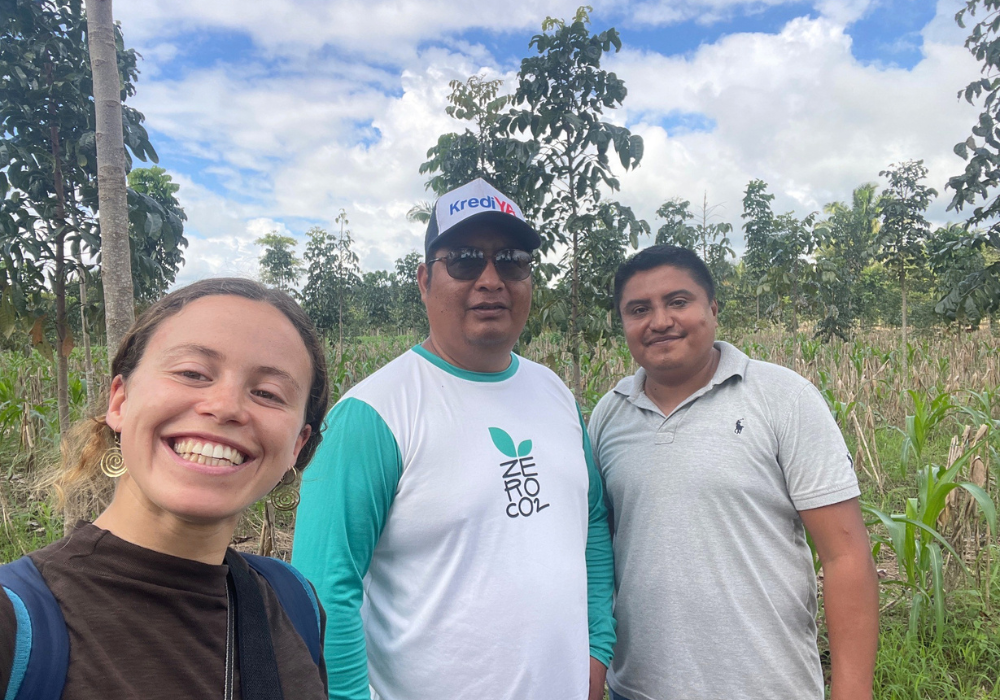
Earthly Research Associate Monica Mayorga (left) with local project managers Arturo (middle) and Virgilio (right) at the Reforestation, Agroforestry and Natural Regeneration project in Petén, Guatemala.

Visiting nature-based solutions in Petén firsthand

Together with project managers Virgilio and Arturo, I visited the plant nursery, where thousands of native tree seedlings are grown before being distributed to participating farmers across the region. From there, we visited several participant farms to see how those seedlings are restoring degraded land while creating new opportunities for local communities.

About the reforestation, agroforestry, and natural regeneration project

The project operates across nine municipalities in Guatemala's Petén department, restoring degraded pasture and cropland through native tree planting, agroforestry and assisted natural regeneration. It is led by

ZeroCO2

(Italy) and

Vivero Mundo Verde

(Guatemala), combining international technical expertise with deep local knowledge to support smallholder farmers.

1. Supporting verified carbon removals

The project has restored 418.9 hectares of degraded land through reforestation, agroforestry and assisted natural regeneration. To date, it has generated approximately 2,606 tCO₂e of verified carbon removals.

2. Reconnecting fragmented habitats to support biodiversity

Native timber species, including mahogany and cedar, are being restored across the landscape. Assisted natural regeneration increases habitat complexity, reconnects fragmented forests and supports the recovery of one of Mesoamerica's most important tropical forest ecosystems.

3. Empowering over 200 local livelihoods

More than 200 smallholder farmers across 46 rural communities participate in the project, with 28.5% of participants coming from Q'eqchi' Indigenous communities. Participants receive training in plantation management, fire prevention, disease control and assisted natural regeneration, while 13 full-time team members and 35 seasonal workers support restoration activities. 

As part of the benefit sharing agreement, 60% of project revenue is shared directly with participants through cash or in-kind payments, helping diversify household incomes and support long-term stewardship of the restored landscapes.

Supporting disclosure-ready nature investments

The project is certified under the

Plan Vivo Standard

, which places communities at the centre of restoration through long-term environmental stewardship, equitable benefit sharing and sustainable rural development. 

This level of rigour matters beyond the project itself: the data and verification behind it allows businesses investing in this project to report with confidence against frameworks like TNFD, CSRD/ESRS and the GHG Protocol, defend their claims under growing scrutiny, and demonstrate real, measurable impact across carbon, biodiversity and people.

How the project works: restoring degraded land through community-led forestry

Nearly

six in ten

are living below the poverty line, and economic opportunities remain limited for many rural communities. The project was designed with this in mind: not only as a route to carbon removal, but as a long-term rural development strategy that gives farming families in Petén new, diversified sources of income.

Since 2020, the number of participating farmers has grown year on year, expanding the project's reach across Petén's nine municipalities and 46 rural communities. Petén itself covers nearly one-third of Guatemala's national territory, giving a sense of the scale at which this restoration model can grow.

The project works directly with the smallholder farmers who own and manage the land.

Step 1: Seedling production and distribution

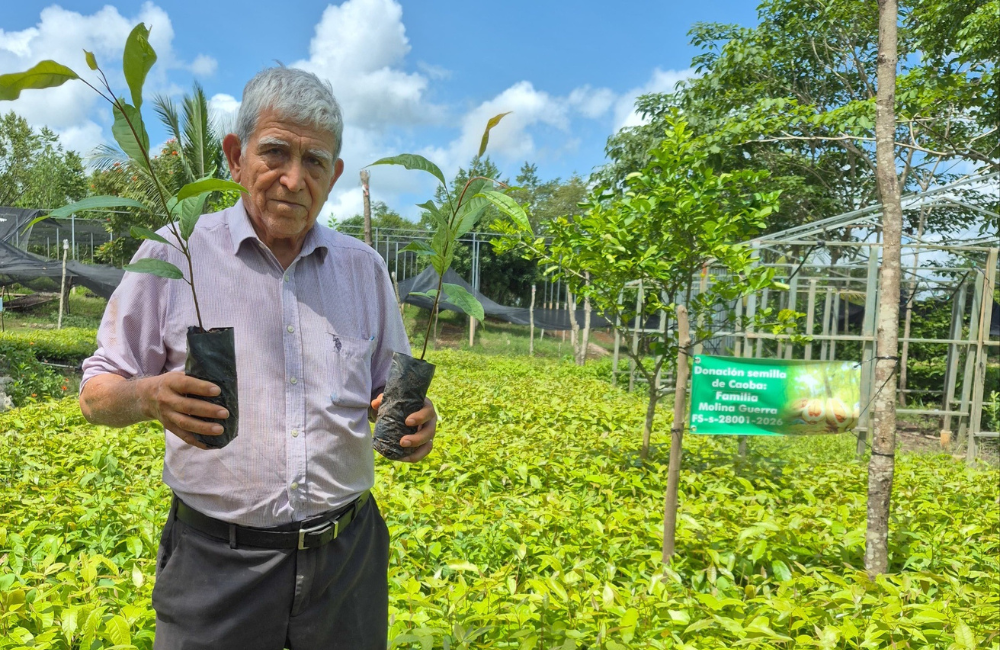
The project runs its own plant nursery, growing native species including cedar, mahogany, chicozapote, citrus and papaya. Seedlings are donated to participants, timed to match seasonal rainfall so families plant when conditions favour survival.

Step 2: Farmer-led species selection

Project technicians assess each plot's soil type, topography and drainage, and advise farmers on what will grow best. Farmers then choose which species to plant on their own land. 

Cedar and mahogany are the most commonly selected: both are native, economically valuable, and classified as Vulnerable on the IUCN Red List after decades of overexploitation, making their reintroduction here particularly significant.

Step 3: Intercropping and early establishment

During the early growth phase, some farmers plant maize and yucca between the young trees, maintaining food supply while the forest establishes. Others choose to let natural regeneration take over immediately, building a more diverse understory from the outset.

Step 4: Natural regeneration from year five

From year five, communities are trained and incentivised to promote natural and assisted regeneration between the planted trees. This builds structural diversity, species richness and habitat complexity, and helps reconnect forest patches fragmented by decades of cattle ranching and slash-and-burn agriculture.

Step 5: Ongoing training and technical support

Participants receive four training modules covering plantation management, fire prevention and disease control. The team supports restoration activities on the ground, ensuring farmers have continued access to expertise as conditions change.

Governance and community decision-making

Community committees oversee the project locally, with structures designed to include women and Indigenous participants in decision-making. Training sessions, consultations, and benefit-sharing agreements are carried out through participatory processes that prioritise informed consent, not just formal compliance.

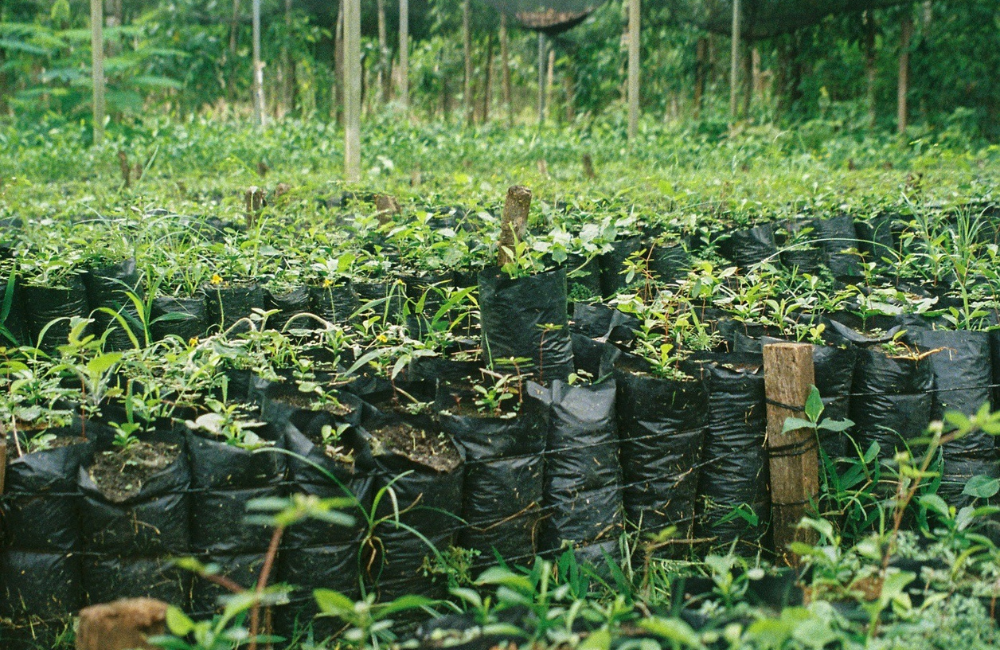
Tree nursery in Nuevo Horizonte

The project's plant nursery in Nuevo Horizonte, where thousands of native tree seedlings are grown before being distributed to participating farmers.

My highlights from the visit in the Guatemala nature project

The plant nursery

Virgilio and Arturo began the visit by showing me around the plant nursery in Nuevo Horizonte. Rows of native seedlings filled the space, including chicozapote, citrus, mahogany, cedar and papaya. These are carefully grown before being distributed to participating farmers, who use them to establish agroforestry systems and restore degraded land on their properties.

Flowering plants are also grown throughout the nursery to attract beneficial insects and help protect the young seedlings from pests, reducing the need for chemical interventions.

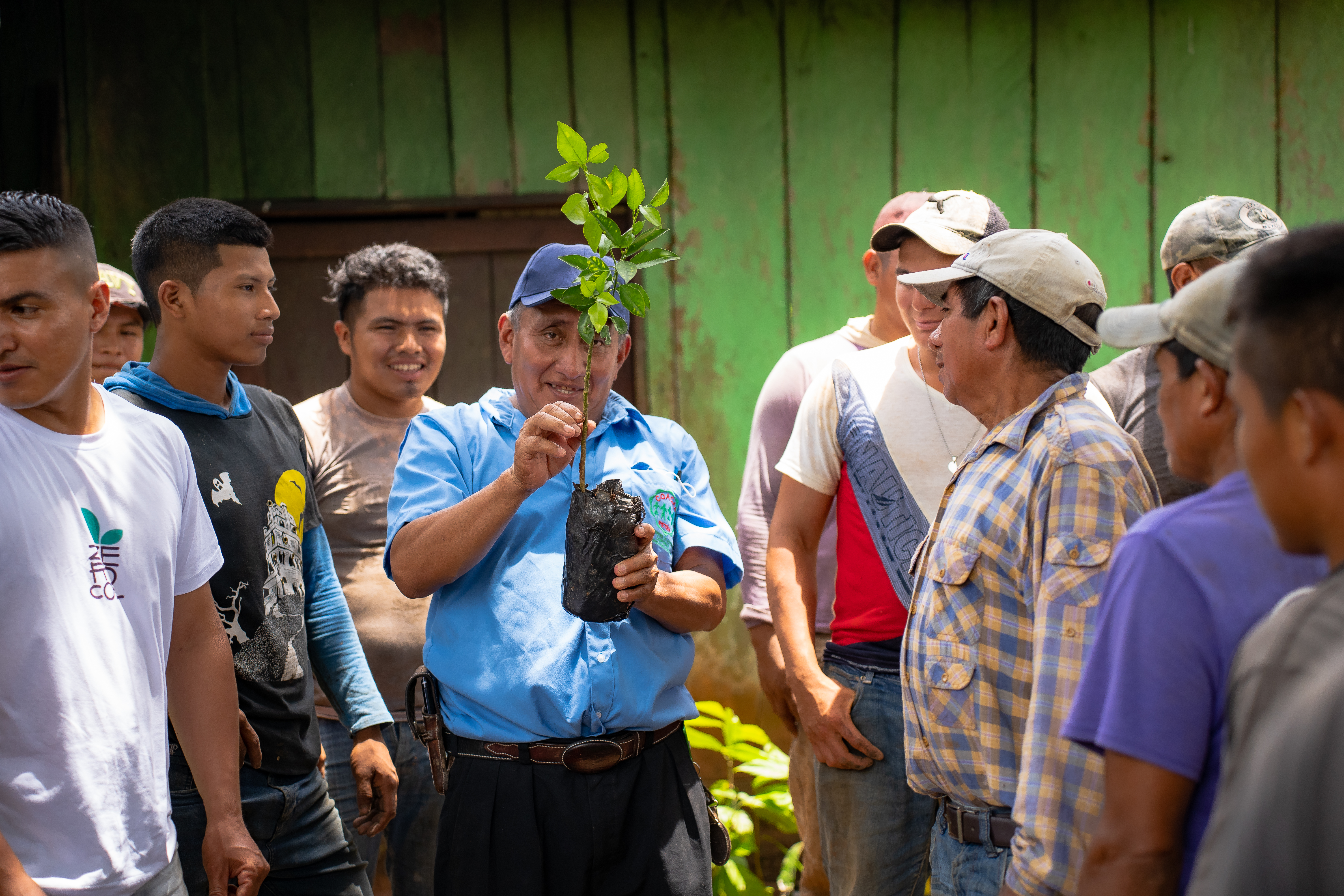
Since my visit, the project has distributed some of these plantings for another planting season. In June 2026, it distributed the first 6,000 seedlings of the year. The first delivery went to Omar Samayoa, who manages a 25-hectare family property in Palestina de Las Cruces, Petén.

Participant farms

We then visited several participant farms, where it was remarkable to see how seedlings from the nursery had grown into young trees towering above us just a few years later.

Virgilio and Arturo explained that project technicians work closely with each farmer to recommend species based on soil type, topography and drainage, while allowing participants to choose what they want to plant.

Cedar and mahogany are among the most commonly planted species. Both are native to the region and hold significant economic and cultural value, but decades of overexploitation have left them listed as Vulnerable on the IUCN Red List.

Some farmers intercrop maize and yucca between young trees during the establishment phase, maintaining food production while the trees grow. Others allow natural regeneration to develop immediately, creating a more diverse understory between the planted trees.

My closing thoughts from the field

I left back to Flores before the heavy afternoon rain rolled in, feeling deeply grateful for Virgilio and Arturo’s warm welcome and for the chance to see their work up close which reflects Earthly’s values of tackling climate change, strengthening biodiversity and supporting local communities.

Omar Samayoa, from Las Cruces, Petén, receives the 2026 season's first seedling delivery

Omar Samayoa, a participating farmer from Las Cruces, Petén, receives the first delivery of native tree seedlings for the 2026 planting season.

Responding to changing climate conditions through adaptive restoration

Restoration in Petén doesn't happen in a stable climate. Between 2023 and 2024, El Niño conditions reduced rainfall across Guatemala's agricultural season by up to 20% and pushed temperatures roughly 1°C above the historical average, with drought conditions affecting 15 of the country's 22 provinces by December 2023. 

In Petén, this played out as a sharp swing from drought to intense rainfall, and the 2022 plantation cohort, still in its early and most vulnerable growth stage, was hit hardest: waterlogged soil reduced oxygen available to the roots, causing seedling mortality and poor establishment.


The project's team:

  • Replanted affected areas and expanded technical support and training for participating farmers

  • Began testing flood-tolerant species for the areas most exposed to heavy rainfall

  • Adjusted seedling production and delivery timing to match seasonal rainfall patterns, so families plant when conditions best support tree survival

  • Strengthened technical guidance on species selection, matching species to local environmental conditions as they shift

As the 2026 planting season begins, forecasts point to another El Niño phase, with higher temperatures and below-average rainfall expected across parts of Central America. Rather than a one-off response, the project treats this as part of an ongoing pattern: growing trees is only the starting point, and lasting restoration depends on continuous technical support, shared knowledge, and resources that help communities manage shifting conditions over time. 

Why natural regeneration matters in this region

Petén is home to one of Mesoamerica's largest remaining tropical forests, but decades of cattle ranching, slash-and-burn agriculture and land degradation have fragmented the landscape into isolated patches. As forests become disconnected, wildlife has fewer opportunities to move between habitats, making it harder for species to find food, mates and suitable breeding grounds.

Letting the forest regrow itself

Alongside the trees they plant, participating farmers are trained to let native vegetation recover on its own, rather than relying on planting alone. This gradually:

  • Reconnects fragmented habitats

    : Linking isolated forest patches creates wildlife corridors that allow animals to move, feed and breed across the landscape.

  • Supports native wildlife

    : Petén is home to species such as the great curassow, the Endangered Yucatán black howler monkey and the Critically Endangered hickatee river turtle, all of which benefit from more connected habitats.

  • Builds healthier forests

    : Natural regeneration increases structural diversity, species richness and habitat complexity, helping restored forests become more resilient over time.

Reforestation - Petén, Guatemala - 4

According to the World Resources Institute (WRI), ANR can restore forests at less than a third of the cost of tree planting. It also produces more biodiverse, resilient forests than planting alone.

A nature project independently assessed for business to invest with confidence

Earthly assessed the Reforestation, Agroforestry and Natural Regeneration project using

Keystone 3.0

, our independent nature project assessment framework. The project holds an overall Earthly rating of 6.9, calculated across three pillars:

  • Carbon: 7.3 - based on the strength of the project's verified carbon removal to date and beyond.

  • Biodiversity: 7.0 - reflecting the reintroduction of vulnerable native species and the project's contribution to reconnecting fragmented forest habitat.

  • People: 6.5 - built upon the project's impact on smallholder farmers, including training, employment and benefit-sharing.

Unlike assessments that focus on carbon alone, Keystone evaluates projects across more than 160 indicators, giving businesses a more complete picture of project quality, integrity and potential risks. It is also methodology- and registry-agnostic, making it easier to compare projects using a consistent framework.

For sustainability teams navigating

disclosure frameworks

such as SBTi, TNFD, IFRS S2, ESRS, SBTN, ISO 14068-1 and CDP, independent project assessments help strengthen investment decisions and support more robust sustainability disclosures. Rather than relying solely on project documentation, businesses can draw on independent evidence made on this project to understand project maturity, identify risks and report with greater confidence.

How can businesses invest in this project?

Businesses can support the

reforestation, agroforestry, and natural regeneration project

directly through

Earthly's marketplace

, or build it into a wider nature investment strategy through

Earthly Plans

or

Automated Investment

, ensuring their portfolio reflects verified, high-integrity projects across carbon, biodiversity, and community impact.

Reforestation - Petén, Guatemala - 6

Carbon, biodiversity and people all matter when assessing a nature project. Keystone evaluates all three using 168 independent indicators, giving businesses a transparent, evidence-based way to identify high-integrity projects.

Frequently Asked Questions

What is Assisted Natural Regeneration (ANR)?

ANR is a restoration technique that allows naturally occurring seedlings and vegetation to grow alongside planted trees, rather than relying on planting alone. It speeds up forest recovery, increases biodiversity, and costs less than replanting every hectare from scratch.

What role do Indigenous communities play in the project?

Q'eqchi' Indigenous communities make up 28.5% of participants. Governance structures, including community committees, are designed to include women and Indigenous participants in decision-making, with training, consultations and agreements carried out through participatory processes that prioritise informed consent.

Why does Earthly independently assess nature projects?

Independent assessments help businesses understand project quality, integrity and potential risks before investing. Earthly's Keystone framework evaluates projects across carbon, biodiversity and people, helping sustainability teams make more informed investment decisions and support credible sustainability reporting.

What is the Plan Vivo Standard?

Plan Vivo is an internationally recognised certification standard for nature-based projects that places communities at the centre of restoration. It focuses on long-term environmental stewardship, equitable benefit sharing and sustainable rural development.

Which sustainability frameworks can this project support?

The project's independent assessment and verified data can support sustainability reporting across frameworks such as TNFD, the GHG Protocol, SBTi, CSRD/ESRS and other nature- and climate-related disclosure requirements.